
Jamaica: Caribbean island nation — geography, history, and culture
Jamaica is a Caribbean island nation known for its mountains, reggae music, and tropical climate. This article summarizes its geography, history, society, economy, administrative divisions and notable cultural contributions.
Jamaica is an island country in the Caribbean, lying south of Cuba and west of Hispaniola. It forms part of the Greater Antilles and the wider West Indies and is known for a varied landscape of coastal plains, central highlands and the misty Blue Mountains. The island has an area of about 10,990 square kilometres and is home to roughly three million people. Its capital and largest city is Kingston, a major port and cultural centre.
Image gallery
10 Images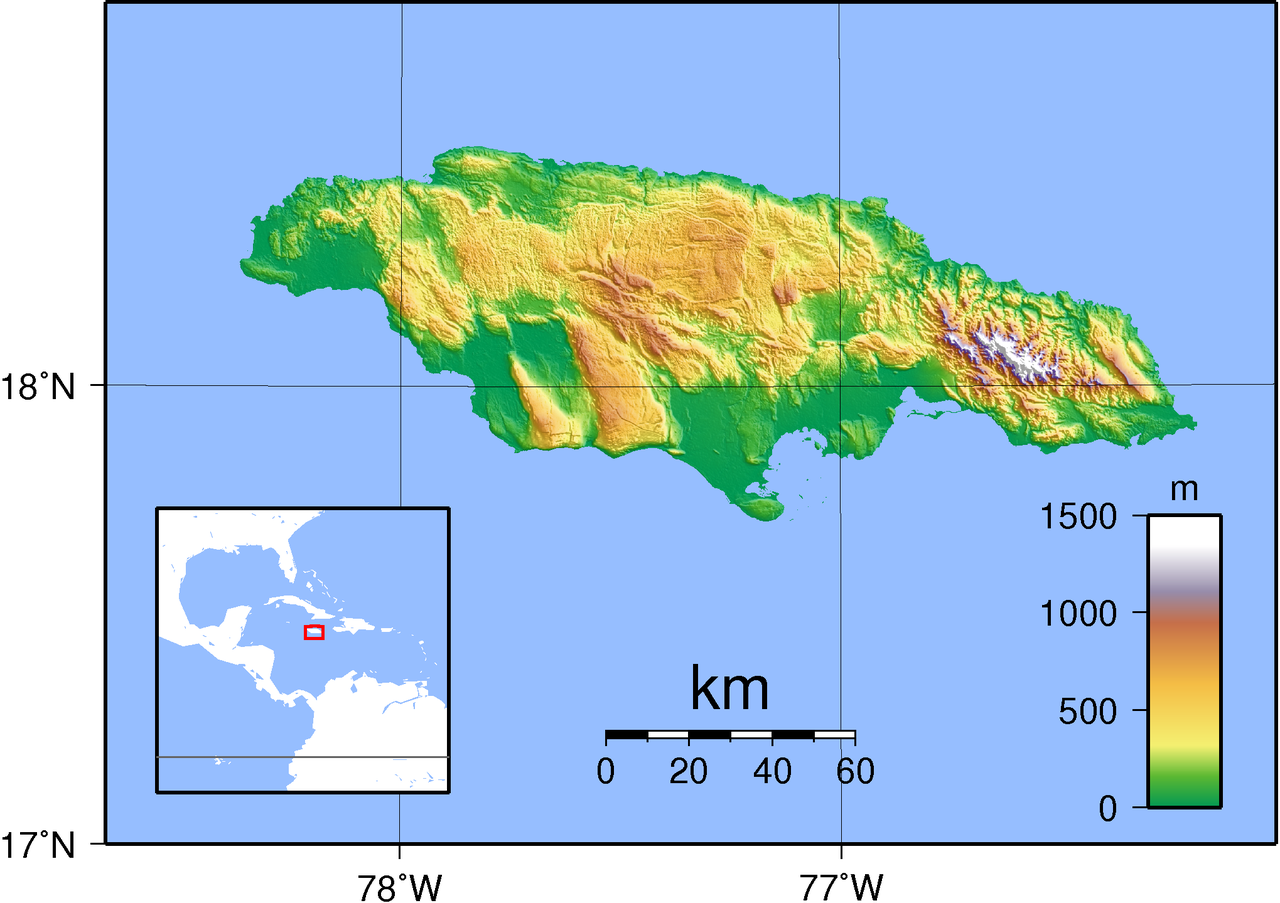




Geography and environment
The island's terrain includes low coastal plains and a rugged interior of limestone plateaus and mountain ranges. The Blue Mountains rise to heights above 2,000 metres and are an important watershed and biodiversity area. Jamaica has a tropical climate with wet and dry seasons, coral reefs along many shores, and a network of rivers and springs that gave the island its indigenous name, Xaymaca, commonly translated as "Land of Springs." The island supports a variety of habitats and several endemic plants and animals, and areas such as the Blue and John Crow Mountains have been recognized for their ecological and cultural significance.
History and origins
Indigenous Taíno peoples inhabited the island before European contact; their name for the island, Xaymaca, survives in historical accounts. Spain claimed Jamaica after Christopher Columbus's voyages and established settlements, later ceded to Britain in the 17th century. Under British rule Jamaica became a plantation economy built on enslaved African labour; the legacy of slavery, resistance and later emancipation shaped social and cultural formations on the island. Jamaica achieved political independence in 1962 and remains a member of international organizations while maintaining strong cultural ties to the anglophone world. For background on regional context see the Taíno and pre-Columbian history and the broader Caribbean region.
Culture and society
Jamaica's cultural influence is outsized for its size. English is the official language, while Jamaican Patois (an English-based creole) is widely spoken. The island is the birthplace of reggae music and the Rastafari movement; artists and athletes from Jamaica have achieved international prominence. Cuisine, including jerk cooking and Blue Mountain coffee, and festivals such as carnival and church celebrations are important to everyday life. Social identities on the island reflect a mix of African, European and indigenous influences, and diasporic connections link Jamaica to communities around the world.
Economy, infrastructure and uses
Jamaica's economy is diversified across tourism, agriculture, mining and services. Tourism brings many visitors to beach resorts and cultural sites, while agriculture produces sugar, bananas and the famed Blue Mountain coffee. Bauxite mining and alumina processing are significant industrial activities. Remittances from overseas Jamaicans and service industries in Kingston and other urban areas contribute to national income. Transport is centred on ports, airports and a road network connecting major towns such as Montego Bay, Spanish Town and St. Ann's Bay.
Administrative divisions and notable facts
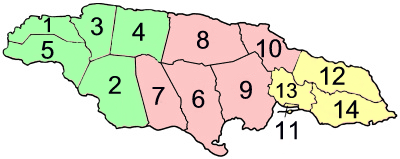
Administratively the island is divided into three historic counties and fourteen parishes. Major towns include Kingston and Montego Bay, and several natural and cultural sites have international recognition. The island's strategic location in the Caribbean places it about 140 kilometres south of Cuba and roughly 190 kilometres west of Hispaniola, linking it historically and economically with its neighbours. For a regional overview see the Greater Antilles.
- Counties: Cornwall, Middlesex, Surrey (historical divisions).
- Parishes: Kingston, St. Andrew, St. Catherine, Clarendon, Manchester, St. Elizabeth, Westmoreland, Hanover, St. James, Trelawny, St. Ann, St. Mary, Portland, St. Thomas.
- Notable: Birthplace of reggae and important athletic traditions; landscapes range from coral reefs to high mountain forests.
Questions and answers
Q: Where is Jamaica located?
A: Jamaica is an island country in the Caribbean, part of the Greater Antilles, located about 140 kilometers south of Cuba and 191 kilometers west of Hispaniola.
Q: What is the capital city of Jamaica?
A: The capital city of Jamaica is Kingston.
Q: What are some other towns in Jamaica?
A: Other towns in Jamaica include Montego Bay, St. Ann's Bay, and Spanish Town.
Q: How is Jamaica divided?
A: Jamaica is divided into three counties – Cornwall, Middlesex, and Surrey – which are subdivided into 14 parishes.
Q: What is the Taíno name for Jamaica?
A: The Taíno name for Jamaica is Xaymaca, which means "Land of Springs".
Q: What is the size of Jamaica?
A: Jamaica is 10,990 square kilometers (4,240 sq mi) in area, making it the third-largest island country in the Greater Antilles.
Q: What is Jamaica's relation to the West Indies?
A: Jamaica is part of the West Indies.
Related articles
Author
AlegsaOnline.com Jamaica: Caribbean island nation — geography, history, and culture Leandro Alegsa
URL: https://en.alegsaonline.com/art/49160
Sources
- cia.gov : The CIA World Factbook – Jamaica
- esa.un.org : "World Population Prospects: The 2017 Revision"
- imf.org : "Jamaica"
- data.worldbank.org : "Gini Index"
- cia.gov : "Country Comparison: Distribution 0f Family Income – Gini Index"
- hdr.undp.org : "2015 Human Development Report"
- uctp.org : "Taíno Dictionary" · web.archive.org
- jamaicans.com : "The Taino of Jamaica (Jamaica)"
- jnht.com : "Jamaica History: Columbian/Spanish"
- jis.gov.jm : "Government of Jamaica - History of Jamaica"
- jnht.com : "Spanish Town"
- oll.libertyfund.org : Narrative of the Expedition to San Domingo
- eoearth.org : "Jamaica"