
Cuba: Geography, History, Culture and Contemporary Society
Cuba is a Caribbean archipelago centered on the island of Cuba, known for its colonial history, 20th‑century revolution, Spanish language, rich cultural traditions, and distinctive political and economic model.
Overview
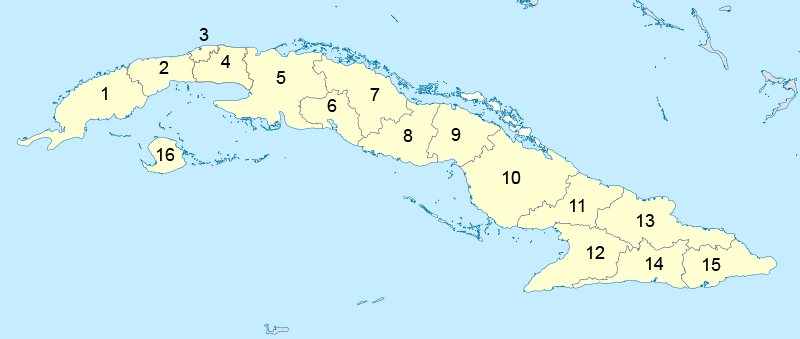
Cuba is an island nation in the Caribbean Sea composed of the main island of Cuba, the Isla de la Juventud and many smaller cays and islets. Its capital and largest city is Havana (Spanish: La Habana); other major urban centers include Santiago de Cuba. The island lies close to the southeastern United States (United States) and near Mexico, Haiti, Jamaica and the Bahamas.
Image gallery
10 Images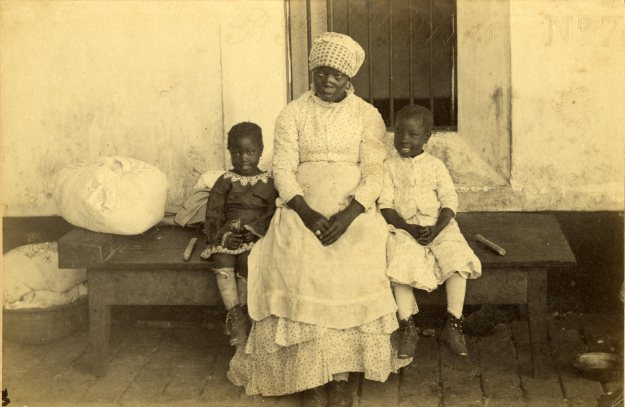




Geography and climate
Cuba is the largest landmass in the Caribbean archipelago and features a mix of coastal plains, rolling hills and low mountain ranges. The climate is tropical, with warm temperatures year-round, a wet season and a dry season, and vulnerability to tropical storms and hurricanes. Coastal and marine environments support coral reefs, mangroves and important fisheries.
Historical outline
Before European arrival, the islands were inhabited by indigenous peoples. In 1492 explorers led by Christopher Columbus reached the island, and Cuba became part of the Spanish overseas empire for several centuries. Following the Spanish–American War (1898) Spain’s control ended and the island underwent a period of heavy American influence, gaining formal independence in the early twentieth century while remaining closely tied to the United States.
In 1959 a revolutionary movement led by Fidel Castro and Che Guevara ousted the government of Fulgencio Batista. The new regime adopted socialist policies, drew closer to the Soviet Union, and consolidated power under a single party system. A failed invasion sponsored by opponents and backed by elements of the United States is often referred to in discussions of the early 1960s (Bay of Pigs). The Communist Party of Cuba (PCC) was formalized and has remained the island’s central political force.
Government, economy and society
Cuba has been governed under a socialist framework since the revolution, with state direction of many sectors of the economy. The country places emphasis on universal health care and education, and its social programs and human development indicators are widely discussed alongside economic challenges. Tourism, agriculture, medical services, remittances from abroad and cultural exports are important to the contemporary economy. Cuba also navigates long-standing diplomatic and trade tensions arising from historic policies of the United States and shifting international alignments following the collapse of the Soviet Union.
Culture and identity
The official language is Spanish. Cuban culture reflects a blend of Spanish, African and indigenous influences visible in music (son, rumba, salsa), dance, literature, visual arts and religion (including Afro‑Cuban traditions such as Santería). Baseball is a popular sport; cigars, rum and distinctive architectural styles are recognizable cultural exports. Cuban emigration has created vibrant diaspora communities that influence the island socially and economically.
Notable facts and distinctions
- Cuba is the largest island nation in the Caribbean and an archipelago of many smaller islands and keys.
- It has a long colonial history under Spain before a twentieth‑century period of formal independence and heavy foreign influence.
- Since 1959 it has been governed by a socialist system associated historically with the Soviet Union and, today, remains one of the few socialist states outside Asia (global context) in the Caribbean and the western hemisphere.
For readers seeking general background or specific topics—geography, colonial history, the 1959 revolution, culture, or current affairs—scholarly histories and contemporary analyses provide deeper coverage. This article is a concise introduction to Cuba’s geography, historical turning points, cultural life and ongoing social and economic dynamics.
Questions and answers
Q: What is the capital of Cuba?
A: The capital of Cuba is Havana. In Spanish, it is called "La Habana".
Q: What language do people in Cuba speak?
A: People in Cuba speak Spanish as their official language.
Q: Who discovered Cuba?
A: Christopher Columbus discovered Cuba in 1492.
Q: When did Cuba become independent from Spain?
A: After the Spanish-American War of 1898, Cuba became an independent country in 1902.
Q: Who led the Cuban Revolution?
A: The Cuban Revolution was led by Fidel Castro and Che Guevara.
Q: How did the US respond to Castro's socialist government?
A: The US attempted to invade Cuba to overthrow its communist-led government but failed.
Q: What type of government does Cuba have today?
A: Today, Cuba has a Communist Party-led government which has been ruling since 1965.
Related articles
Author
AlegsaOnline.com Cuba: Geography, History, Culture and Contemporary Society Leandro Alegsa
URL: https://en.alegsaonline.com/art/24511
Sources
- commons.wikimedia.org : Cuba
- en.wikivoyage.org : Cuba
- bc.gov.cu : "Cuban Peso Bills"
- mipais.cuba.cu : "National symbols"
- one.cu : Anuario Estadístico de Cuba 2010
- cia.gov : "CIA - The World Factbook -- Cuba"
- hdr.undp.org : "- Human Development Reports"
- web.stanford.edu : "Cuba no longer the Sugar Bowl of the World 10.02.03"
- hsph.harvard.edu : Harvard Public Health Review/Summer 2002
- cia.gov : "CIA World Factbook"
- independent.co.uk : "Latin lessons: What can we Learn from the World's most Ambitious Literacy Campaign?"
- mdgs.un.org : "unstats | Millennium Indicators"
- assets.panda.org : "Living Planet Report 2006"
- wikidata.org : wikidata.org/wiki/Q241
- catalogue.bnf.fr : cb118684677