
Seagrass (marine flowering plants)
Seagrasses are marine flowering plants that form underwater meadows on continental shelves. They stabilize sediment, sequester carbon, provide habitat and food for many animals, and face threats from pollution and habitat loss.
Overview
Seagrasses are true flowering plants that have returned to the sea. They belong to a small number of families within the order Alismatales and are monocotyledons adapted to life in fully marine, often highly saline environments. Unlike seaweeds, which are algae, seagrasses have roots, stems (rhizomes) and flowers, and they complete their whole life cycle underwater.
Image gallery
10 Images


Characteristics and biology
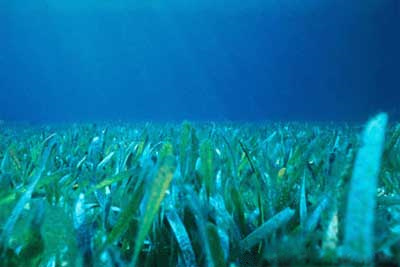
Seagrass species form dense beds or meadows on soft sediments of continental shelves and shallow bays. They have strap-like leaves that grow from horizontal rhizomes, and their roots stabilize sediment. These plants perform photosynthesis and oxygenate the water around them. Many seagrasses produce tiny flowers and fruits; reproduction occurs both sexually, by seeds, and asexually by vegetative spread along rhizomes.
Distribution, habitats and geological role
Seagrasses occupy shallow, light-penetrated parts of the coastal ocean and are important components of continental shelf ecosystems. They can be dominant in subtropical and temperate regions and contribute to coastal carbonate dynamics: primary producers and epiphytic organisms on seagrass blades help form carbonate sediment. Notable regions with extensive seagrass meadows include areas such as Florida Bay and waters around Bermuda, though beds occur worldwide wherever conditions of light, depth and substrate allow.
Ecological importance and services
Seagrass meadows provide multiple ecosystem services: they stabilize shorelines, trap and bind sediments, improve water clarity, act as nursery grounds for fish and invertebrates, and sequester organic carbon in their sediments. Their productivity supports complex communities and they interact with other coastal habitats such as mangroves and tidal marshes to sustain coastal biodiversity.
- Shoreline protection and sediment stabilization
- Nursery and refuge for juvenile fish and invertebrates
- Carbon sequestration and nutrient cycling
- Water quality improvement through particle trapping
Food web role and typical consumers
Seagrass beds sustain a wide range of grazers and detritivores. Many species across different phyla feed on seagrass or on the epiphytes that grow on its leaves. Seagrass herbivory is a significant transfer of energy in coastal food chains, connecting primary producers to larger animals and humans.
- Dugongs and large herbivorous marine mammals
- Manatees and green turtles (Chelonia mydas)
- Various fish species, waterfowl and invertebrates such as sea urchins and crabs
Adaptations, threats and conservation
Seagrasses are adapted to continual submersion, with pollen and seeds that can disperse in water and leaves suited to currents. They are sensitive to light reduction and water quality decline. Major threats include coastal development, dredging, eutrophication, boat propeller scarring and climate-related changes such as warming and increased storminess. Disease outbreaks and invasive species have also reduced beds in some regions. Conservation measures emphasize protection of water quality, careful coastal planning, restoration of damaged meadows and monitoring of populations.
Notable facts
Seagrass meadows are hotspots of biodiversity and key elements of coastal resilience. Small calcifying algae and epiphytes that live on seagrass blades, such as the red alga Melobesia, can produce chalky carbonate as a metabolic by-product, contributing to local sediment formation. Because of their ecological functions and carbon storage ability, seagrasses are increasingly recognized in coastal management and blue carbon strategies.
For more technical background and regional information, consult specialized resources and management guides provided by local authorities and scientific organizations. External resources and further reading are available on plant biology, on Alismatales, and via marine habitat portals linked to monocot studies and marine ecology. Additional links: salinity, habitats, continental shelf, ecosystem, carbonate, sediment, Florida Bay, Bermuda, species lists, herbivory studies, food webs, dugongs, manatees, sea urchins, crabs.
Related articles
Author
AlegsaOnline.com Seagrass (marine flowering plants) Leandro Alegsa
URL: https://en.alegsaonline.com/art/88262