
Sediment: deposition, composition and geological significance
Sediment is loose material deposited by water, wind, ice or gravity. This article describes composition, transport, depositional environments, diagenesis, sedimentary structures and practical importance.
Overview
Sediment is unconsolidated particulate material — mineral grains, rock fragments, and organic debris — that accumulates on land, in lakes, rivers and the sea. It forms when weathering and erosion break down rocks or biological material, and the fragments are moved by agents such as water, wind, ice or gravity until they are deposited. For introductions to how and where particles settle, see deposition processes.
Image gallery
10 Images




Composition and classification
Sediments are commonly classified by grain size and origin. Grain-size terms in general use include clay, silt, sand and gravel; these sizes largely control transport behavior and permeability. By origin, sediments are described as:
- Clastic: composed of fragments of preexisting rocks (for example, sand and mud).
- Chemical: formed by precipitation of minerals from solution (for example, evaporites and some carbonate deposits).
- Biogenic: made of accumulated remains of organisms (for example, shell beds, peat).
Transport and depositional environments
Transport mechanisms determine where sediment is deposited. Moving water (rivers, tides, waves), wind (aeolian systems), glaciers and gravity all carry particles of different sizes and deposit them when the transporting energy drops. Common depositional settings include river channels and floodplains, deltas, beaches and continental shelves, lakes, deserts and glacial tills. For discussions of wind and water transport and typical environments, consult resources on wind and water transport and depositional environments.
Sedimentary structures and records
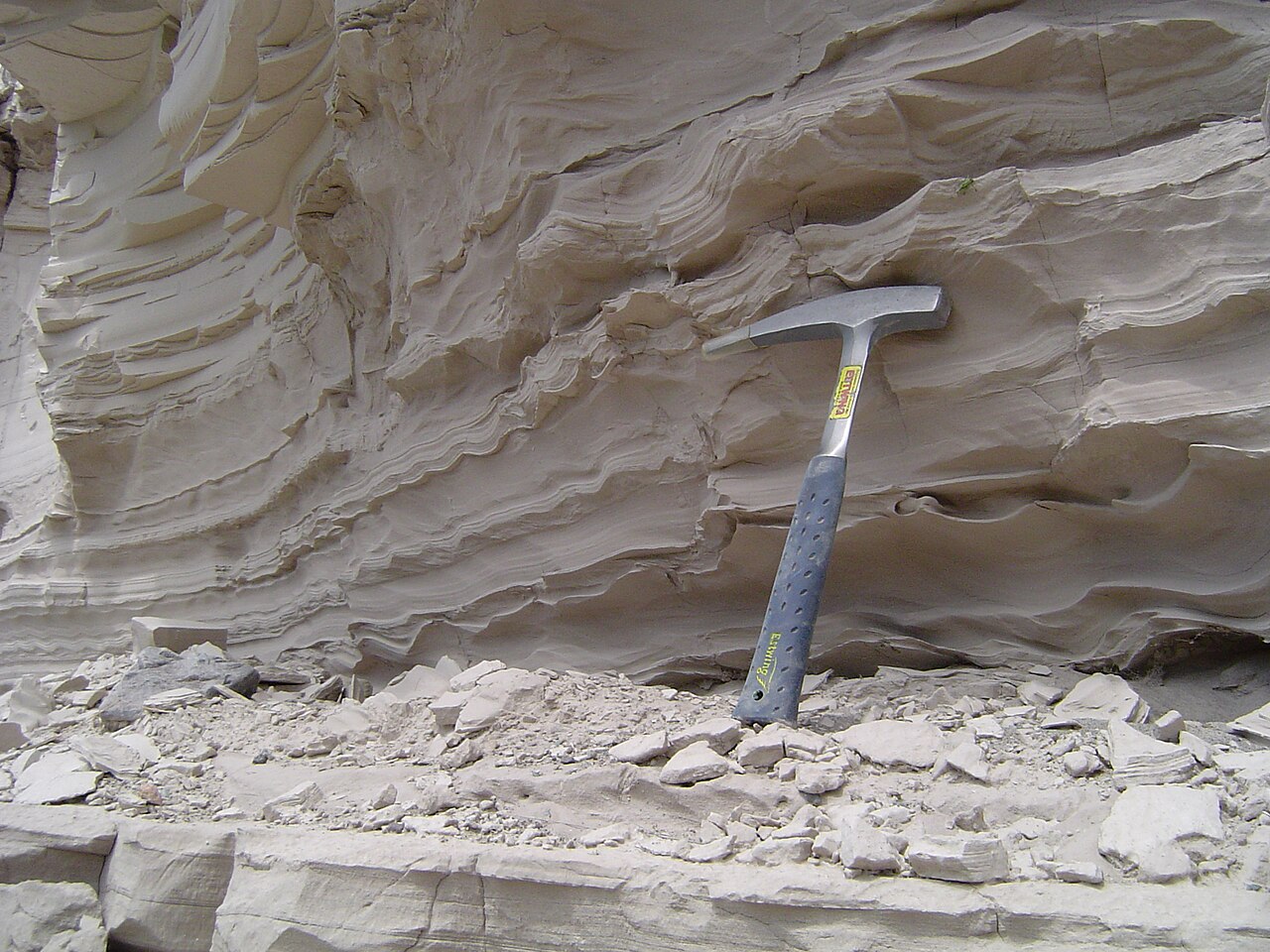
Sediments often display structures formed during or shortly after deposition. Examples are bedding and lamination, cross-bedding in dunes, ripple marks in shallow water, and graded bedding from settling in turbidity currents. These features, together with fossil content and geochemical signals, make sediments important archives of past climates, sea-level change, and biological activity. The scientific study of these processes and records is called sedimentology.
Burial, diagenesis and rock formation
Once buried beneath younger layers, sediments are subject to compaction and chemical alteration. Mineral growth and cementation can bind grains together in a process called lithification, turning loose sediment into sedimentary rock. The combined physical and chemical changes occurring after deposition are described as diagenesis; more information on transformation to rock appears in many guides to sedimentary rock formation.
Economic, environmental and practical importance
Sediments are economically significant as aquifer host materials and as reservoirs for oil and gas. They supply construction aggregates (sand, gravel), fertile soils, and raw materials such as industrial minerals. Environmentally, sediment transport influences water quality, coastal stability and habitat distribution. Because sediments preserve records of past environments, they are key to archaeology, paleoclimatology and environmental reconstruction.
Study methods and everyday meaning
Fields methods include mapping, coring, and sampling; laboratory techniques include grain-size analysis, petrography, geochemistry and dating methods. In everyday usage, the word "sediment" can mean any material that settles to the bottom of a liquid. Simple demonstrations and explanations of particulate settling are common in teaching materials on sediment in liquids, and familiar examples include deposits seen in bottled drinks or natural waters and the particulate residue sometimes present in beer (see common examples). For further reading, introductory textbooks and field guides in sedimentology are recommended.
Questions and answers
Q: What is sediment?
A: Sediment is made up of small particles that are deposited in water or on land.
Q: How long can sediments stay in their new place?
A: Sediments can stay in their new place for a long time.
Q: What can transform sediment into sedimentary rocks?
A: Pressure can slowly transform sediment into sedimentary rocks.
Q: What is sedimentology?
A: Sedimentology is the study of how sedimentary rocks are formed.
Q: What other material can be referred to as sediment?
A: Material transported by wind or water and deposited on the surface can also be referred to as sediment.
Q: What happens to sediments after they are deposited in a new place?
A: Sediments often get eroded again and deposited in a new place.
Q: What is the more general use of the word sediment?
A: The more general use of the word sediment refers to any matter that falls to the bottom of a liquid, such as beer.
Related articles
Author
AlegsaOnline.com Sediment: deposition, composition and geological significance Leandro Alegsa
URL: https://en.alegsaonline.com/art/88516