
Continental shelf: definition, formation, ecology and legal importance
The continental shelf is the submerged margin of a continent. This article covers its physical form, geological origins, ecology, resources, human uses and legal status under maritime law.
The continental shelf is the shallow, submerged margin of a continental landmass that extends seaward from the shoreline to a distinct change in slope known as the shelf break. In essence it is the underwater continuation of the continent, typically characterised by gentle gradients, abundant sediments and a depth range much less than the open ocean. Shelves form important interfaces between terrestrial and deep‑water environments, supporting diverse ecosystems and human uses.
Image gallery
10 Images





Physical characteristics and components
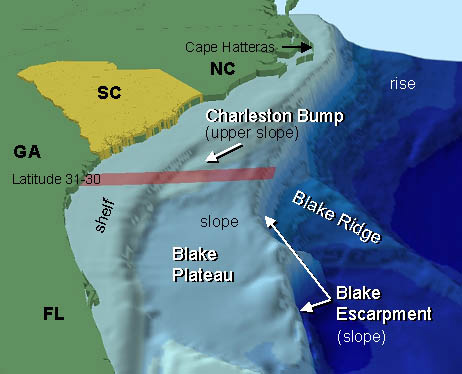
A continental margin commonly comprises three main parts: the shelf, the continental slope and the continental rise. The shelf is relatively flat and shallow compared with deeper ocean basins and commonly collects sediments derived from rivers, coastal erosion and biological activity. The outer edge of the shelf is marked by the shelf break, beyond which the seafloor descends more steeply to the abyssal plain. Shelf widths vary widely — from only a few kilometres on active, tectonically convergent coasts to more than a thousand kilometres on passive margins — and the shelf break is often found near depths of order 200 metres, although local values vary.
Formation and geological history
Continental shelves develop through a combination of tectonic setting, sediment supply and changes in sea level. On passive margins, long periods of subsidence and steady sedimentation produce wide, gently sloping shelves. On active margins, where plates converge or slide, shelves tend to be narrow or absent. Repeated glacial cycles have exposed and submerged shelves: during glacial maxima large volumes of water were locked in ice and sea level fell, turning parts of the modern shelf into dry land; in warmer interglacials those areas became inundated again. Studies of submerged terraces, submarine canyons and sediment cores record these dynamic histories and the timing of past sea‑level changes such as the most recent ice ages.
Ecology, resources and human uses
Because sunlight penetrates to much of the shelf area, these zones are among the most biologically productive parts of the ocean. Phytoplankton, seagrasses, kelp forests and benthic communities support rich food webs and a large proportion of the world’s fisheries. Continental shelves also host valuable resources: hydrocarbons in sedimentary basins, placer and seabed mineral deposits, and aggregates used for construction. They are accessible locations for shipping lanes, ports and offshore infrastructure, and they contain archaeological sites where former coastal settlements and migration routes are now submerged; in some respects submerged banks and shoals resemble isolated island-like features.
Legal and geopolitical significance
Under the United Nations Convention on the Law of the Sea (UNCLOS) coastal states have sovereign rights to explore and exploit the natural resources of their adjacent continental shelf. States are granted an exclusive economic zone (EEZ) out to 200 nautical miles from baselines, and there are procedures to substantiate claims for an extended continental shelf beyond that limit on the basis of geological and geophysical evidence. Disputes can arise where shelves and resources extend between neighbouring states or across polar regions.
Research, management and environmental concerns
Modern study of continental shelves uses bathymetric mapping, seismic reflection, sediment coring and biological surveys to understand structure, resources and habitats. Management challenges include overfishing, habitat loss from trawling and dredging, pollution from land and sea, risks from offshore drilling and the implications of climate change. In polar shelves, warming and changing sea ice can alter sediment dynamics and release carbon or methane stored in sediments, with potential ecosystem and climate feedbacks. Sustainable management requires integrated coastal and marine planning, protected areas and international cooperation.
- Key features: shelf, shelf break, slope, rise.
- Main controls: tectonic margin type, sediment supply, sea‑level history.
- Common uses: fisheries, hydrocarbons, minerals, shipping and archaeological research.
- Examples: the broad Siberian shelf of the Arctic Ocean is an extreme passive‑margin shelf; see also the Siberian regional descriptions for detailed study of Arctic shelves.
Continental shelves therefore play a central role in Earth systems, human economies and coastal cultures. Their study combines geology, oceanography, biology and law to inform conservation and sustainable use.
Questions and answers
Q: What is a continental shelf?
A: A continental shelf is the submerged part of a continent.
Q: Was the continental shelf always below the water?
A: No, the continental shelf was part of the land during the ice ages in the glacial periods, but under water in the interglacial periods.
Q: What is the depth of the continental shelf?
A: The depth of the continental shelf varies greatly, up to 140 metres deep.
Q: What lies beyond the continental shelf?
A: Beyond the continental shelf, the bottom goes down to much greater depths.
Q: How does the width of the continental shelf vary?
A: The width of the continental shelf varies greatly depending on the edge of the moving continental plate. At the leading edge of a moving continental plate there will be little or no shelf, while the widest shelf is the Siberian shelf in the Arctic Ocean, which is 1500 km (930 miles) in width.
Q: In which period are we currently living?
A: We are currently living in an interglacial period
Q: Is every continent surrounded by water?
A: Every continent is surrounded by water, but it can be seen as an island where most of it is above the water line, and we see it as a continent.
Tags
Related articles
Author
AlegsaOnline.com Continental shelf: definition, formation, ecology and legal importance Leandro Alegsa
URL: https://en.alegsaonline.com/art/22773
Sources
- palaeos.com : palaeos.com