
Dugong (Dugong dugon)
A marine herbivore of warm coastal waters, the dugong is a slow-moving sea mammal that feeds on seagrass and is closely related to manatees and elephants. This article covers appearance, behavior, distribution, and conservation.
Overview
The dugong (Dugong dugon) is a fully aquatic marine mammal that spends its entire life in shallow seas. Often called a "sea cow," it is a specialised grazer that feeds almost exclusively on seagrass beds. Dugongs are long-lived, slow-moving animals whose ecology and life history are tightly linked to coastal habitats in tropical and subtropical regions.
Image gallery
10 Images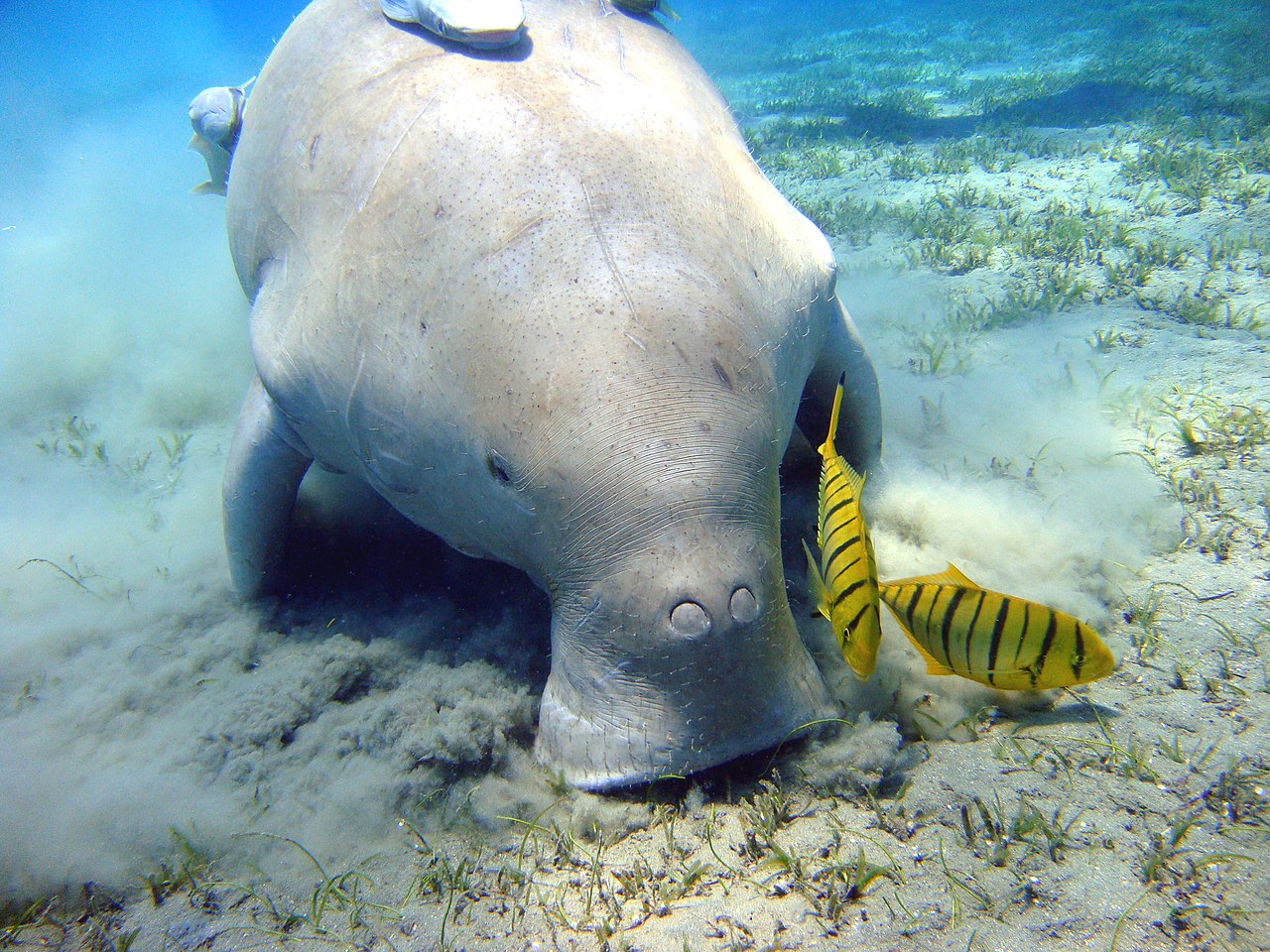


Physical characteristics
Dugongs have a fusiform, whale-like body with paired forelimbs that act as flippers and a horizontal tail fluke. Their skin ranges from grey to brown and may show algae, scars, or barnacles. Adults commonly reach about 3 m (10 ft) in length and can weigh up to 400 kg (882 lb), though size varies with region. Their skull and dentition reflect a herbivorous diet: downturned, broad snouts and a set of cheek teeth adapted for cropping and processing seagrass. Unlike many fishes, dugongs lack a dorsal fin (dorsal), but possess a tail with well-developed flukes.
Taxonomy and relatives
Belonging to the order Sirenia, dugongs are more closely related to terrestrial mammals such as elephants than to fishes. Their nearest living aquatic relatives are the manatees; the West African and American manatees share many traits but typically inhabit fresh or brackish waters (manatee). Evolutionary adaptations for an aquatic herbivore—such as reduced hind limbs and dense bones—reflect a long history of marine specialization.
Range, habitat and movement
Dugongs occupy warm, shallow coastal waters where seagrass beds are abundant. Their distribution includes the northern coast of Australia (north coast of Australia), parts of the Indian Ocean, and scattered populations across the Pacific Ocean. They generally prefer depths where sunlight reaches the seafloor and seagrass grows. Dugongs are considered migratory to the extent that they may travel between feeding and breeding areas or in response to seasonal changes. Many individuals show localized movements under 15 km, but some monitored animals have moved several hundred kilometres. For example, studies show many travel less than 15 km (9 mi) while others travel much farther when following food supplies or during mating-related movements.
Behaviour and life cycle
Dugongs surface to breathe and usually remain submerged for several minutes between breaths. Mothers nurse calves, which are typically called calves, until about two years of age; juveniles attain adult size over several years and reach sexual maturity around 9–17 years in many populations. Lifespan in the wild can extend several decades. Social structure is generally loose: animals may forage alone or in small groups, with larger aggregations forming near rich feeding grounds.
Predators, threats and conservation
Natural predators include large sharks and occasional attacks by large marine predators such as saltwater crocodiles and killer whales, though predation is relatively rare. Human-caused threats are the principal concern: habitat loss from coastal development and seagrass degradation, entanglement in fishing gear, vessel strikes, and illegal hunting have caused declines in many parts of the range. Conservation actions include protection of seagrass habitats, boat-speed restrictions in dugong areas, bycatch mitigation, and legal protection under national and international frameworks. Research and monitoring continue to refine knowledge of population trends and critical habitats.
Importance and distinctions
- Ecological role: As dominant seagrass grazers, dugongs help maintain the health and diversity of seagrass ecosystems.
- Distinct from manatees: While similar in appearance and diet, dugongs are more strictly marine and have a fluked tail, whereas most manatees have paddle-shaped tails.
- Human connections: Dugongs feature in coastal cultural traditions, and their presence can indicate healthy coastal environments.
For further general information and resources about dugong biology, distribution and conservation, see regional marine mammal guides and conservation organisations (general reference, Australia, Indian Ocean region, Pacific region).
Notable anchors and references in scientific and conservation literature use satellite tracking and aerial surveys to map dugong movements and identify priority seagrass habitats, contributing to management measures that aim to balance coastal development with the long-term survival of these unique marine herbivores.
Primary natural threats occasionally recorded include predation by large sharks and encounters with large predators, while movement behaviour and population structure are influenced by environmental variability and human impacts.
Questions and answers
Q: What is a dugong?
A: The dugong (Dugong dugon) is a large mammal that lives its whole life in the sea. They are sometimes called "sea cows" as they eat large amounts of sea grass.
Q: Where do dugongs live?
A: Dugongs live in warm, shallow areas where the sea grass grows. This area includes the north coast of Australia, and in other countries in the Indian Ocean and the Pacific Ocean.
Q: How big can a dugong grow to be?
A: The dugong can grow to about 3 m (10 ft) long and weigh as much as 400 kg (882 lb).
Q: What is a baby dugong called?
A: A baby dugong is called a calf. It drinks milk from its mother until about two years old.
Q: How long does it take for a dugong to reach adult size?
A: A dugong reaches its adult size between the ages of 9 and 17 years.
Q: How long can a Dugong live for?
A: The Dugong can live for up to 70 years of age.
Q: What animals attack Dugongs?
A: Because of their size, the only other species to attack Dugongs are sharks, Saltwater Crocodiles and Killer Whales.
Related articles
Author
AlegsaOnline.com Dugong (Dugong dugon) Leandro Alegsa
URL: https://en.alegsaonline.com/art/29148
Sources
- iucnredlist.org : "Dugong dugon"
- environment.gov.au : "Dugongs"
- gbrmpa.gov.au : "Dugong Biology and Life History"
- australianmuseum.net.au : "Dugong"
- gbrmpa.gov.au : "Dugong Movements"