
Seed (botany): structure, germination, and ecological importance
A seed is the reproductive unit of seed plants, containing an embryo, stored nutrients and a protective coat. Seeds enable dormancy, dispersal and germination and are central to ecosystems, agriculture and conservation.
A seed is the unit produced by seed plants that can develop into a new individual. It is a specialised reproductive structure that protects and nourishes an embryo (embryo) until conditions allow growth. A typical seed contains three basic parts: the embryo, a supply of stored nutrients, and a protective seed coat. These features allow the young plant to survive periods of environmental stress and to disperse away from the parent plant.
Image gallery
10 Images


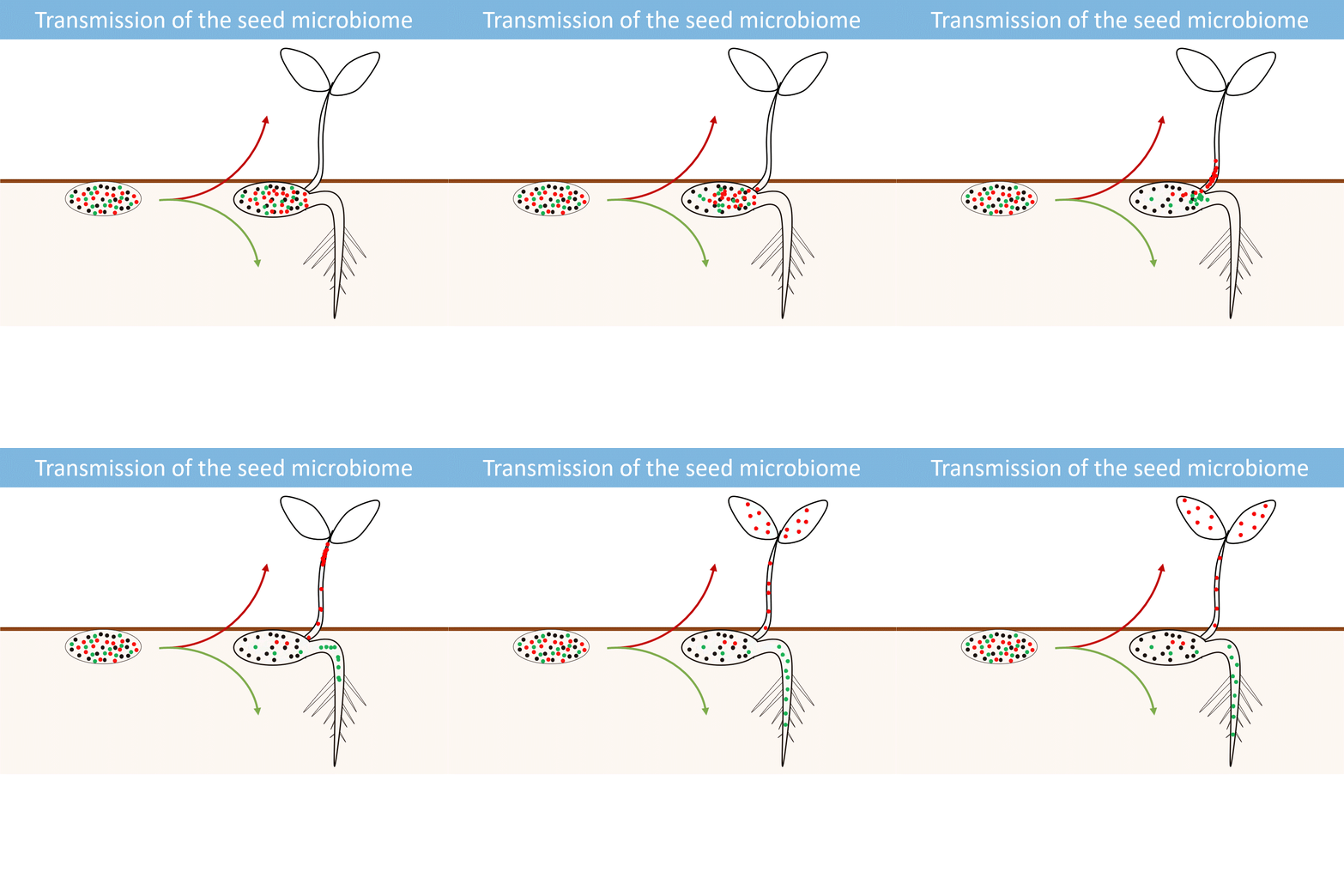
Structure and anatomy
Most seeds have an outer coat, often called the testa, which reduces desiccation and mechanical damage. Inside lies the embryo, the miniature plant with embryonic root and shoot. Nutrient reserves are supplied either by an endosperm surrounding the embryo or by the seed leaves, the cotyledons, which may store starch, oils or proteins. The relative development of these tissues varies among species and determines such features as seed size, texture and longevity.
Development and maturation
Seeds develop from fertilised ovules following pollination. During maturation the embryo differentiates, reserves accumulate and the seed coat forms. Mature seeds commonly enter a dormant state in which metabolic activity is reduced. Dormancy prevents germination during temporarily favourable conditions that would not support subsequent growth.
Types and adaptations
Seed size and form are highly diverse. Many plants produce numerous small seeds that disperse easily by wind or water; others produce fewer, larger seeds with greater nutrient stores. The coconut (coconut) is an example of a large, buoyant seed adapted for ocean dispersal and is often compared in size to a child's head. Some seeds are dry and hard, while others are fleshy and remain enclosed within fruits, aiding animal dispersal.
Dormancy and germination
Seed dormancy is the condition that prevents germination even when environmental conditions appear suitable; it is a common strategy to avoid germination at the wrong season. Dormancy may be imposed by the seed coat, by immature embryos, or by physiological inhibitors. Germination begins when dormancy is broken and the seed imbibes water, takes up oxygen and senses appropriate temperature and sometimes light. The embryo then resumes growth and develops into a seedling, using stored food until leaves enable photosynthesis.
Dispersal and ecological roles
Seeds are principal agents of plant dispersal and colonisation. Dispersal mechanisms include wind, water, attachment to animals, internal transport via ingestion, ballistic ejection and human movement. Adaptations such as wings, hairs, buoyant structures and fleshy tissues facilitate these modes. Seeds form key components of food webs: many animals eat seeds, and human societies rely heavily on plant seeds as staples.
Agricultural and human importance
Seeds are central to agriculture and food security. Cereals and grains such as grain crops—including rice, wheat and maize—are harvested seeds that provide calories and nutrients for much of the human population. Seeds are also sources of oils, fibres, medicines and ornamentals. Understanding seed biology underpins crop breeding, storage and processing.
Conservation and storage
Because seeds can remain viable for extended periods under appropriate conditions, they are used in conservation through seed banks and living collections. Storage protocols depend on seed type and may require drying and low-temperature storage to maximise longevity. Conservation efforts use seeds for habitat restoration and to preserve genetic diversity.
Summary features
- Embryo: the young plant inside the seed (embryo).
- Food reserves: stored in endosperm or cotyledons to support early growth.
- Protective coat: reduces water loss and protects against microbes and predators.
- Dispersal: by wind, water (e.g. coconut), animals (animals), or mechanical means; many seeds occur within fruits.
- Human uses: major food sources include grain crops such as rice, wheat and maize.
Seeds enable plants to survive variable environments, disperse across landscapes and sustain ecosystems and human economies. Their study spans botany, ecology, agriculture and conservation biology and remains central to addressing food security and biodiversity challenges.
Questions and answers
Q: What is a seed?
A: A seed is the part of a seed plant which can grow into a new plant. It is a reproductive structure which disperses, and can survive for some time.
Q: What are the three basic parts of a typical seed?
A: The three basic parts of a typical seed are an embryo, a supply of nutrients for the embryo, and a seed coat.
Q: Do all plants make the same number of seeds?
A: No, some plants make a lot of seeds, while others make only a few.
Q: What is the endosperm?
A: The endosperm is the food store in a seed that helps the new plant begin to grow.
Q: Are seeds good food for animals and people?
A: Yes, many kinds of seeds are good food for animals and people. The many kinds of grain that people grow, such as rice, wheat, and maize, are all seeds.
Q: What do seeds need to start developing?
A: When the seed is ready to develop, it needs water, air and warmth but not sunlight to become a seedling.
Q: Can seeds be found outside of fruits?
A: Yes, while seeds are often inside fruits, they can also be found in other parts of the plant.
Related articles
Author
AlegsaOnline.com Seed (botany): structure, germination, and ecological importance Leandro Alegsa
URL: https://en.alegsaonline.com/art/88534
Sources
- news.nationalgeographic.com : 2,000-Year-Old Seed sprouts, sapling is thriving
- commons.wikimedia.org : Seed