
Manatee
Manatees are slow-moving, fully aquatic mammals of the order Sirenia (genus Trichechus). They graze on seagrass and freshwater vegetation and are protected for their ecological role and conservation status.
Overview
Manatees are large, fully aquatic marine mammals in the order Sirenia. Belonging to the genus Trichechus, there are three widely recognized species: the West Indian, the Amazonian and the West African manatee. They are herbivores that feed on seagrasses and other aquatic plants, and they are often called "sea cows" because of their grazing habits and slow movements.
Image gallery
10 Images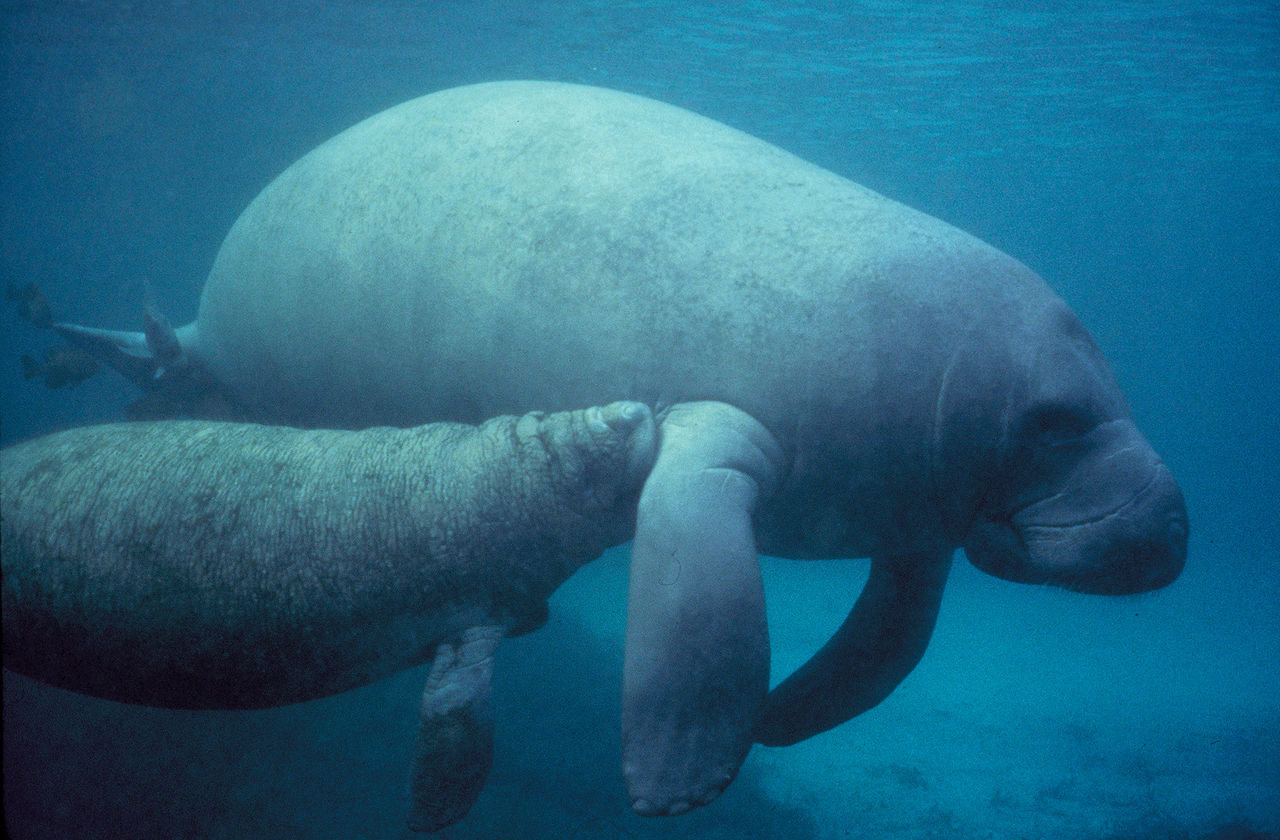


Physical characteristics
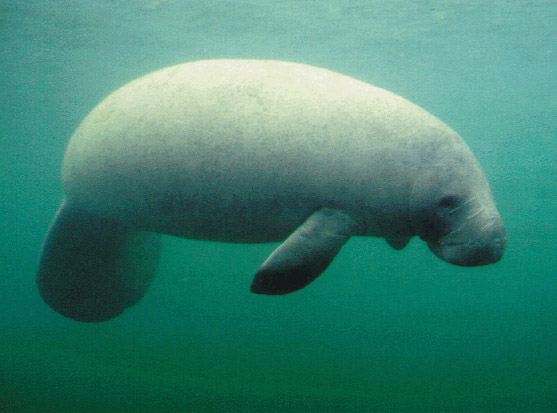
Manatees are robust, paddle‑tailed mammals with a rounded body, forelimbs modified into flippers and a broad, flat tail. Their skin is thick and sparse-haired, and their faces have stiff whiskers (vibrissae) used to sense food and substrates. Adult sizes vary by species but they can weigh several hundred kilograms and reach lengths of several metres. Manatees breathe air at the surface and can stay submerged for several minutes when resting.
Habitat, diet and behaviour
These animals inhabit coastal shallow waters, estuaries and freshwater rivers in tropical and subtropical regions. They feed primarily on a variety of aquatic vegetation and play an important role in maintaining healthy seagrass beds. Manatees are generally solitary or found in small groups; they move slowly but can make short bursts of speed if necessary. They tolerate both salt and fresh water and often migrate seasonally to warmer areas.
History, name and relationships
The English name "manatee" derives from Spanish manatí, itself historically traced to an Arawakan or Carib word thought to mean breast, a reference to the animal's mammary glands or to how mothers carry calves. Manatees are closely related to dugongs and to several extinct sirenians such as Steller's sea cow.
Conservation and importance
Manatees face threats from boat strikes, habitat loss, entanglement in fishing gear, cold stress and harmful algal blooms. Conservation efforts include speed restrictions for boats, habitat protection, rescue and rehabilitation programs, and public education. As grazers, manatees help shape coastal plant communities and support ecological balance; they also have value for ecotourism and as charismatic species drawing attention to aquatic conservation.
For general information on classification and mammals see mammals, on Sirenia overview see Sirenia resources, and for further reading consult regional guides or conservation organizations: status notes, habitat summaries, and genus details.
Questions and answers
Q: What are manatees?
A: Manatees are large, fully-aquatic marine mammals of the order Sirenia, also known as sea cows.
Q: How many species of manatees are there?
A: There are three manatee species.
Q: What is the genus name for manatees?
A: The genus name for manatees is Trichechus.
Q: Where does the name "manatee" come from?
A: The name "manatee" comes from the Spanish word "manatí", which itself comes from a Carib word meaning "breast".
Q: Why are manatees sometimes known as sea cows?
A: Manatees are sometimes known as sea cows due to their herbivorous diet and slow, gentle movements that resemble those of cows.
Q: Are manatees aquatic or land animals?
A: Manatees are aquatic animals and spend their entire lives in the water.
Q: What order do manatees belong to?
A: Manatees belong to the order Sirenia.
Related articles
Author
AlegsaOnline.com Manatee Leandro Alegsa
URL: https://en.alegsaonline.com/art/61186