
Seed dispersal: mechanisms, history, and ecological importance
Comprehensive overview of seed dispersal: main mechanisms, evolutionary history, ecological roles, research methods, and conservation implications, with examples and links to related concepts.
Overview
Seed dispersal is the suite of processes that move a plant's diaspores (seeds and sometimes associated fruit structures) away from the parent to new sites where they may germinate and grow. Dispersal reduces sibling and parent–offspring competition, increases colonization opportunities, enhances gene flow, and buffers populations against local disturbance. Because adult plants are immobile, natural selection has produced a wide range of morphological, chemical and phenological traits that influence how, when and where propagules move.
Image gallery
10 Images




Major mechanisms and adaptations
Agents of movement fall into broad categories: abiotic vectors such as wind and water, biotic vectors including vertebrates and invertebrates, and intrinsic mechanical means like ballistic release. Each vector is associated with characteristic adaptations.
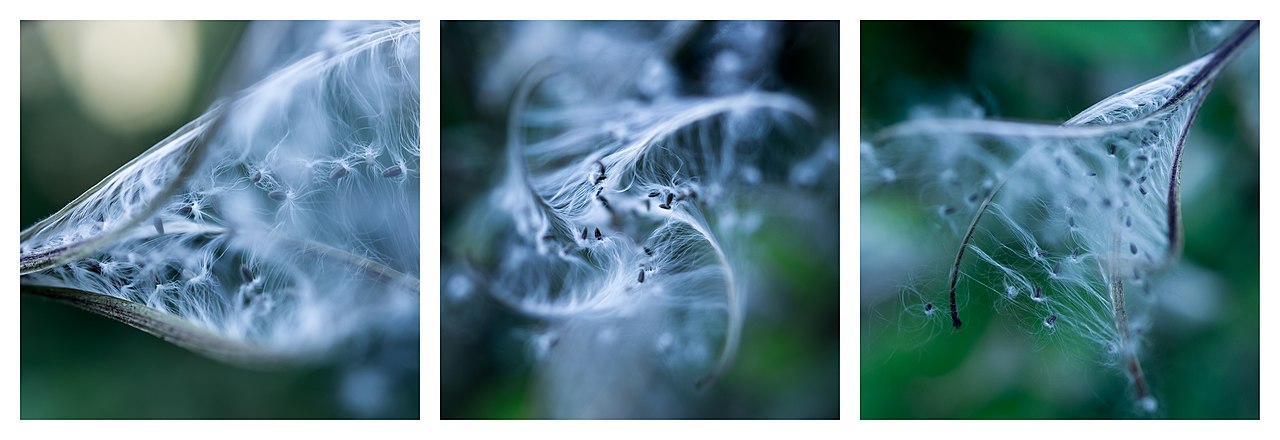
- Wind dispersal: many seeds and fruits have wings, membranous expansions, hairs or tufts that increase aerodynamic residence time (for example, samaras and pappi). These traits often allow long-distance transport under favourable conditions, and different species show predictable morphologies related to their dispersal kernels. See examples of wind-dispersed seeds.
- Water dispersal: buoyant diaspores with air-filled tissues, corky or waxy coatings, or impermeable skins can travel along rivers, coasts and floodplains. Species adapted to hydrochory often time fruiting to seasonal flows and show salt tolerance in coastal systems.
- Animal-mediated dispersal: animals transport diaspores externally (epizoochory) when hooks, barbs or sticky exudates cling to fur or feathers, or internally (endozoochory) when fleshy fruits attract ingestion and later defecation of viable seeds. Many fruits advertise rewards with colour, scent and nutrient-rich tissues to attract specific dispersers.
- Ballistic release: some plants actively eject seeds by tensioning tissues in pods or capsules; when tissues snap back the seeds are flung away from the parent plant, reducing immediate competition.
- Gravity and short-distance movement: heavy seeds simply fall and may roll or be moved short distances by small mammals, rodents or ants; secondary dispersal by these vectors can be ecologically important.
Evolutionary history and co-evolutionary dynamics
Early land plants dispersed spores and lightweight propagules largely by wind and water for hundreds of millions of years. The rise of seed plants and, later, flowering plants brought new dispersal syndromes and interactions. The appearance of flowers and rewards promoted pollinator relationships, which in turn influenced fruit and seed traits. Fossil and comparative evidence shows that interactions between angiosperms and insects began in the Mesozoic and that subsequent radiations of both groups reshaped terrestrial ecosystems. Nectar production and other rewards mark the origin of close mutualisms with insects and, later, vertebrates such as birds and mammals. For discussion of ancient intervals and taxa see entries on the Silurian, Lower Cretaceous and Upper Cretaceous, and resources on early pollinators and parallel radiations.
Ecological consequences and examples
Dispersal shapes population structure, community assembly, and landscape-level patterns. Wind-dispersed species often colonize open or disturbed ground swiftly, while animal-dispersed species can establish in microhabitats favoured by their dispersers and may show clustered distributions reflecting animal movement patterns. Classic examples include parachute-like pappi of dandelions, aerodynamic samaras of maples, buoyant coconut fruits that cross oceans, and fleshy berries consumed and transported by birds and mammals. Many seeds form persistent soil seed banks that are replenished by dispersal and that contribute to recovery after disturbance.
Trade-offs, syndromes and strategies
Plants balance trade-offs between seed size, number and dispersal distance. Large seeds generally contain more reserves and increase chances of establishment in shaded or resource-poor microsites, but they are harder to move long distances. Small seeds are produced in greater numbers and travel more easily, yet they often require exposed or favourable microsites to germinate. Dispersal syndromes are descriptive groups of traits correlated with particular vectors; they are useful heuristics but not absolute rules, as many species use multiple vectors or deviate from typical syndromes. Timing of fruit ripening and synchrony with disperser behaviour are additional adaptive features.
Human impacts and conservation implications
Human activities now influence dispersal at unprecedented scales. Habitat fragmentation, landscape modification and global trade have altered natural dispersal pathways, reduced connectivity for some species, and promoted introductions of others. Assisted migration, restoration planting and conservation of key dispersers are active management responses to dispersal limitation under climate change. Conversely, inadvertent transport by vehicles, ballast water, horticulture and trade is a principal pathway for invasive plants; effective management requires understanding both natural dispersal processes and anthropogenic vectors.
Research methods and applied perspectives
Researchers combine field observations, seed traps, genetic markers, radio-tagging of frugivores, and modelling to characterize dispersal kernels, seed shadows and establishment probabilities. Experimental studies of germination after gut passage, attachment strength for epizoochorous diaspores, and flotation tests for hydrochorous fruits inform ecological and evolutionary inference. Modelling approaches link dispersal ecology to population dynamics, metapopulation persistence and landscape connectivity assessments used in conservation planning.
Further reading and related concepts
Introductory texts in botany and plant ecology cover functional traits related to dispersal; specialist reviews treat seed fate, dispersal limitation, and the role of dispersers in ecosystems. For background on terminology and related topics, see entries on parent plants, plant biology, and evolutionary processes. For plant–animal interactions and rewards see nectar and fruit rewards, discussions of mutualism, and work on hymenopterans and other insect groups. Additional resources use the following links: seed examples, Lower Cretaceous context, and Upper Cretaceous studies.
Understanding dispersal remains central to ecology, evolution and conservation. Continued synthesis of field data, experimental work and modelling will improve predictions of species responses to environmental change and inform interventions that maintain biodiversity and ecosystem function.
Questions and answers
Q: What is seed dispersal?
A: Seed dispersal is the way seeds get away from the parent plant to a new place. It involves spreading or scattering the seeds in order for them to take root in other places and not compete with each other or the parent plant.
Q: How did plants disperse their spores and seeds before flowering plants appeared?
A: Before flowering plants appeared, virtually all transport of spores and seeds was done by mechanical means such as wind or water.
Q: What type of relationship do flowers and insects have?
A: Flowers and insects have a co-evolutionary relationship, where they rely on each other for pollination and fertilisation.
Q: When did this mutualism between hymenopterans (bees) and angiosperms (flowering plants) begin?
A: The mutualism between hymenopterans (bees) and angiosperms (flowering plants) began in the Upper Cretaceous period when nectar started appearing in flowers.
Q: How are spores dispersed?
A: Spores are almost always dispersed by wind.
Q: How are fruits adapted for dispersal?
A: Fruits are adapted for dispersal by animals, so they need to be nutritious and good to eat in order to be eaten by animals who will then spread them elsewhere.
Related articles
Author
AlegsaOnline.com Seed dispersal: mechanisms, history, and ecological importance Leandro Alegsa
URL: https://en.alegsaonline.com/art/88530
Sources
- batcon.org : "Fruit Bats: prime movers of tropical seeds"