
Sakhalin: geography, peoples, history, and economy
Sakhalin is Russia's largest island in the North Pacific. This article summarizes its geography, indigenous peoples, Russo–Japanese history, economy (energy, fisheries), ecology and cultural significance.
Sakhalin is a large, elongated island in the North Pacific, forming the main land area of Sakhalin Oblast in the Russian Far East. It lies roughly between 45°50′ and 54°24′ N and is separated from the Japanese island of Hokkaidō by the narrow La Pérouse (Sōya) Strait. The island's long shape, varied coastline and position at the meeting point of temperate and subarctic zones produce a range of landscapes and climates: mountains along a central spine, river valleys and coastal plains, with colder conditions and sea ice to the north and milder maritime influences in the south.
Image gallery
10 Images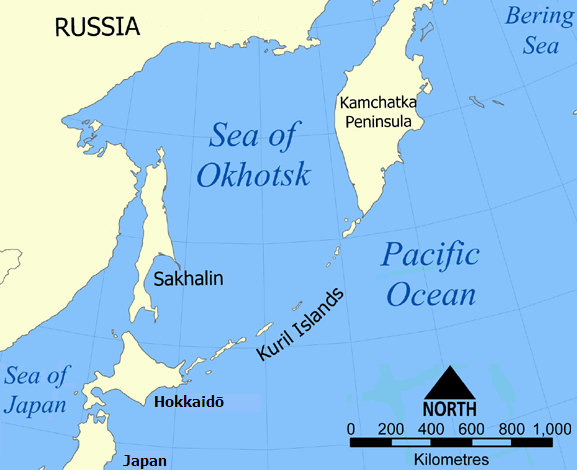


Names, languages and indigenous peoples
Sakhalin has a multilingual toponymy that records its complex human history: Russian Сахалин, Japanese 樺太/サハリン, and Chinese forms 庫頁/库页 or 薩哈林/萨哈林. Indigenous communities with historic ties to the island include the Sakhalin Ainu, the Nivkh and the Oroks; these groups developed distinct maritime and riverine lifeways based on fishing, hunting and gathering. Following the upheavals of the mid‑20th century, many Ainu moved to Hokkaidō and other areas, while remaining communities and cultural traditions persist on the island. The island is administered today by the Russian state (Russia), and its indigenous history and languages are subjects of research and cultural revival efforts (Sakhalin Ainu, Hokkaidō).
Geography, climate and ecology
Sakhalin's terrain includes a coastal fringe, broad lowlands in some southern and eastern sectors, and a rugged central mountain chain. Vegetation varies from boreal and mixed forests of conifers and birch to tundra patches in the far north; peatlands and wetlands are common in depressions. The surrounding seas support rich fisheries and populations of marine mammals; seabird colonies, salmon runs in rivers, and populations of large mammals on land contribute to the island's biological diversity. Geological processes have produced mineral deposits and hydrocarbon resources offshore and onshore.
History and political control
The island's recorded modern history is characterized by contact and contest between Russian and Japanese interests, and by earlier indigenous occupation. In the late 19th and early 20th centuries, the expansion of state interests in northeastern Asia increased strategic competition. The Russo‑Japanese War of 1904–1905 resulted in territorial change: after hostilities Japan gained control of the southern portion of the island under the terms of the settlement that followed the conflict. Factors such as railway expansion and influence in Manchuria and Korea figured in the broader regional rivalry: projects like the Trans‑Siberian railway and related railway plans were elements in diplomatic and military calculations involving places such as Manchuria and the Qing Dynasty era polity in northeastern Asia, and the Korean peninsula (Korea).
Japan administered southern Sakhalin from 1905 until the final months of the Second World War. In August 1945, in operations linked to the closing campaigns against Japan, the Soviet Union under Joseph Stalin launched offensives in Manchuria and on Sakhalin and the nominal state of Manchukuo; following these operations the island came under Soviet—and subsequently Russian—administration. Earlier and later international treaties and agreements altered formal sovereignty and control; the island's twentieth‑century history is therefore tied closely to the larger story of Russo‑Japanese relations (Russo‑Japanese War, Second Sino‑Japanese War, War in the Pacific).
Settlements, administration and transport
Major towns on the island serve administrative, commercial and transport functions. Yuzhno‑Sakhalinsk is the principal administrative centre, while ports such as Korsakov and Kholmsk connect Sakhalin to other parts of the Russian Far East and offer ferry links toward Japan in peacetime. Road and rail networks on the island link population centres, ports and industrial sites. The island's role as an outpost of the Russian Far East shapes its infrastructure priorities and demographic profile.
Economy: resources, fisheries and industry
Sakhalin's economy rests on a combination of extractive industries, fisheries, forestry and services. Hydrocarbon exploration and production—both onshore and offshore—have drawn international attention and investment since the late twentieth century; large energy projects operating in the region have influenced local employment, transport and port activity. Fisheries remain economically and culturally important for coastal communities, while timber resources and related processing activities contribute to regional output. Extractive development has brought economic benefits but also raised concerns about environmental impacts and effects on indigenous livelihoods.
Environment, conservation and challenges
Environmental monitoring and protected areas aim to conserve important habitats for migratory birds, fish runs and rare species. Challenges include reconciling industrial development with conservation of coastal ecosystems, maintaining the quality of marine and freshwater resources used by local communities, and ensuring the cultural rights and participation of indigenous groups in land‑use decisions. International cooperation and scientific research play roles in understanding the island's ecosystems and in formulating management approaches that balance economy and biodiversity.
Cultural notes and literature
Sakhalin features in travel literature, ethnographic writing and Russian literature. Anton Chekhov visited the island in the 1890s and wrote an influential account of penal and social conditions there; travel accounts by foreign authors from the late 19th and early 20th centuries also describe the island's remoteness, resources and peoples. Contemporary cultural life reflects a mixture of indigenous traditions, Russian and post‑Soviet influences, and historical layers of Japanese presence in the southern half of the island during the early 20th century (Japanese victory in 1905 is one of the outcomes often cited in older summaries of the Russo‑Japanese conflict). The island thus remains a locus for studies of colonial contact, resource development and cultural resilience (Imperial Japanese Army, Imperial Japanese Navy, Empire of Japan, Emperor Meiji).
- Location: Largest island of the Russian Federation, in the North Pacific between the Asian mainland and Hokkaidō.
- Peoples: Indigenous groups (Sakhalin Ainu, Nivkh, Orok), Russian and other settlers; complex demographic history shaped by 20th‑century events.
- Economy: Fisheries, forestry, energy projects and regional services; offshore and onshore hydrocarbon activity plays a major role.
- History: A site of Russo‑Japanese rivalry and changing control through the early and mid‑20th century; links to wider regional conflicts and diplomatic settlements.
- Culture and environment: Important both for cultural history and for conservation of marine and terrestrial ecosystems.
Related articles
Author
AlegsaOnline.com Sakhalin: geography, peoples, history, and economy Leandro Alegsa
URL: https://en.alegsaonline.com/art/86366
Sources
- museum.sakh.com : "The Indigenous Peoples"