
Imperial Japanese Navy (Dai-Nippon Teikoku Kaigun)
The maritime force of the Empire of Japan from the Meiji era until post‑World War II dissolution, noted for rapid modernization, decisive early victories, and a shift from battleship to carrier warfare.
Overview
The Imperial Japanese Navy was the principal naval force of the Empire of Japan from the years following the Meiji Restoration until its post‑war dissolution. Established as part of Japan's rapid modernization, the service grew from coastal defenses and imported expertise into a blue‑water navy capable of projecting power throughout East Asia and the Pacific. Its rise influenced naval strategy and regional politics from the late 19th century through World War II. The navy served as the maritime arm of the Empire of Japan and was a central instrument of state policy and military planning.
Image gallery
10 Images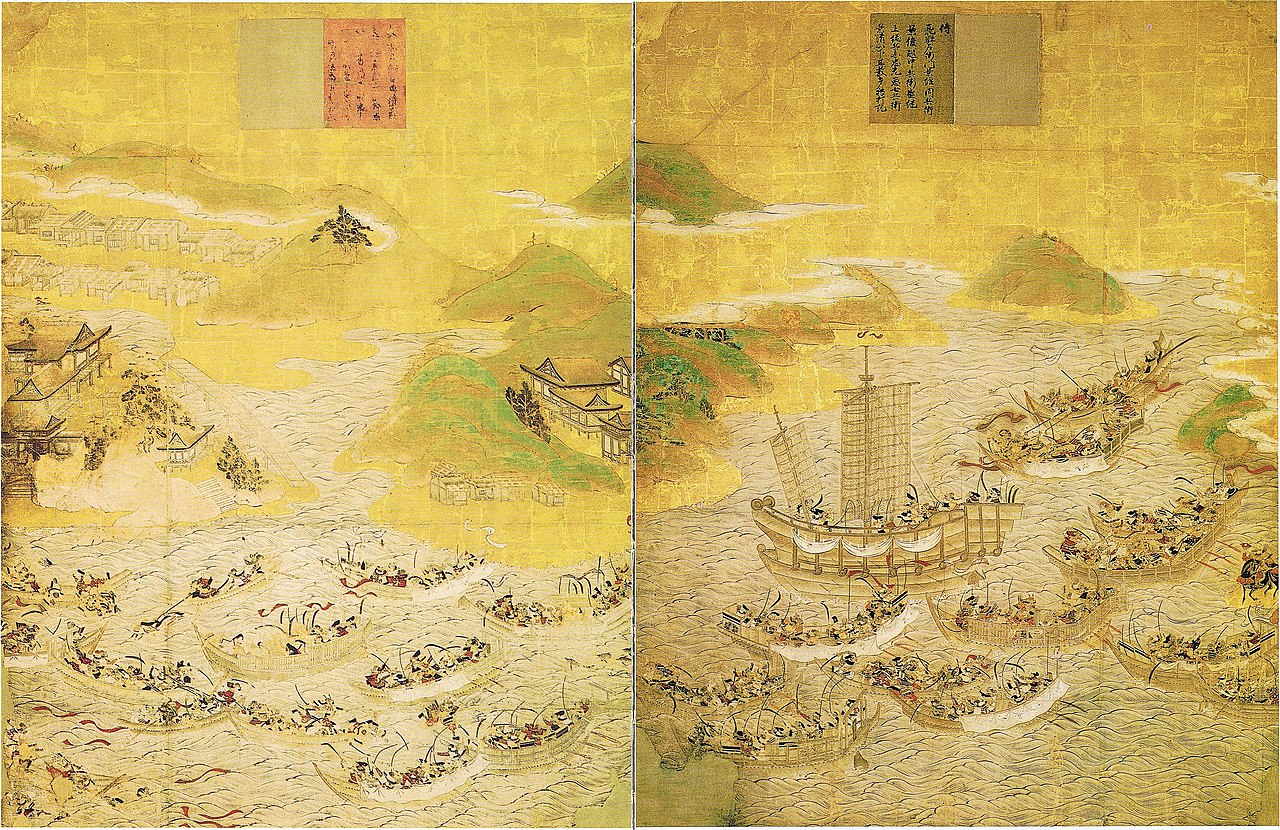


Organization and characteristics
The force combined several major components: capital ships, cruisers, destroyers, submarines, naval aviation and logistical support. Early doctrine emphasized a decisive battle between fleets and favored battleships and heavy guns; by the 1930s and 1940s aircraft carriers and naval air power assumed greater importance. Training, shore establishments and specialized schools produced officers skilled in navigation, gunnery and carrier operations. The navy also developed distinctive ship designs, torpedo tactics and an emphasis on long‑range strikes.
- Major ship types: battleships, battlecruisers, carriers, cruisers, destroyers, submarines.
- Capabilities: naval aviation, torpedo warfare, fleet tactics, amphibious support.
Its institutions blended foreign influence—particularly from the Royal Navy in the Meiji period—with indigenous doctrine and technological adaptation.
History and major actions
The navy proved its effectiveness in several conflicts as Japan expanded its regional role. It defeated Qing forces during the First Sino‑Japanese War, and obtained a landmark victory over the Russian fleet in the Russo‑Japanese War. In World War I it played a supporting role to Allied operations and protected sea lanes. The interwar years brought treaty limits, modernization and a growing focus on carrier aviation following global naval developments.
From the 1930s the service operated in the Second Sino‑Japanese War and later in large‑scale Pacific campaigns during World War II. Notable operations included early offensive actions that extended Japan's reach, and later large naval battles that reversed its fortunes. After Japan's surrender in 1945 the Imperial structure was disbanded and its remaining functions were eventually succeeded by postwar maritime forces.
The navy's legacy is multifaceted: it demonstrated rapid industrial and organizational modernization, influenced naval thought on the value of carriers, and remains the subject of historical study for its tactics, technology and role in 20th‑century geopolitics. Its formation in the Meiji era is often linked to the broader political changes of the Meiji Restoration, and its career intersected with many defining conflicts of the period, including the naval service's engagements and the wider regional wars that shaped modern East Asia.
For further reading on individual battles, ship classes and institutional history see specialized sources and archival collections that document the Imperial Japanese Navy's organization, operations and transformation over eight decades.
Related articles
Author
AlegsaOnline.com Imperial Japanese Navy (Dai-Nippon Teikoku Kaigun) Leandro Alegsa
URL: https://en.alegsaonline.com/art/46887
Sources
- books.google.com : "Kaigun"
- lcweb2.loc.gov : Library of Congress Country Studies, Japan
- lcweb2.loc.gov : "World War II and the Occupation, 1941-52" · webcitation.org
- lcweb2.loc.gov : "The Article 9 'No War' Clause"
- lcweb2.loc.gov : "The Self-Defence Forces"
- lcweb2.loc.gov : "Maritime Self-Defense Force"