
Russo-Japanese War (1904–1905)
Conflict between the Russian and Japanese Empires over influence in Manchuria and Korea (1904–1905). Marked Japan's emergence as a modern great power and reshaped East Asian geopolitics.
Overview
The Russo-Japanese War was fought between the Japanese Empire and the Russian Empire from 1904 to 1905. It arose from competing imperial ambitions in northeastern Asia and ended in a decisive Japanese victory. The conflict is notable as the first major defeat of a European great power by an Asian nation in modern warfare, and it altered perceptions of strength and balance in East Asia and beyond.
Image gallery
10 Images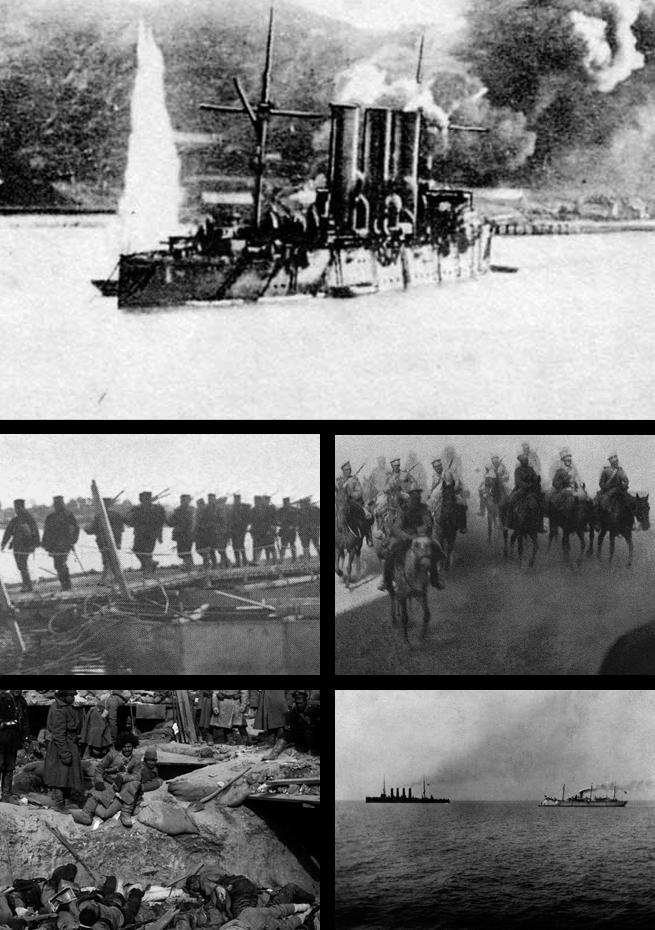




Background and causes
During the late 19th and early 20th centuries both Japan and Russia expanded their influence in territories that had been under Qing Chinese suzerainty. The immediate dispute focused on control of Manchuria and dominance over Korea. Japan, following the Meiji Restoration and rapid modernization, regarded control over Korea and parts of Manchuria as vital to its security and economic interests. Russia sought a reliable year-round harbour on the Pacific Ocean, because its eastern port at Vladivostok was vulnerable to seasonal ice. To that end Russia had leased Port Arthur and invested in infrastructure such as the Trans-Siberian railway, increasing its capacity to project force into the region. The competing aims, along with failures of diplomatic compromise, made war increasingly likely.
Diplomacy and outbreak
Negotiations between Tokyo and St. Petersburg over spheres of influence and access rights were protracted and ultimately unsuccessful. Japan launched a pre-emptive naval attack on the Russian fleet at Port Arthur and nearby waters, bringing the two empires into open conflict. The action reflected Japan's willingness to use force to secure strategic objectives when diplomacy stalled.
Theatres of war and major engagements
Land campaigns were fought chiefly on the Liaodong Peninsula and across southern Manchuria, with major battles at places such as Mukden. At sea, actions took place around the Korean peninsula and in the Yellow Sea, culminating in the decisive Battle of Tsushima which shattered the Russian Baltic fleet that had sailed halfway around the world. The siege of Port Arthur and river battles, including clashes near the Yalu River, demonstrated the interplay of modern artillery, entrenchments, and railway logistics. The war was fought on terrain that had been associated with the declining authority of the Qing dynasty in China, and urban centres such as Dalian were affected by military occupation and infrastructure use.
Technology and logistics
The conflict illustrated the importance of industrial-era technology and organization: steel warships, quick-firing naval and field artillery, telegraph communications, and the long-distance movement of troops by rail. The Trans-Siberian railway and coastal bases were crucial for resupply and reinforcement, while Japan's efficient mobilization and coastal logistics helped sustain its operations.
Peace and consequences
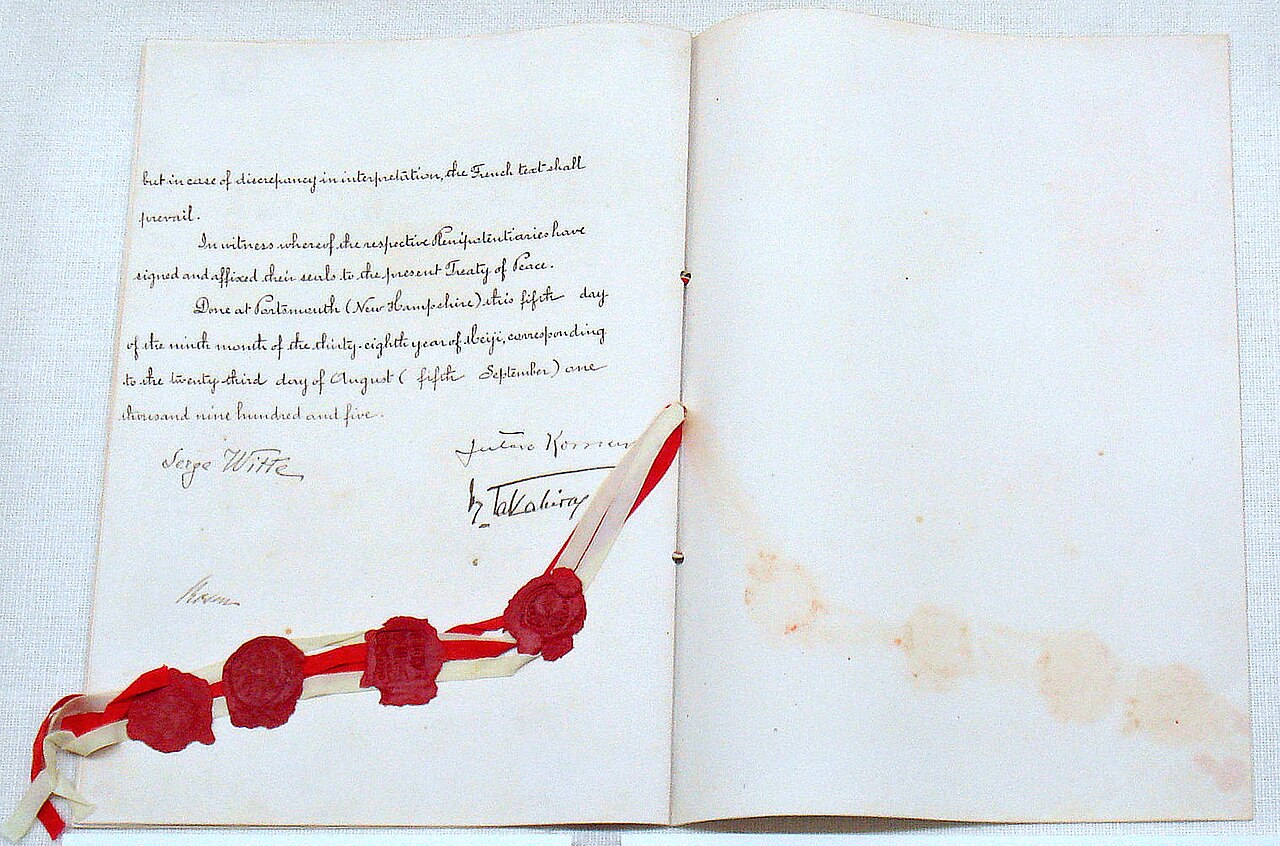
Diplomatic mediation brought the fighting to an end with a negotiated settlement in 1905. The treaty recognized Japanese predominance in Korea and transferred certain territorial and economic rights in southern Manchuria to Japan, including control over strategic ports. The negotiations were mediated by an outside power and concluded at the Treaty of Portsmouth. The outcome weakened Russia's international prestige and intensified internal political and social pressures that contributed to unrest at home. For Japan, the victory affirmed its status as a modern regional power and accelerated its role in East Asian affairs.
Long-term significance
The war had lasting effects on regional geopolitics and on global attitudes toward imperialism and modernization. It demonstrated that industrialized non-European states could defeat established European empires, encouraged military reforms elsewhere, and deepened rivalries over influence in China and Korea. The conflict also highlighted the fragility of Qing control in northeastern China and presaged further contests over the peninsula and Manchuria in the decades that followed.
Notable facts
- The conflict combined large-scale land battles with decisive naval engagements and long-distance logistics.
- Access to a warm-water port on the Pacific was a central strategic aim for Russia.
- Railway and telegraph networks, including the Trans-Siberian railway, shaped operational possibilities.
- Fighting occurred on territory connected to the weakening Qing state and affected cities such as Dalian and Port Arthur.
For further study consult primary and secondary collections on the policies of the Russian Empire, regional analyses of Manchuria and Korea, naval histories of operations in the Yellow Sea, and works addressing strategic issues such as the role of the Trans-Siberian railway and access to the Pacific.
Questions and answers
Q: Who fought in the Russo-Japanese War?
A: The Japanese Empire and the Russian Empire fought in the Russo-Japanese War.
Q: When did the Russo-Japanese War take place?
A: The Russo-Japanese War took place from 1904 to 1905.
Q: Who won the Russo-Japanese War?
A: The Japanese Empire won the Russo-Japanese War, and the Russian Empire lost.
Q: Why did the Russo-Japanese War happen?
A: The Russo-Japanese War happened because the Russian Empire and Japanese Empire disagreed over who should get parts of Manchuria and Korea.
Q: Where was the Russo-Japanese War fought?
A: The Russo-Japanese War was fought mostly on the Liaodong Peninsula and Mukden, the seas around Korea, Japan, and the Yellow Sea.
Q: What did Russia want in the Russo-Japanese War?
A: Russia wanted a 'warm-water port' on the Pacific Ocean for their navy and trade, and they had already rented Port Arthur from the Qing Empire and got their permission to build a Trans-Siberian railway from St Petersburg to Port Arthur.
Q: Why was the Chinese Empire involved in the Russo-Japanese War?
A: The Chinese Empire of the Qing Dynasty was involved in the Russo-Japanese War because the land and possessions that Russia and Japan fought over were Qing land and possessions, and Korea was under Qing rule before it was seized by Japan.
Related articles
Author
AlegsaOnline.com Russo-Japanese War (1904–1905) Leandro Alegsa
URL: https://en.alegsaonline.com/art/84857
Sources
- worldcat.org : OCLC 2418247
- usnwc.edu : "The Russo-Japanese War: Primary Causes of Japanese Success,"
- worldcat.org : OCLC 252084846
- worldcat.org : OCLC 56955351