
Trans‑Siberian Railway: overview, route, history and significance
The Trans‑Siberian Railway is the world’s longest continuous rail corridor linking European Russia with the Russian Far East and connecting branches into Mongolia, China and the Pacific coast.
The Trans‑Siberian Railway is a network of linked rail lines that forms the longest continuous rail corridor in the world, running from the Moscow area across the breadth of Russia to the Pacific coast. Built to overcome the vast distances of northern Eurasia, it has served as a backbone for passenger travel, freight movement and regional development. The line touches major population and industrial centers in Moscow and throughout European Russia, continues eastward across Siberia and into the Russian Far East provinces (administrative regions), and links by branches to neighboring countries such as Mongolia and China, finally reaching ports on the Sea of Japan and the broader Pacific region.
Image gallery
10 Images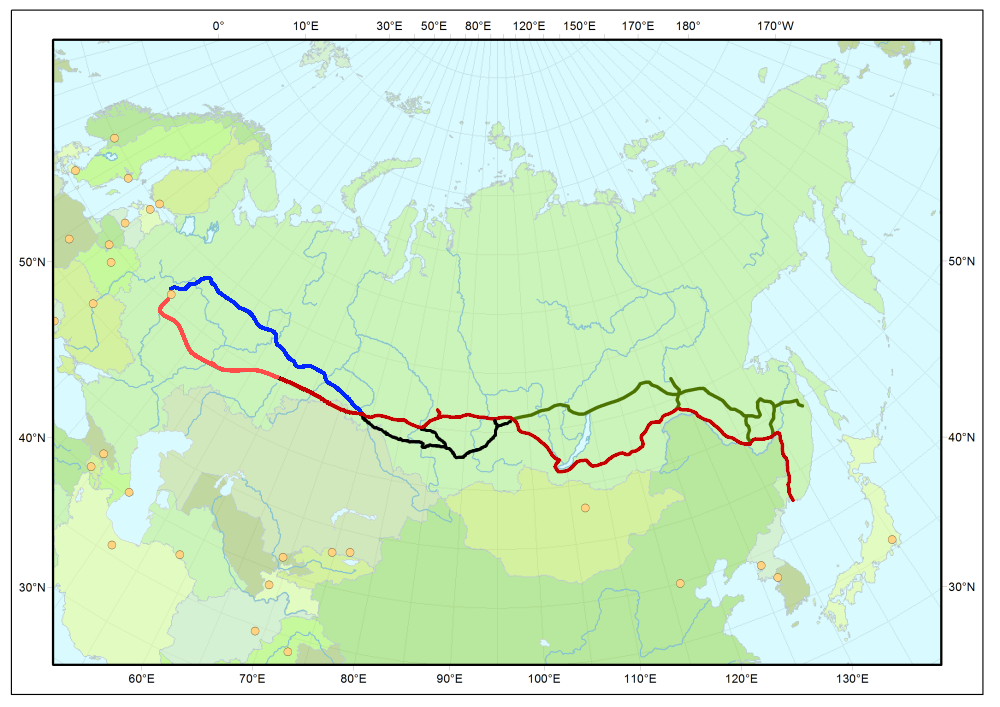



Route and main characteristics
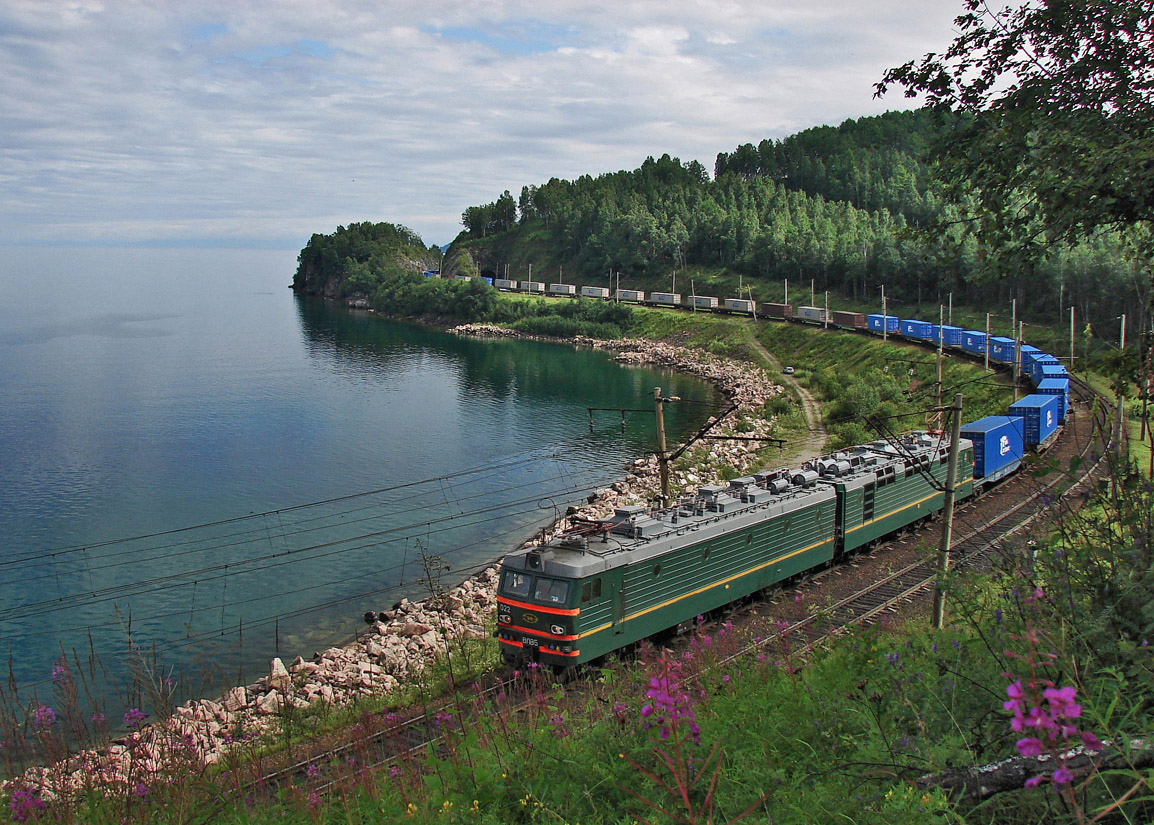
The core Trans‑Siberian route crosses a wide variety of landscapes — plains, forests, taiga and mountain ranges — and passes through important cities including Yekaterinburg, Omsk, Novosibirsk, Krasnoyarsk, Irkutsk and Vladivostok. The network is built to the Russian broad gauge and includes single and double track sections, long electrified stretches and historic engineering works such as the Circum‑Baikal alignment around Lake Baikal. Over its length the railway traverses multiple time zones and varied climates, presenting ongoing operational challenges for maintenance, scheduling and rolling stock.
Historical background
Conceived in the late 19th century, the Trans‑Siberian project began as an effort to bind the distant reaches of the Russian state by rail. Construction accelerated in the 1890s with imperial backing and continued into the early 20th century. Motivations combined economic goals—moving grain, timber and minerals to markets—and strategic needs, allowing faster troop and supply movements across long distances. The line stimulated urban growth and industrialization along its corridor and evolved through successive upgrades, linkages and branch lines.
Branches, international links and variants
Because of its length and geopolitical setting the Trans‑Siberian comprises several through routes. The Trans‑Mongolian line runs from Russia through Mongolia to China and onward to Beijing; the Trans‑Manchurian makes an alternate link via northeastern China. The Amur and Baikal alternatives provide inland detours. Regional junctions also tie the corridor to domestic lines such as the historic West Siberian connections, including the older West Siberian Railway, which integrated with the main route to expand reach and capacity.
Uses, economic role and notable facts
The railway carries a mix of long‑distance passenger trains, local commuter services and large volumes of bulk and container freight. It remains vital for moving natural resources from Siberia’s forests, mines and fields to industrial centers and ports. The corridor is also a popular long‑distance travel route for tourists seeking overland journeys across Eurasia. Notable points: it crosses many time zones, has required continuous modernization, and plays both commercial and strategic roles in the region.
- Strategic importance: supported rapid movement across Russia’s vast interior and influenced settlement patterns.
- Engineering highlights: major bridges, tunnels and the Circum‑Baikal line around Lake Baikal.
- International connections: links to Mongolia, China and ports on the Sea of Japan and Pacific.
- Regional integration: integration with networks in Russia and historic lines such as the West Siberian Railway.
The Trans‑Siberian remains a living transportation system: historically significant, economically essential and continually adapted to meet modern freight, passenger and geopolitical demands. Visitors and historians alike study it as an example of large‑scale infrastructure that reshaped a continent.
Questions and answers
Q: What is the Trans-Siberian Railway?
A: The Trans-Siberian Railway is a set of railways that goes from Moscow and European Russia to the Russian Far East provinces, Mongolia, China, and the Sea of Japan.
Q: Why did the Russians begin building the Trans-Siberian Railway?
A: The Russians began building the Trans-Siberian Railway in the 1890s to connect Moscow to the Pacific Ocean because travel from one end of Russia to the other was an important problem.
Q: How long did it take to travel from one end of Russia to the other before the Trans-Siberian Railway was built?
A: Before the railway was built, the trip took about a year along very rough roads.
Q: What was one reason for building the Trans-Siberian Railway?
A: One reason for building the Trans-Siberian Railway was military: to transport troops to the East in order to protect the country against Japan and China.
Q: What was another reason for building the Trans-Siberian Railway?
A: Another reason for building the Trans-Siberian Railway was to transport food from the farming areas of south-western Siberia to the people in the European part of Russia.
Q: What developed along the route of the Trans-Siberian Railway?
A: Many cities and industries are built up along the route of the Trans-Siberian Railway.
Q: When did it connect with the West Siberian Railway?
A: In 1900, the Trans-Siberian Railway connected with the West Siberian Railway.
Related articles
Author
AlegsaOnline.com Trans‑Siberian Railway: overview, route, history and significance Leandro Alegsa
URL: https://en.alegsaonline.com/art/101113