
Pavo (Asiatic peafowl)
Pavo is the genus of Asiatic peafowl in the pheasant family, known for the blue (Indian) and green peafowl. This article covers appearance, behavior, distribution, diet, reproduction and conservation.
Overview
Pavo is the genus that contains the Asiatic peafowl, a small group of large, ground-dwelling birds in the pheasant family Phasianidae. Native to South and Southeast Asia, these birds are best known for the extravagant long feathers carried by males and for strong sexual dimorphism: males (peacocks) are highly ornamented while females (peahens) are subtler in color. The genus has been widely kept in captivity and has cultural importance in many parts of its natural range.
Image gallery
10 Images




Physical characteristics
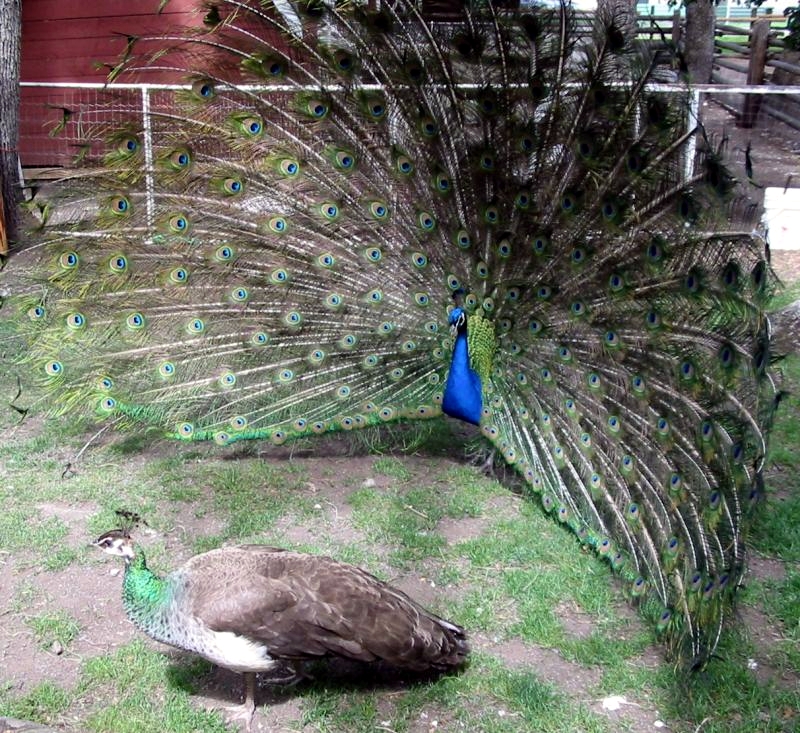
Members of the genus Pavo are medium to large birds with robust bodies, strong legs adapted for walking and roosting in trees at night, and a crest of feathers on the head. The male’s most distinctive feature is the elongated train composed mainly of modified upper-tail covert feathers. These feathers display eye-like markings that the male can raise into a fan during displays. Females are smaller, lack the long train, and usually show cryptic brown or greenish plumage. Both sexes retain a short tail of flight feathers used for balance and shelter.
Species and distribution
- Blue peafowl (Pavo cristatus) — often called the Indian peafowl; native to the Indian subcontinent and widely introduced elsewhere. It occupies a variety of habitats including open woodlands, farmland edges and areas near human settlements.
- Green peafowl (Pavo muticus) — historically ranged across parts of Southeast Asia and southern China; it prefers forested habitats and has suffered declines where habitat has been fragmented or lost.

Behavior and diet
Peafowl are omnivorous. Their diet includes seeds, plant matter, flower petals, insects and small vertebrates such as reptiles and amphibians. They spend much of the day foraging on the ground and often roost in trees at night. Males perform elaborate courtship displays, spreading their trains into a vertical fan and rattling the feathers to catch the attention of visiting females. These displays serve both to attract mates and to warn or intimidate potential predators or rivals.
Reproduction and lifecycle
Breeding systems vary but are often polygynous: a single male may display to several females. Females build a simple ground nest, lay a small clutch of well-camouflaged eggs and provide most of the parental care. Chicks are precocial, leaving the nest shortly after hatching and following the mother while learning to feed and hide. Juvenile males develop ornate adult plumage over several years.
Conservation and human relations
The conservation outlook differs by species and region. Blue peafowl maintain large populations over parts of their native range and tolerate human-altered landscapes, while green peafowl have declined in many areas due to habitat loss, hunting and disturbance. Captive populations and protection in reserves help maintain numbers, and cultural reverence for peafowl in some countries has aided local conservation. Because of their visibility and beauty they are common in parks, private estates and aviaries worldwide.

Notable facts and distinctions
Commonly used English names distinguish sex and species: the male is the peacock, the female the peahen, and both together are peafowl. The "eyes" on the train are highly visible examples of sexual ornamentation shaped by mate choice. Anatomically, the train is not the true tail but consists of elongated coverts above the tail. Peafowl are social outside the breeding season and may form small flocks.

Further reading and external links
- Asiatic peafowl overview
- General bird classification
- Genus Pavo information
- Family Phasianidae details
- Taxonomic notes
- Southeast Asia habitats
- Blue peafowl species page
- Range of Indian peafowl
- Peafowl in Pakistan
- Provincial symbols and birds
- Green peafowl species page
- Myanmar bird fauna
- Southern China wildlife
- Laos natural history
- Thailand avifauna
- Vietnam bird records
- Cambodia wildlife notes
- Peninsular Malaysia habitats
- Malayan biodiversity
- Java island birds
- Peafowl train feathers
- Plant material in diet
- Seed consumption
- Insect prey
- Small vertebrate prey
- Reptile prey records
- Amphibian prey records
Related articles
Author
AlegsaOnline.com Pavo (Asiatic peafowl) Leandro Alegsa
URL: https://en.alegsaonline.com/art/75257