
Pegomastax — a small heterodontosaur from the Early Jurassic
Pegomastax africana, a small heterodontosaurid ornithischian from Early Jurassic South Africa, known for a robust lower jaw and enlarged canine-like tooth; described by Paul Sereno in 2012.
Pegomastax africana is a small heterodontosaurid dinosaur from the Lower (Early) Jurassic of South Africa. The name means "strong jaw" and refers to the stout lower jaw preserved in the only known skull. Pegomastax is interpreted as a small, bipedal ornithischian with a mix of sharp and leaf-shaped teeth, and it is important for understanding early dinosaur diversity after the Triassic.
Image gallery
10 Images


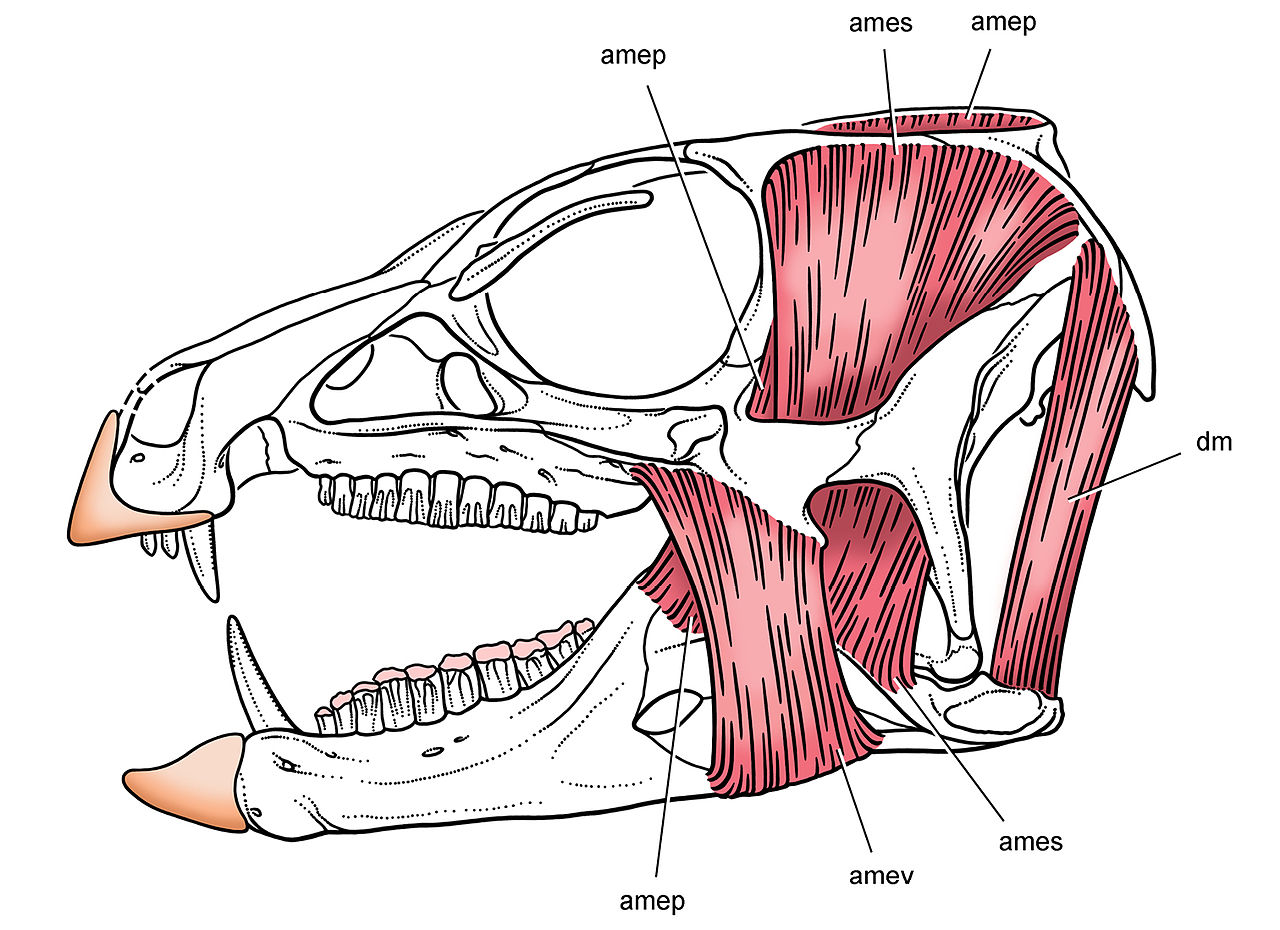

Anatomy and distinguishing features
Although known primarily from a single skull housed in a South African museum, Pegomastax shows a distinctive combination of features. Its lower jaw is relatively deep and robust and supports a short beak at the front of the mouth. Most striking is an enlarged, canine-like tooth at the front of the lower jaw that resembles a tusk. Behind that tusk the cheek teeth are adapted for processing plant material, with crowns suitable for cropping and grinding.
- Robust, deep mandible with short rostral beak
- Enlarged canine-like (tusk) tooth in the lower jaw
- Heterodont dentition: different tooth shapes in the same jaw
- Small body size — often estimated at roughly 60 cm in length
Discovery and naming
The fossil was collected during a South African field expedition in the 1960s but remained undescribed for decades. Paul Sereno recognized the specimen as unusual and formally named and described Pegomastax africana in 2012. The holotype skull is curated at the Iziko South African Museum in Cape Town. Early recognition, delayed description, and eventual publication illustrate how museum collections can contain scientifically valuable material long before formal study.
Paleobiology: diet and behaviour
Like other heterodontosaurs, Pegomastax likely combined features for biting, slicing and grinding. The presence of a short beak and multiple tooth types suggests an herbivorous or omnivorous diet that included tough plant matter, seeds, and possibly small invertebrates. The canine-like tusk may have served a defensive role, been used in intraspecific display or combat, or helped process food — its exact function is debated but the morphology is comparable to tusks found in related heterodontosaur taxa.
Paleoenvironment and significance
Pegomastax lived in what is now South Africa during the Early Jurassic, a time when continents and ecosystems were still recovering and diversifying after the end-Triassic extinctions. Its presence adds to evidence that small, specialized ornithischians were widespread and ecologically varied in Gondwana. The discovery helps paleontologists trace early ornithischian evolution and the rise of different tooth specializations among small herbivores and omnivores.
Relationships and notable facts
Heterodontosaurs as a group are characterized by varied tooth shapes and sometimes prominent tusks; they include better-known genera such as Heterodontosaurus and later small members like Fruitadens. The precise position of heterodontosaurs within Ornithischia is still debated by researchers, with analyses variably recovering them as basal ornithopods or more basal ornithischians. Pegomastax contributes to this discussion by preserving a distinct lower jaw morphology and dental pattern.
For further reading and the original description, see the formal account and museum accession notes: taxonomic overview, heterodontosauridae, Lower Jurassic context, South African deposits, and type skull record. Additional resources include the describing author's publication and broader reviews of early ornithischian evolution: museum catalogue, original description, species entry, dental morphology studies, early Jurassic paleoecology.
Notable fact: Despite its small size, Pegomastax illustrates how early ornithischians experimented with diverse tooth specializations and feeding strategies shortly after the Triassic–Jurassic boundary.
Questions and answers
Q: What is Pegomastax?
A: Pegomastax is a genus of small heterodontosaur dinosaur.
Q: Where was Pegomastax discovered?
A: Pegomastax was discovered in Lower Jurassic rocks in South Africa.
Q: What is the name of the type species of Pegomastax?
A: The name of the type species of Pegomastax is P. africana.
Q: Who published a description of Pegomastax in 2012?
A: Paul Sereno published a description of Pegomastax in 2012.
Q: How did Pegomastax differ from other heterodontosaurs?
A: Pegomastax differed from other heterodontosaurs by details of the skull, especially having a robust lower jaw with a short beak.
Q: Did Pegomastax have any specialized tooth for defense?
A: Yes, Pegomastax had an enlarged canine-like tooth at the beginning of the lower jaw's tooth row, which may have been used for defense.
Q: What was Pegomastax's diet?
A: Pegomastax's diet was mainly herbivorous, as the rest of its teeth were those of a herbivore.
Related articles
Author
AlegsaOnline.com Pegomastax — a small heterodontosaur from the Early Jurassic Leandro Alegsa
URL: https://en.alegsaonline.com/art/75465
Sources
- doi.org : 10.3897/zookeys.226.2840
- bbc.co.uk : bbc.co.uk/news/science-environment-19830486