
Pelagornis — giant bony‑toothed seabirds
Pelagornis is an extinct genus of very large marine birds known as bony‑toothed birds. They had long, narrow wings and tooth‑like beak projections; some species had wingspans estimated over 6 metres.
Overview
Pelagornis is a genus of extinct, large seabirds commonly placed in the group called pelagornithids or "bony‑toothed" birds. These birds are known from fossils found in marine sedimentary deposits and are best known for exceptionally long wings and distinctive tooth‑like projections along the beak. One species, often cited in popular accounts, has wingspan estimates that make it among the largest flying birds known. Although their exact relationships to modern bird groups are debated, pelagornithids are widely interpreted as specialised oceanic soarers.
Image gallery
10 Images



Anatomy and adaptations
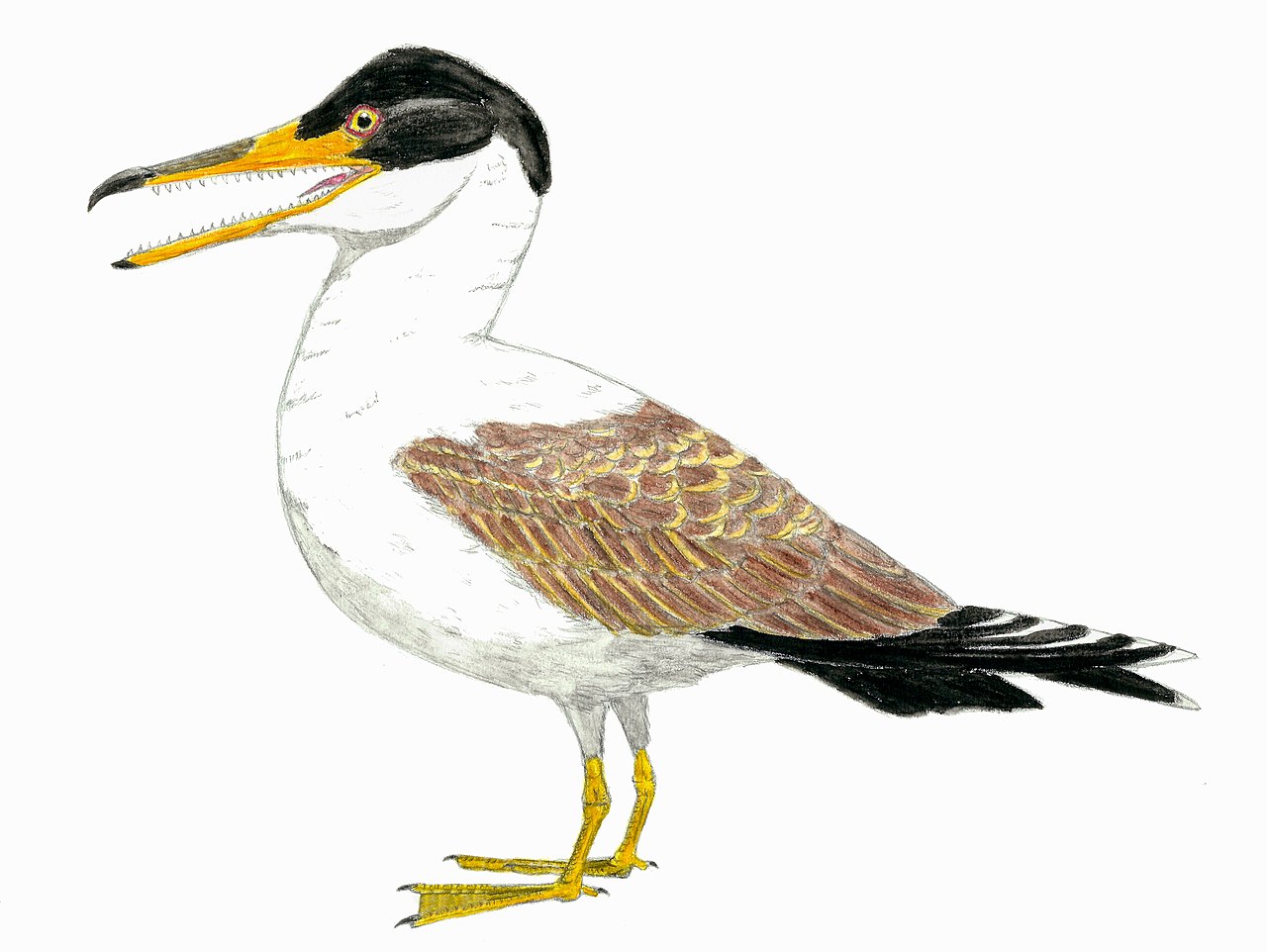
Pelagornithids combined several anatomical features adapted for life over open water. Their wings were long and narrow with proportionally extended primaries and relatively light, pneumatic bones that reduced weight for flight. The most striking trait was the presence of bony outgrowths along the margins of the upper and lower jaws; these projections resembled teeth but were not true teeth of dentine and enamel — they are better described as pseudoteeth. These structures likely helped the birds grasp slippery prey such as fish and squid. Wing morphology and skeletal proportions indicate a high degree of soaring efficiency, similar in function to the dynamic soaring used by modern albatrosses, though details of takeoff and landing remain subjects of study.
Fossil record and age
Fossils attributed to pelagornithids occur from the Paleogene through the Pliocene, showing a long history from shortly after the end of the age of dinosaurs up to a few million years ago. Individual species within the genus were described from sediments dated to the Oligocene and Miocene epochs. The fragmentary nature of many remains means body size estimates depend on reconstructions from partial skeletons and comparisons with living seabirds — a factor that produces varying wingspan estimates in the literature.
Ecology and behavior
These birds are interpreted as seabirds that spent most of their lives at sea, relying on efficient gliding to travel long distances with little energetic cost. Their feeding strategies have been inferred from beak shape, pseudoteeth, and wing form: they likely captured prey at or near the surface, seizing fish and cephalopods, and possibly scavenged. Because many details come from bone morphology, palaeoecologists reconstruct their lifestyle by analogy with modern oceanic soarers, while acknowledging important differences in feeding anatomy.
Extinction, significance, and notable facts
Pelagornithids, including species placed in Pelagornis, became extinct by the late Neogene, around a few million years ago. Proposed factors for their decline include changes in oceanic productivity and climate, competition with emerging groups of marine predators and modern seabirds, and shifts in habitat distribution. Paleontologists study pelagornithids for what they reveal about the upper limits of flying animal size and the evolution of extreme specialisations for marine life. One often‑mentioned species, described from Oligocene deposits and estimated to have had a wingspan of roughly six to seven metres, has been used to illustrate these limits and the challenges of reconstructing ancient flight capability.
Distinctions and research notes
- True teeth vs pseudoteeth: the jaw projections are bony extensions, not true teeth formed of enamel and dentine.
- Flight comparisons: wingspan estimates for the largest pelagornithids exceed those of the largest living albatrosses by about twofold, but mass and wing loading estimates vary.
- Taxonomy and relationships: pelagornithid affinities are debated; they are often treated as a distinct extinct lineage with convergent adaptations to those of modern procellariiform seabirds.
For additional summaries and specimen records see resources linked here: species account, wingspan estimates, comparison with albatross, geological context, and broader marine bird overviews at marine bird research.
Questions and answers
Q: What is Pelagornis?
A: Pelagornis is a genus of huge fossil birds.
Q: Which species of Pelagornis is one of the largest birds ever found?
A: P. sandersi is one of the largest birds ever found.
Q: How does P. sandersi's wingspan compare to that of the largest albatross?
A: P. sandersi's wingspan was twice that of the largest albatross.
Q: When did P. sandersi live?
A: P. sandersi lived about 25 million years ago.
Q: What are pelagornithids known for?
A: Pelagornithids are known for bony tooth-like beak projections, large size, and highly modified wing bones.
Q: What is the suggested lifestyle of P. sandersi based on its gliding ability?
A: The suggested lifestyle of P. sandersi is a long-range marine soaring life-style similar to that of living albatross.
Q: When did the whole group of pelagornithids go extinct?
A: The whole group of pelagornithids went extinct about three million years ago.
Related articles
Author
AlegsaOnline.com Pelagornis — giant bony‑toothed seabirds Leandro Alegsa
URL: https://en.alegsaonline.com/art/75481
Sources
- bbc.co.uk : bbc.co.uk/news/science-environment-28164063
- pnas.org : pnas.org/content/early/2014/07/02/1320297111
- news.bbc.co.uk : news.bbc.co.uk/1/hi/sci/tech/6262740.stm