
Blue peafowl (Indian peafowl)
Large, colorful pheasant native to the Indian subcontinent, known for the male's iridescent blue plumage and long train used in courtship displays. Covers appearance, behavior, history, and conservation.
The blue peafowl, commonly called the Indian peafowl, is a striking bird native to the Indian subcontinent. It belongs to the pheasant family and is one of the most recognisable wild birds because of the male's vibrant bluish plumage and long decorative tail coverts. The species is both wild and commonly kept in parks, private collections and cultural sites, where it is often tolerated or encouraged.
Image gallery
10 Images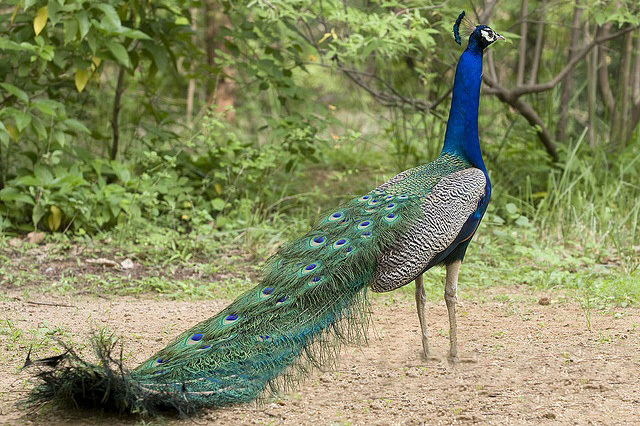


Appearance and anatomy
Males (peacocks) are famous for their elongated train of ornate feathers, each bearing eye-like markings called ocelli. These train feathers are actually modified upper-tail coverts and can be raised into a fan during courtship displays. The body shows glossy blue and green iridescence: the shimmering effect arises from microscopic structures in the feathers rather than pigments. Females (peahens) are generally less colourful, with mottled browns and greens that provide camouflage while nesting.
Behavior, diet and reproduction
Blue peafowl are ground-dwelling birds that feed on a mixed diet of seeds, fruits, insects and small animals. They roost in trees at night. During the breeding season, males perform elaborate displays—spreading and rattling their trains, calling loudly and strutting—to attract females. Females lay a clutch of eggs on the ground and incubate them alone. Outside the breeding season, peafowl often form loose social groups.
Distribution, history and human relationships
Native populations occur across a broad range of habitats from dry deciduous forests to cultivated lands in South Asia. Over centuries the species has been introduced beyond its native range to estates, parks and urban areas worldwide, where free-roaming birds are sometimes established. The blue peafowl has deep cultural importance in South Asian art, religion and folklore, and it is the national bird of India.
Conservation and notable facts
- The species is generally resilient and has a wide distribution, but local declines can occur from habitat loss and persecution.
- Iridescent colours are structural, not pigment-based, an often-cited example in studies of feather optics.
- Peafowl are capable of short flights despite their large train and will roost in trees to avoid predators.
Because of their striking appearance and cultural prominence, blue peafowl are familiar to many people worldwide. Their ecology, displays and role alongside humans make them a frequent subject of natural history and cultural studies.
Tags
Related articles
Author
AlegsaOnline.com Blue peafowl (Indian peafowl) Leandro Alegsa
URL: https://en.alegsaonline.com/art/12364
Sources
- avibase.bsc-eoc.org : Avibase - the world bird database
- commons.wikimedia.org : Pavo cristatus