
Asian black bear (Ursus thibetanus)
Medium-sized forest bear of Asia with a distinctive white chest mark. Overview of appearance, behavior, range, threats, and conservation, plus notable differences from other bear species.
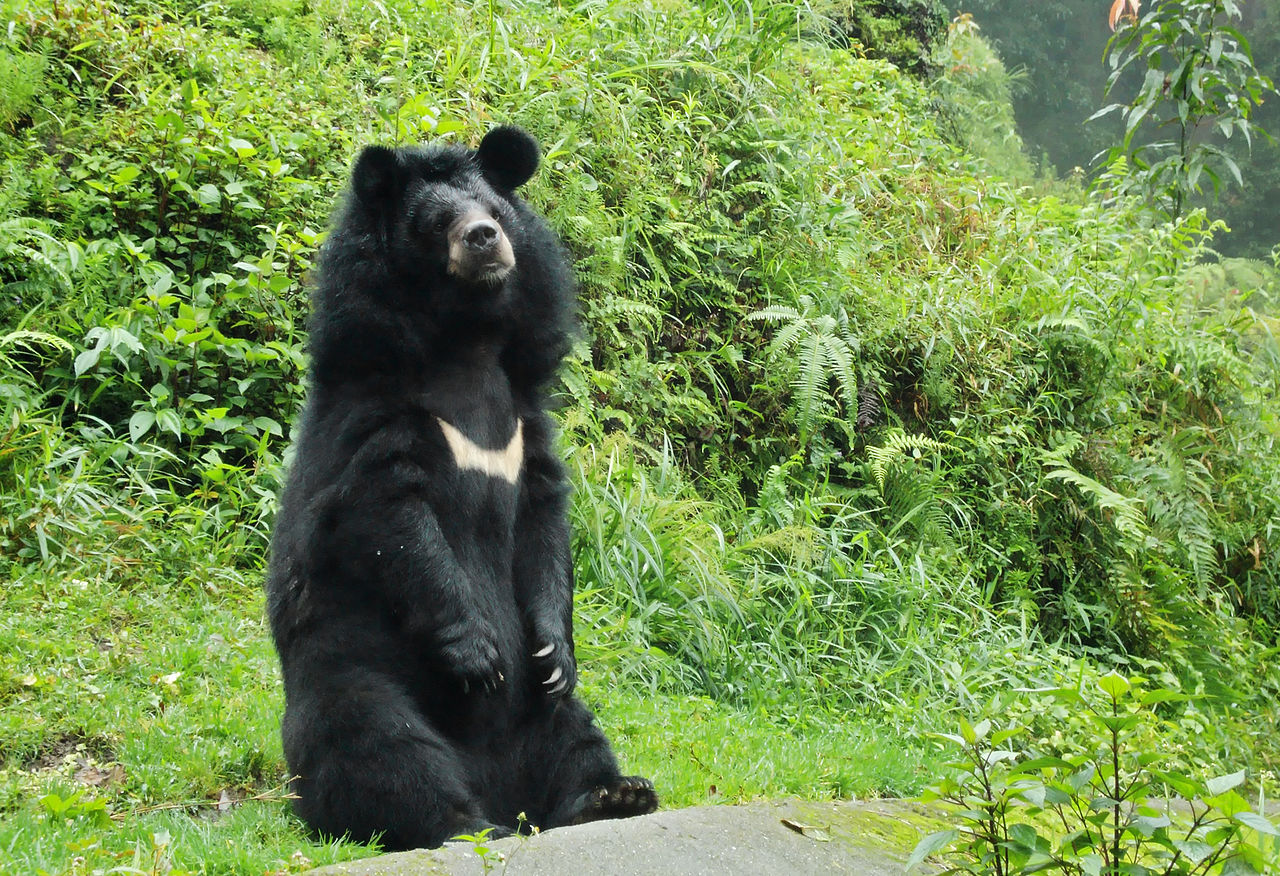
The Asian black bear (Ursus thibetanus), sometimes called the Asiatic black bear, moon bear or white-chested bear, is a medium-sized bear native to broad areas of Asia. It is recognizable by its predominantly dark coat and a pale, often crescent-shaped patch on the chest. Members of this species occupy forested mountains and foothills from the Himalaya across East and Southeast Asia, and into parts of the Russian Far East and Japan.
Image gallery
10 Images





Physical characteristics and behaviour
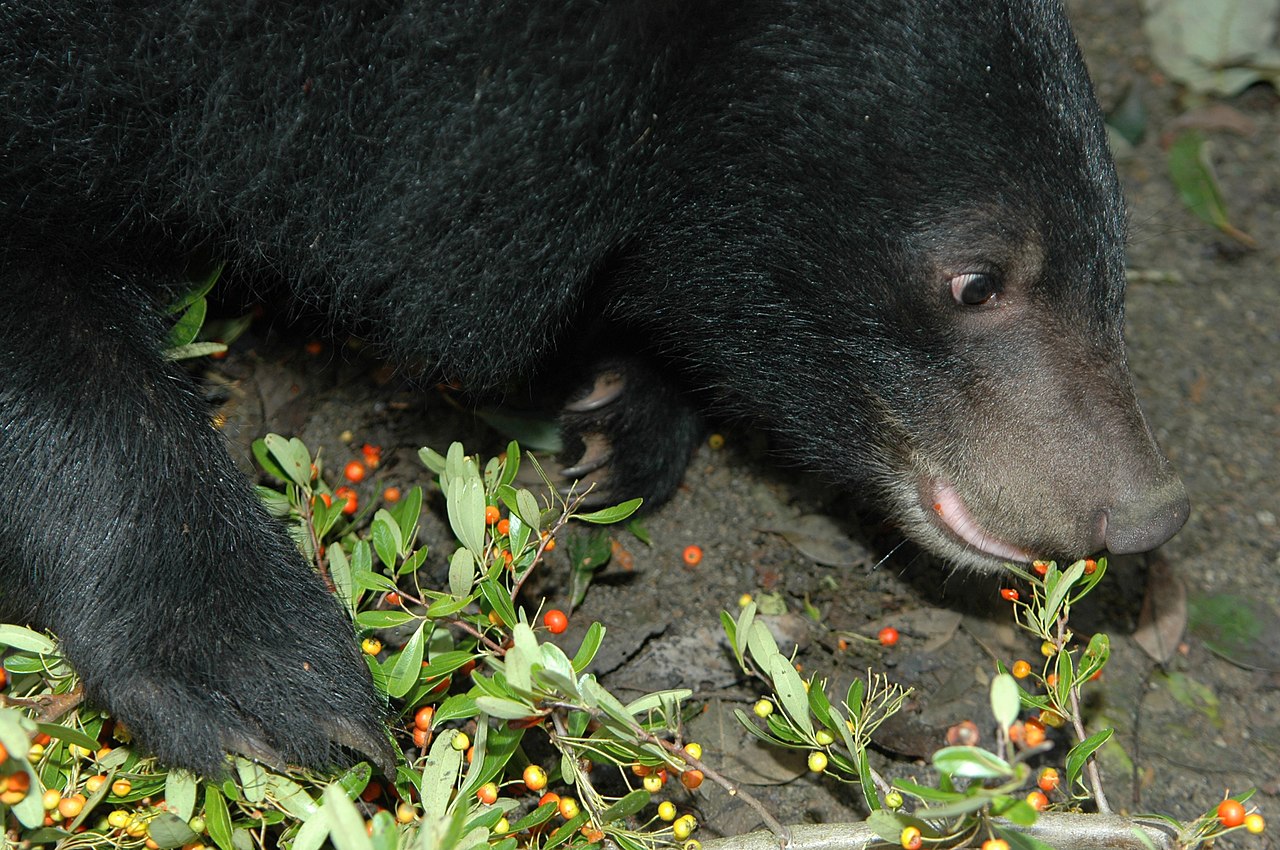
Asian black bears have strong limbs and long, curved claws adapted for climbing. Adult body size is moderate compared with larger brown bears; sexual dimorphism is present, with males generally larger. Their diet is highly adaptable and omnivorous: they feed on fruits, nuts, roots and other plant material, supplementing these with insects, small mammals and carrion. In some regions they opportunistically prey on young ungulates or scavenge larger carcasses. They are largely solitary outside the breeding season and are known for their ability to climb trees, where they may feed or escape danger.
Reproduction and life cycle
Breeding patterns vary across the range but typically include a single litter every one to three years. Females give birth to a small litter of cubs after a delayed implantation and a period of denning in colder parts of the range. Cubs remain with their mother for more than a year as they learn foraging and survival skills.
Range, habitat and ecology
Asian black bears inhabit temperate and subtropical forests, preferring areas with dense cover and abundant food resources. They occur at a range of elevations, from lowland woodlands to alpine fringes. Fragmentation of habitat, agricultural expansion and infrastructure development have reduced and isolated populations in parts of the range, affecting movement and gene flow.
Human interactions and conservation
Humans are the principal threat to Asian black bears through habitat loss, poaching and capture for parts that are used in traditional medicine and other markets. In several countries, targeted protection and captive-breeding programs have been implemented, and the species is recognised on international conservation lists. Conflict with people can occur where bears raid crops or livestock, and mitigation often requires a combination of habitat protection, community measures and law enforcement.
Distinctive facts and relationships
Asian black bears are closely related to the American black bear; the two are considered sister species. They differ from other bears by the characteristic pale chest mark and their arboreal habits. Natural predators of adults are few — tigers and, in some areas, larger brown bears can kill them — while cubs may fall prey to leopards, wolves, lynx or other carnivores depending on locality. Because of their striking appearance and cultural significance in several societies, they are a frequent subject of folklore and wildlife education.
Further reading and resources
- Species overview and identification
- Comparison with American black bear
- Names and cultural references (Korean example)
- General diet and feeding behaviour
- Fruits and seasonal food sources
- Habitat: grasslands and forest edges
- Foliage and browse in the diet
- Insect prey and foraging techniques
- Small mammal prey and opportunistic feeding
- Records of predation on lagomorphs and similar prey
- Scavenging and carrion use
- Nuts, seeds and other plant foods
- Interactions with ungulates
- Incidents involving large livestock
- Reports of encounters with wild boar
- Human conflict and hunting pressures
- Predation by big cats such as tigers
- Competition and interactions with brown bears
- Threats to cubs: leopards and other carnivores
- Wolf interactions and ecosystem context
- Records involving lynx
- Regional predators such as jackals
- Pack-hunting predators and cub vulnerability
For most readers, local wildlife authorities or conservation organisations provide the best region-specific guidance on living with and protecting Asian black bears. Field guides and veterinary sources can provide more detail on identification, health and husbandry where captive care is relevant.
Related articles
Author
AlegsaOnline.com Asian black bear (Ursus thibetanus) Leandro Alegsa
URL: https://en.alegsaonline.com/art/6611
Sources
- commons.wikimedia.org : Ursus thibetanus
- species.wikimedia.org : Ursus thibetanus
- amazon.com : The Encyclopedia of Mammals: 1