
Asiatic salamanders (Hynobiidae): overview, biology and conservation
Asiatic salamanders (family Hynobiidae) are a basal group of salamanders from temperate Asia, known for external fertilization, aquatic larvae and numerous Japanese endemics; many species face habitat threats.
Overview
Asiatic salamanders belong to the family Hynobiidae, a basal lineage of primitive salamanders within the amphibian order. In common usage they are simply called hynobiids or Asiatic salamanders. They are generally small to medium-sized terrestrial or semi-aquatic amphibians with life cycles that include a free‑swimming larval stage and a terrestrial adult stage in many species.
Image gallery
5 Images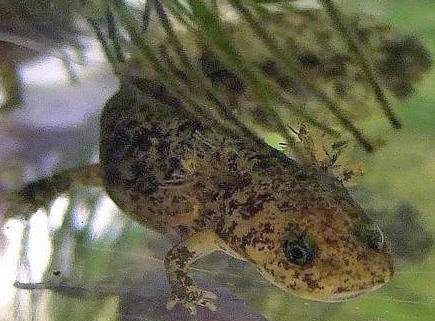


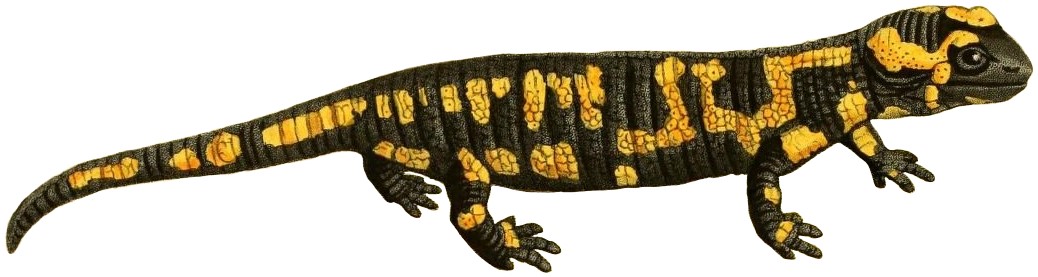
Distinctive characteristics
Hynobiids have body forms typical of salamanders—elongated bodies, well-developed limbs and tails—but they are best known for reproductive and anatomical features that set them apart from many other families. Key traits include:
- External fertilization: pairs spawn and females deposit egg-sacs, which males then fertilize externally.
- Aquatic eggs and larvae: eggs are usually laid in water; larvae have external gills and an aquatic phase before metamorphosis.
- Variation in habitat use: species range from mountain forests to lowland streams and cold springs.
Reproduction and life history
Unlike most salamanders that use internal spermatophore transfer, hynobiids perform external spawning. Females lay gelatinous egg-sacs attached to submerged vegetation or stones; males release sperm over the egg-sacs to fertilize them. Larvae hatch with gills and develop in water, later metamorphosing into juvenile or adult forms adapted for terrestrial life. This spawning behavior is one of the principal features that links hynobiids with the giant salamanders of the family Cryptobranchidae.
Distribution, diversity and taxonomy
Asiatic salamanders occur across temperate Asia, including parts of eastern Russia, China, the Korean peninsula and the Japanese archipelago (Asia and Japan). The family contains several genera—such as Hynobius, Onychodactylus and Salamandrella—with many species restricted to local regions. Hynobiidae and Cryptobranchidae together form the suborder Cryptobranchoidea, representing an ancient branch of salamander evolution within the order Caudata (salamanders).
Conservation and significance
Many hynobiid species have small, fragmented populations and are sensitive to changes in water quality, habitat loss, deforestation and introduced predators. Because of their restricted ranges and specialized breeding sites, several species are of conservation concern and are subjects of habitat protection and captive‑breeding programs. Hynobiids also attract scientific interest as living representatives of an early-diverging salamander lineage that helps researchers understand amphibian evolution and reproductive diversity.
Related articles
Author
AlegsaOnline.com Asiatic salamanders (Hynobiidae): overview, biology and conservation Leandro Alegsa
URL: https://en.alegsaonline.com/art/6627
Sources
- www5d.biglobe.ne.jp : Hasumi M. 2002/2015. About Hynobiidae