
Jackal: natural history, behavior, species, and human interactions
Medium-sized canids of Africa and Asia known for opportunistic feeding, monogamous pairs, and important ecological and cultural roles; includes three commonly recognised species.
Overview
Jackals are medium-sized members of the dog family often described as canid species native to parts of Africa and Asia. They are flexible feeders: many sources call them opportunistic omnivores while also noting a strong tendency to hunt small and medium prey and to scavenge. Jackals are adapted for long-distance movement rather than short bursts of speed; they can sustain running at roughly 16 km/h (10 mph) for extended periods, which helps them pursue prey or travel between food patches.
Image gallery
10 Images


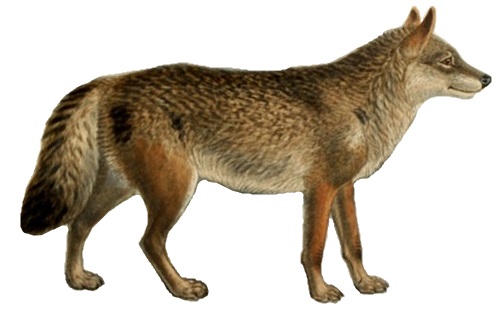


Physical characteristics and classification
Typical jackal anatomy includes a lean body, relatively long legs, pointed muzzle and large ears that aid hearing in open habitats. Their dentition and digestive system reflect a mixed diet that can include vertebrate prey, insects, fruit and carrion, which is why the term carnivorous applies to some behaviours but does not fully describe their diet. Jackal-like forms are not a single biological clade; the common name groups several closely related canids that share similar size and behaviour rather than a unique taxonomic lineage. Cytogenetically, many jackal populations show the familiar canid chromosome count of 78 chromosomes.
Social structure and behaviour
Many jackal populations form stable, monogamous breeding pairs in which one male and one female cooperate to raise offspring. Pairs commonly defend a home territory, using chemical signals such as urine and feces to mark boundaries. Territories may be large enough to sustain several generations, with young adults remaining with parents before dispersing. While solitary or pair hunting is usual, jackals will sometimes form small groups to take down larger prey or to scavenge communal carcasses.
Species and geographic notes
- Black-backed jackal (Lupulella mesomelas) – a widespread African form adapted to a range of habitats.
- Golden jackal (Canis aureus) – found across South and Southeast Asia, the Middle East and parts of Europe; a generalist that occupies varied landscapes.
- Side-striped jackal (Lupulella adusta) – native to central and southern regions of Africa with a preference for moister bush and woodland areas.
These three commonly recognised species illustrate the ecological flexibility of jackals and the geographic breadth of the name "jackal." Regional populations differ in coloration, size and behaviour according to local conditions.
Related taxa and conservation
Some canids are occasionally misidentified as jackals. For example, the Ethiopian wolf has been called the Simien jackal in older literature, but it is more properly treated as a distinct wolf-like species; it occurs in Ethiopia and nearby Eritrea and is classified with true wolf-like canids. That species is among the most threatened canids and is often described as endangered, highlighting how conservation status varies widely across the family.
Ecological and human significance
Jackals play several ecological roles: they control populations of rodents and insects, help recycle nutrients by scavenging carcasses, and sometimes influence the behaviour of larger predators. They also come into conflict with people when they prey on poultry or livestock, and they can be reservoirs for diseases of concern to humans and domestic animals. Culturally, jackals appear in folklore and literature across their range, often portrayed as cunning or adaptable. Conservation priorities differ by species and region, balancing their ecological benefits against localized conflicts and habitat loss.
For additional synoptic information and regional accounts, see linked resources and specialist literature via the anchors embedded above.
Questions and answers
Q: What are jackals?
A: Jackals are canid species found in Africa and Asia. They are carnivorous of small and medium-sized prey.
Q: How fast can jackals run?
A: Jackals can run at speeds of 16 km/h (10 mph).
Q: Are jackals solitary hunters or do they hunt in groups?
A: Jackals often chase prey as a pair or a group, usually not as individuals.
Q: What type of animals do jackals typically hunt?
A: Jackals are predators of small to medium-sized animals and scavengers. They will also take on larger animals if needed.
Q: Are jackal monogamous?
A: Yes, jackal are monogamous (each male lives with only one female). A pair defends its territory from other pairs by marking it with urine and feces.
Q: Do young adult jackal stay with their parents until they have their own territory?
A: Yes, the territory may be large enough to hold some young adults who live with their parents until they have their own territory.
Q: Is the Ethiopian wolf really a jackal or is it actually a wolf?
A: The Ethiopian wolf (Canis simensis), which is sometimes called Simien jackal, is actually a wolf rather than a true jackal species. It is one of the rarest and most endangered of all canids.
Related articles
Author
AlegsaOnline.com Jackal: natural history, behavior, species, and human interactions Leandro Alegsa
URL: https://en.alegsaonline.com/art/48931