
American black bear (Ursus americanus)
Comprehensive overview of the American black bear: identification, range, behaviour (including hibernation), diet, reproduction, interactions with people, and conservation and management.
Overview
The American black bear (Ursus americanus) is the smallest and most widely distributed bear species in North America. It is a highly adaptable omnivore that occupies diverse habitats from dense forested landscapes to swamps, mountains, and edge habitats near human development. Generally secretive, black bears often avoid people but may be attracted to human food and waste, leading to conflict when people and bears share space.
Image gallery
10 Images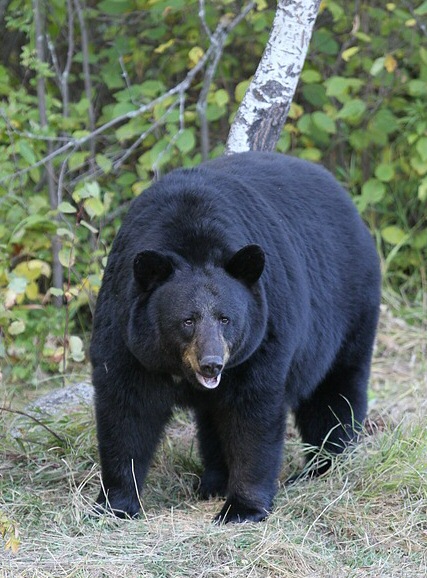



Physical characteristics and variation
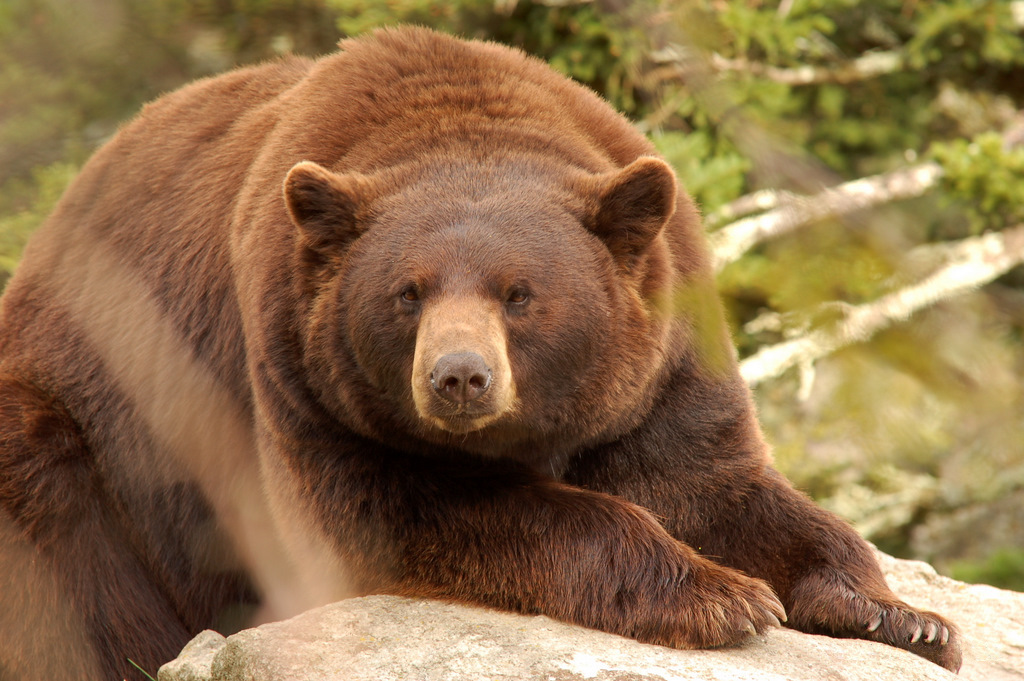
Coloration in black bears ranges from true black to brown, cinnamon, and in isolated populations even pale or white phases. Adults have a robust, stocky build, short tails, and strong limbs adapted for climbing and digging. Size varies regionally, reflecting available food and genetic factors; males are typically larger than females. Lifespan in the wild commonly reaches into the teens for individuals that avoid serious conflict and disease.
Hibernation and physiology
During winter many black bears enter a dormancy often called hibernation, although their physiological state differs from that of small mammal hibernators. Metabolic rate and metabolism slow substantially and heart rate drops. A resting heart can pause for extended intervals, sometimes for as long as twenty seconds, while core temperature falls but remains higher than in many true hibernators. During this period bears conserve energy and live off fat reserves accumulated during the active seasons.
Range, habitat and movements
Black bears occur across much of their continental range, using dens in trees, rock crevices or excavated ground sites for wintering and rearing young. Seasonal movements and local migrations follow food availability, with bears expanding their foraging areas in years of poor natural food production. Populations persist in both continuous wilderness and more fragmented suburban landscapes when suitable cover and food are present and conflicts are managed.
Diet and foraging behaviour
As true omnivores, black bears exploit a wide array of foods. Their diet includes animal prey such as fish, small mammals like rodents, and rabbits, as well as invertebrates including insects. They scavenge carrion and take advantage of abundant plant resources such as fruit, berries, and mast like nuts. Vegetation including grasses and leaves supplements the diet, and bears will raid beehives for honey. Opportunistic predation on young ungulates, such as deer fawns or occasionally moose calves, is documented where circumstances allow.
Reproduction and development
Breeding typically occurs in summer. Females exhibit delayed implantation, so embryos develop later and cubs are born in a sheltered den during winter dormancy. Litters usually contain one to three cubs, which remain with the mother for over a year and learn vital foraging and survival behaviours. Female black bears invest heavily in offspring care and may not reproduce every year if food is scarce.
Predators, threats and juvenile survival
Adult black bears have relatively few natural predators aside from humans and larger bear species in overlapping ranges. Cub mortality can be high from predation and other causes; potential predators include wolves, coyotes, cougars, lynxes, foxes and raptors such as birds of prey. In some regions interspecific interactions with grizzly bears or alligators have influenced local survival and behaviour patterns.
Conservation status and population trends
The American black bear is widely assessed as a species of lower conservation concern due to its broad distribution and relatively large overall numbers. Local population trends vary: some areas have expanding populations, while others are reduced by habitat loss, mortality from vehicle collisions, illegal killing, and unsustainable harvest. Management aims to maintain viable populations while reducing negative human-bear interactions through habitat conservation and public outreach.
Human interactions and safety
Black bears often adapt to human-dominated landscapes by exploiting attractants. Securing garbage, removing food sources, and using bear-resistant containers are primary measures to reduce conflict. Most encounters are non‑fatal; historically only a small number of human deaths have been attributed to black bears, but any close encounter can be dangerous. For local guidance consult regional wildlife agencies and resources that provide advice on coexistence and legal regulations (range information, local guidance at wildlife offices and community programs linked to management agencies via local winter and denning guidance).
Research, management and cultural significance
Ongoing research addresses population monitoring, genetics, disease, the effects of climate and land use change on food resources, and nonlethal ways to reduce conflict. In many indigenous and local cultures, the black bear has cultural, spiritual and material significance. Hunting, where regulated, is used as a management tool in some regions to sustain both human and bear populations.
Further reading and resources
For species accounts, management guidelines and public education materials consult authoritative sources and regional programs. Useful topics include population status, bear-safe practices, and habitat conservation strategies; many agencies and organizations provide detailed information and updates about research and policies (physiology, cardiology, denning behaviour at heart and circulation, and hibernation facts at hibernation intervals), as well as materials on diet (temperature studies), foraging (omnivore ecology), and human safety (meat and carrion, plant foods, aquatic prey, small mammals). Additional regional accounts cover mammal interactions and food webs involving lagomorphs, invertebrate prey, scavenging, and fruit and mast resources (fruits, nuts). Field studies also consider vegetation use (grasses, leaves), bee interactions (honey), and occasional predation on ungulate young (deer, moose). Conservation and predator interactions refer to other carnivores like wolves, coyotes, cougars, and smaller carnivores including lynx and foxes, plus raptors referenced at birds of prey.
Questions and answers
Q: What is the scientific name of the American black bear?
A: The scientific name of the American black bear is Ursus americanus.
Q: Where do American black bears usually live?
A: American black bears usually live in forested areas, but they may leave forests in search of food.
Q: Is the species listed as endangered by IUCN?
A: No, the species is listed by IUCN as Least Concern because it has a large global population estimated to be twice that of all other bear species combined.
Q: How many people have been killed by these animals in the past century?
A: In the past century, only 37 people have been killed by these animals.
Q: What happens to an American black bear's heart during hibernation?
A: During hibernation, an American black bear's heart can stop for twenty seconds and its body temperature decreases to 31 °C (88 °F). When hibernation is over, its body temperature returns to normal.
Q: What does an American black bear eat?
A: An American black bear is omnivorous and eats both meat and plants such as fish, rodents, rabbits, insects, carrion, fruit, nuts, grass, leaves honey deer and moose calves.
Q: Who are predators of adult and cubs of this species?
A: Predators of adult American black bears include humans grizzly bears and american alligators while wolves coyotes cougars lynxes foxes birds of prey and even other black bears are predators of cubs.
Related articles
Author
AlegsaOnline.com American black bear (Ursus americanus) Leandro Alegsa
URL: https://en.alegsaonline.com/art/3371
Sources
- iucnredlist.org : "Ursus americanus"
- nps.gov : "Shenandoah National Park – American Black Bear (U.S. National Park Service)"
- bbc.co.uk : "BBC News – Hibernating bears studied in unprecedented detail"
- nps.gov : "Yellowstone National Park – Denning and Hibernation Behavior (U.S. National Park Service)"
- species.wikimedia.org : Ursus americanus
- commons.wikimedia.org : Ursus americanus
- wikidata.org : Q122783
- animaldiversity.org : Ursus_americanus · web.archive.org
- eol.org : 328582
- gd.eppo.int : URSUAM
- fs.fed.us : uram
- fossilworks.org : 52602
- gbif.org : 2433407