
Water buffalo: biology, domestication, uses, and conservation
Concise overview of the water buffalo (wild and domestic): physical traits, behaviour, domestication history, agricultural and dairy uses, feral populations, and conservation challenges for wild populations.
Overview
The water buffalo is a large bovid native to South and Southeast Asia that exists as both wild and domestic forms. The domestic animal derives from the wild Asian water buffalo and has been spread by people beyond its original range. Domestic water buffalo are kept in many parts of Asia, in parts of South America and in some areas of Southern Europe. The wild ancestor is reduced and fragmented in range and receives focused attention for conservation (wild populations).
Image gallery
10 Images


Physical characteristics and behaviour
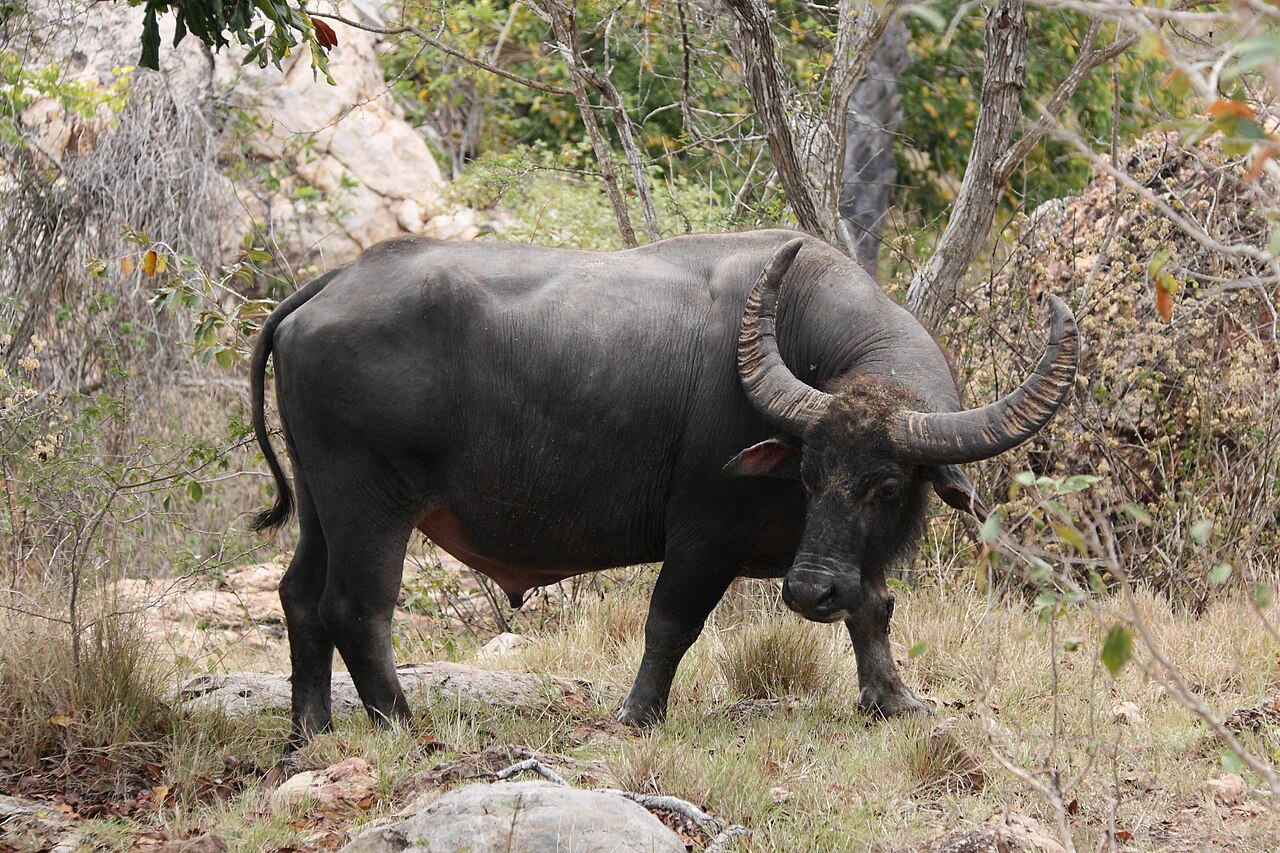
Water buffalo are heavy-bodied herbivores with broad skulls and variable horn shapes; swamp types tend to have wider, crescent horns while river types often bear different horn conformation. Their hooves, body weight and skin adapt them to marshes and flooded fields where they commonly wallow to cool off and remove parasites. Compared with typical dairy cattle, buffalo milk generally contains a higher proportion of fat and total solids, which influences its uses in dairy processing (milk, higher fat).
Domestication and types
Humans have kept and selectively bred water buffalo for several millennia; archaeological and genetic evidence indicate a long history of domestication, extending back at least five thousand years in parts of Asia. Two broad domestic forms are often recognised: the river type, commonly selected for milk production, and the swamp type, often used principally for draft work and as a source of meat. These classifications relate to behaviour, chromosome number in some populations, and traditional husbandry systems.
Uses by humans
Water buffalo have been and remain important to rural economies for multiple products and services. Principal uses include:
- Milk and dairy: buffalo milk is processed into cheese and other products; notable examples include Mozzarella and various forms of fresh curd.
- Draft power and labour: ploughing flooded rice paddies, hauling loads and other agricultural tasks where their strength and water affinity are advantageous.
- Meat, hides and horn material, plus manure used as fertilizer and fuel in many traditional systems.
Reproduction and social structure
Female water buffalo commonly give birth at intervals of roughly every other year under traditional management, though intervals vary with nutrition and workload. Herd social organisation in both wild and domestic contexts typically centres on mixed female groups and their young; young males may remain with maternal groups for several years before forming male-only bachelor herds or competing for mates. Herd sizes vary widely with habitat, management and population pressures.
Feral populations and ecological role
Domestic animals that become free-roaming are referred to as feral in many regions. Such herds can influence landscapes: by grazing and trampling they may reduce dense vegetation, opening habitat and affecting wetland structure. This vegetation management around waterways and ponds can help maintain open water and edge habitats associated with wetlands, which in turn may benefit a diversity of waterbirds and other fauna (birds). At the same time, feral populations can create conflicts with farmers and native ecosystems where they alter vegetation or compete with native herbivores.
Conservation status and challenges
The wild Asian water buffalo persists in a reduced number of protected or remote locations and is considered endangered or threatened in parts of its former range. Remaining wild populations are reported from some protected areas in countries such as India, Nepal, Bhutan and Thailand. Conservation efforts focus on protecting and restoring habitat, reducing poaching, and minimising genetic introgression from domestic animals. Maintaining distinct wild populations is difficult where free-ranging domestic buffalo interbreed with wild stock or where wetlands are converted for agriculture.
Current importance and management
Across large parts of their range, domestic water buffalo continue to be valued for their versatility: as draught animals, as sources of high-fat milk useful for traditional dairy products, and as a store of wealth for smallholders. Sustainable management balances the needs of farmers with habitat conservation, veterinary care, and measures to reduce disease transmission between domestic and wild populations. Local breeds, traditional knowledge and modern veterinary and breeding practices all contribute to how buffalo are kept and conserved in different regions.
Related articles
Author
AlegsaOnline.com Water buffalo: biology, domestication, uses, and conservation Leandro Alegsa
URL: https://en.alegsaonline.com/art/106784
Sources
- news.bbc.co.uk : Buffalo improve wildlife habitat - The Wildlife Trust of South and West Wales use the formidable beasts to help in conservation work at the 264-acre Teifi Marshes reserve; BBC, 15 February, 2004
- ramsar.org : "Buffalos and wetlands" -- grazing in wetland management: A discussion from the Ramsar Forum over late March 1998
- animals.nationalgeographic.com : "Water Buffalo, Water Buffalo Pictures, Water Buffalo Facts - National Geographic"