
Schizocarp: the split fruit and its parts, types, and ecological roles
A schizocarp is a dry fruit that, at maturity, separates into multiple one-seeded segments (mericarp). This article explains its structure, variants, development, examples, and ecological importance.

Overview
A schizocarp is a type of dry fruit characteristic of many flowering plants. At maturity it does not open to release seeds in the way a dehiscent capsule does; instead the whole fruit cleaves into two or more separate units called mericarps (also called cocci in some groups). Each mericarp usually contains a single seed and may remain attached to a short stalk or to a central column termed a carpophore. Schizocarps are an important fruit form for seed dispersal and are often useful in plant identification.
Image gallery
10 Images


Structure and common terms
The basic parts and terms associated with schizocarps include:
- Mericarp — a single one-seeded segment produced when the fruit splits.
- Carpophore — a persistent stalk or column to which mericarps can remain attached after splitting.
- Coccus (plural: cocci) — an alternative name for a single mericarp used especially in certain families.
- Cremocarp — a term sometimes applied to the paired, winged schizocarps of the carrot family (Apiaceae).
Major types and notable variants
Schizocarps occur in several distinct forms depending on how the mericarps behave after separation:
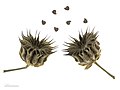
- Indehiscent mericarps — mericarps separate but do not open; the seed remains enclosed (common in Malvaceae).
- Dehiscent mericarps — each mericarp later opens to release its seed; seen in some geraniums.
- Explosive or ballistic schizocarps (regma) — segments separate forcefully and may burst open; Hura crepitans is a dramatic example.
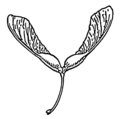
- Winged schizocarps (samara) — each mericarp bears a wing to aid wind dispersal, as in maples.
Development and ecological roles
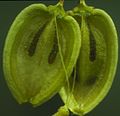
Schizocarps develop from a single compound ovary. At maturity, structural lines of weakness along true septa cause the fruit to split into mericarps. The manner of separation influences dispersal strategy: wind-dispersed samaras travel on air currents, cremocarps of umbellifers often separate into paired, aerodynamic units, and explosive forms fling seeds away from the parent plant to reduce competition. In some species a carpophore holds mericarps in position until wind or animals remove them.
Examples, families and identification value
Several plant families are well known for schizocarps and their distinctive appearances. Examples include:
- Geraniaceae (cranesbills) — typically produce a multi‑mericarp schizocarp that resembles a bird's beak.
- Apiaceae (carrot or umbellifer family) — produce two mericarps joined on a carpophore; these are often called double achenes or cremocarps.
- Aceraceae (maples) — form paired winged mericarps (samaras) that separate and glide away.
- Malvaceae — may form an indehiscent carcerulus in which each cocci detaches intact.
Distinctions and notable facts
Schizocarps are distinct from capsules and aggregate fruits. A capsule typically opens to release many seeds, whereas a schizocarp fragments into single-seeded units. Aggregate fruits arise from many separate carpels of one flower but may also split into units; terminology can overlap and depends on how fruits develop and separate. Botanists use schizocarp anatomy for classification and identification because mericarp shape, number, and attachment are often consistent at genus or family level.
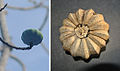
Some species with schizocarps have evolved specialized mechanisms: explosive dehiscence in Hura can hurl seed segments with audible reports, samaras in maples maximize wind dispersal with a single winged mericarp per seed, and the paired mericarps of many umbellifers are adapted to roll, tumble or adhere to animals. Morphological variation among schizocarps reflects diverse ecological solutions for moving seeds away from the parent plant.
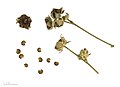
Understanding schizocarps helps both amateurs and professionals recognize plant groups in the field and appreciate the link between fruit form and reproductive strategy. While the basic concept is simple — a dry fruit splitting into mericarps — the variety of structural adaptations is wide and taxonomically informative.
Author
AlegsaOnline.com Schizocarp: the split fruit and its parts, types, and ecological roles Leandro Alegsa
URL: https://en.alegsaonline.com/art/87881