
Arctic char (Salvelinus alpinus): biology, distribution, and conservation
Arctic char is a cold‑water salmonid with a circumpolar range. This article describes its appearance, life histories (landlocked and anadromous), habitat, uses in fisheries and aquaculture, and conservation concerns.
Overview
The Arctic char (Salvelinus alpinus) is a cold‑water fish in the family Salmonidae. It is a circumpolar species in the genus Salvelinus that occurs across the Arctic, sub‑Arctic and in high‑altitude alpine lakes. Populations display diverse life histories: many are breeding in freshwater only, while others are anadromous, migrating to the sea to feed and grow before returning to spawn.
Image gallery
10 Images


Distribution and habitat
Arctic char occur from northern North America through Greenland, Iceland and Scandinavia to eastern Siberia. In some extreme northern systems they are the only fish present; for example, they are the sole fish species recorded in Lake Hazen on Ellesmere Island in the Canadian Arctic. Many populations occupy deep, cold, often glacially fed lakes and the cold coastal waters of high latitudes. In Britain the species is among the rarer native freshwater fishes and is locally protected in some sites (Britain), whereas in parts of Scandinavia and Iceland they are abundant and widely fished or managed for harvest.
Life history and behaviour
Arctic char show great flexibility in life history. Landlocked forms complete their entire life cycle in lakes; anadromous forms move between sea and freshwater. Spawning always takes place in freshwater, typically in shallow gravel or stream mouths, and timing varies with latitude and local conditions (spawning). Juveniles grow in the nursery habitat before dispersing; sea‑migrating individuals generally attain larger sizes because of access to marine prey.
Appearance and ecology
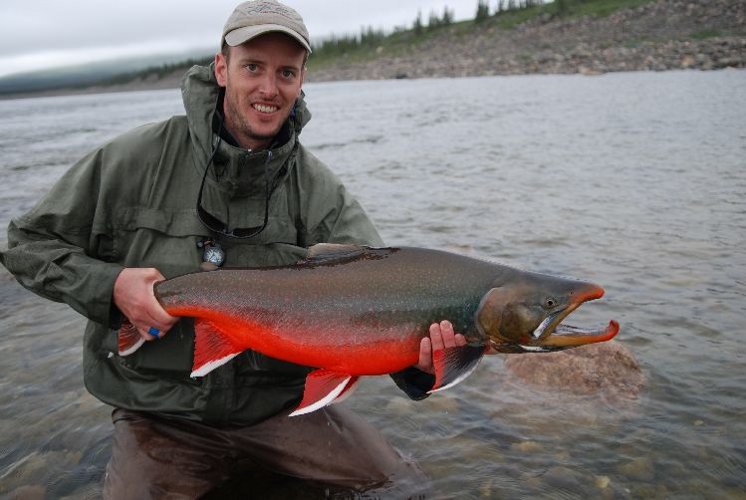
Colour and body shape vary within and among populations. Typical coloration includes a dark back—often dark brown or olive green—with lighter, spotted flanks. Flank and belly hues range from gold or brown to vivid red or orange in some ecotypes; these colours frequently intensify at spawning, when the fins and belly may become bright. Diet is opportunistic and includes zooplankton, benthic invertebrates, insects and small fish; feeding ecology differs between lake‑resident and sea‑migrating fish.
Fisheries, aquaculture and uses
Arctic char is valued by subsistence fishers, recreational anglers and specialty markets for its firm flesh and appealing colour. In regions where wild stocks are abundant, local fisheries are important for food and culture. Char are also raised in aquaculture operations in cold‑water regions and are sometimes stocked to support recreational fisheries; management typically emphasizes habitat protection and regulated catch limits to sustain populations.
Conservation and threats
While many populations are stable, others—particularly isolated or southerly groups—face pressures from climate warming, habitat alteration, acidification of sensitive waters, and competition or hybridization with introduced species. Because Arctic char are adapted to cold, well‑oxygenated waters, changes in temperature regimes, ice cover and water chemistry can have strong effects. Conservation measures in different regions include monitoring programs, habitat protection, fishing regulations and restoration projects to reduce local threats.
Research, diversity and cultural significance
Arctic char are of interest to fisheries scientists and ecologists because of their pronounced ecological and morphological diversity. Within a single lake or watershed, distinct ecotypes—differing in size, shape, diet and timing of reproduction—may coexist, providing natural opportunities to study adaptation and speciation. The species also has cultural importance for many Indigenous and local communities across its range, where it contributes to food security and traditional practices.
Notable facts
- The species bridges traits of other salmonids and is closely related to salmon and to salmon relatives as well as to lake trout in the genus Salvelinus.
- In parts of the Alps, notably regions such as Trentino and mountain areas of the Alps and Lombardy, local lake forms are familiar to anglers and conservationists.
- Arctic char are widespread in Iceland and are known under different local names; in Siberia they are sometimes called golets.
- The species prefers deep, cold, often glacial lakes (glacial lakes) and is sensitive to acidification and other water‑quality changes.
- Colouration varies seasonally and geographically, from dark backs to gold, red or orange flanks; spawning colours can be especially bright (spawning, fins).
- Where common, they support local fisheries and are subject to management actions such as stocking and catch limits to balance use and conservation (fished, managed).
Related articles
Author
AlegsaOnline.com Arctic char (Salvelinus alpinus): biology, distribution, and conservation Leandro Alegsa
URL: https://en.alegsaonline.com/art/5342
Sources
- commons.wikimedia.org : Salvelinus alpinus