
Arctiidae — tiger moths, lichen moths and woolly bears
Arctiidae (commonly tiger moths) is a diverse group of moths known for bright patterns, hairy 'woolly bear' caterpillars, chemical defenses and mimicry; it is now often treated as subfamily Arctiinae.
Arctiidae is a traditional name for a large assemblage of moths that includes the brightly colored tiger moths, the drab footmen, lichen-feeding lichen moths and the wasp-mimicking groups. Around 11,000 described species occur worldwide, with especially high diversity in tropical regions. Many people recognize the family by its hairy caterpillars, popularly called "woolly bears," which gave rise to the scientific name derived from the Greek word for "bear." For more overview material see Arctiidae.
Image gallery
10 Images


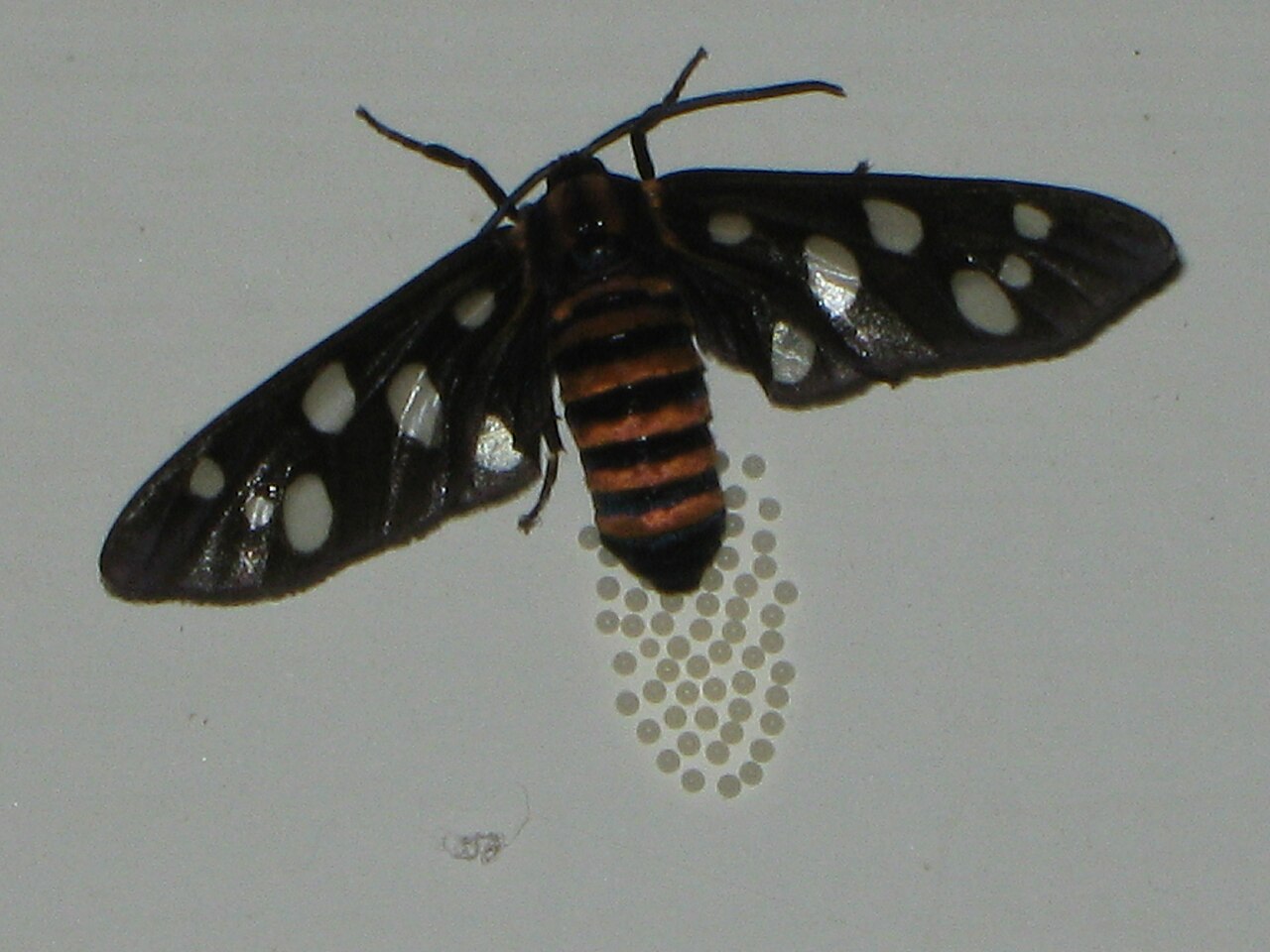


Distinctive features
Adults range from small and inconspicuous to boldly patterned and colorful. Wing patterns often serve as warning signals (aposematism) to predators. Larvae are typically densely setose (hairy) and may sequester plant toxins. Some species fly by day and show bright warning colors, while others are nocturnal. Many lichen moths (often placed in the tribe Lithosiini) feed on lichens and algae as larvae and are slimmer and paler than the classic tiger moths.
Life cycle and behavior
Arctiidae undergo complete metamorphosis: eggs hatch into caterpillars, which feed and grow through several instars before pupating in cocoons that often incorporate larval hairs. Adults emerge to mate and disperse. Larvae feed on a wide range of plants, lichens or detritus depending on the lineage. Some adults produce ultrasonic clicks or defensive chemicals that reduce bat predation or make them unpalatable to birds and other predators.
Defenses, mimicry and chemical ecology
Many species advertise chemical defenses with bright coloration; others mimic distasteful or stinging insects such as wasps. Several lineages can acquire toxic compounds from host plants (for example, pyrrolizidine alkaloids) and retain them through metamorphosis. Acoustic defense—brief ultrasonic clicks produced by specialized organs—is known in multiple taxa and can interfere with bat echolocation.
Taxonomy and history
Historically treated as the family Arctiidae, modern classifications frequently place these moths as the subfamily Arctiinae within the larger family Erebidae. The group contains several recognizable tribes and subgroups, commonly called tiger moths (Arctiini), lichen moths (Lithosiini), footmen, and wasp moths. The informal name "woolly bear" for larvae leads to occasional confusion with other hairy caterpillars such as tussock moths, which belong to a different lineage.
Importance and notable facts
- Arctiids are important in ecological food webs as herbivores and as chemically defended prey for predators.
- Some species are used in studies of warning coloration, mimicry and predator–prey interactions.
- Larval hairs can cause skin irritation in sensitive people, though most woolly-bear species are not dangerously venomous.
Because of their striking appearance and varied life histories, these moths are popular subjects for naturalists and researchers alike. Their classification and relationships continue to be refined with genetic and morphological studies.
Questions and answers
Q: What is Arctiidae?
A: Arctiidae is a family of moths with around 11,000 species found all over the world.
Q: How many neotropical species does Arctiidae have?
A: Arctiidae includes 6,000 neotropical species.
Q: What are some groups included in Arctiidae?
A: Some groups included in Arctiidae are tiger moths, footmen, lichen moths, and wasp moths.
Q: What are tiger moths known for?
A: Tiger moths are known for their bright colours.
Q: What are the caterpillars of Arctiidae species known as?
A: The caterpillars of Arctiidae species are popularly known as woolly bears or woolly worms.
Q: Why is the family Arctiidae named as such?
A: The family Arctiidae is named as such because the scientific name refers to the 'hairy' caterpillars, and the word αρκτος means a bear in Greek.
Q: What is the difference between 'woolly bears' and 'tussock moths'?
A: 'Woolly bears' are the caterpillars of Arctiidae species, while 'tussock moths' more usually refer to Lymantriidae species.
Related articles
Author
AlegsaOnline.com Arctiidae — tiger moths, lichen moths and woolly bears Leandro Alegsa
URL: https://en.alegsaonline.com/art/5353