
Argonauta (paper nautiluses): pelagic octopods and their eggcases
Argonauta are pelagic octopods whose females secrete a delicate, paper-thin eggcase. They display extreme sexual dimorphism, live in tropical and subtropical seas worldwide, and remain incompletely known in many aspects.
Overview
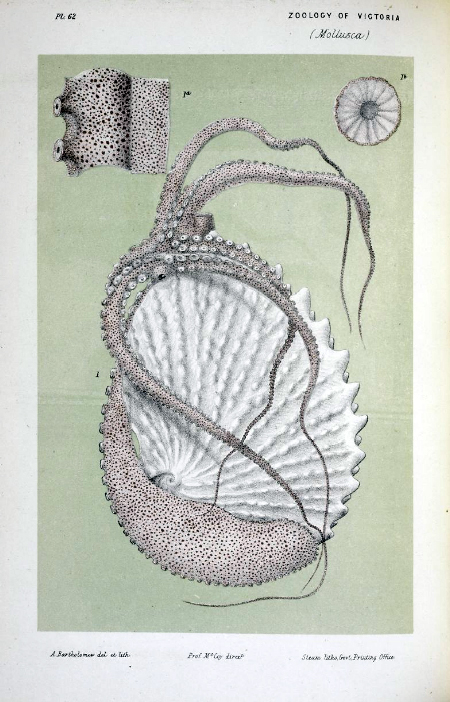
Argonauta is the only living genus in the family Argonautidae and comprises the animals commonly called argonauts or paper nautiluses. These pelagic octopods are best known for the fragile, shell-like eggcase produced by females. The eggcase superficially resembles a nautilus shell in shape, but it lacks chambered gas spaces and is not homologous to true external shells of other cephalopods.
Image gallery
10 Images





Description and anatomy
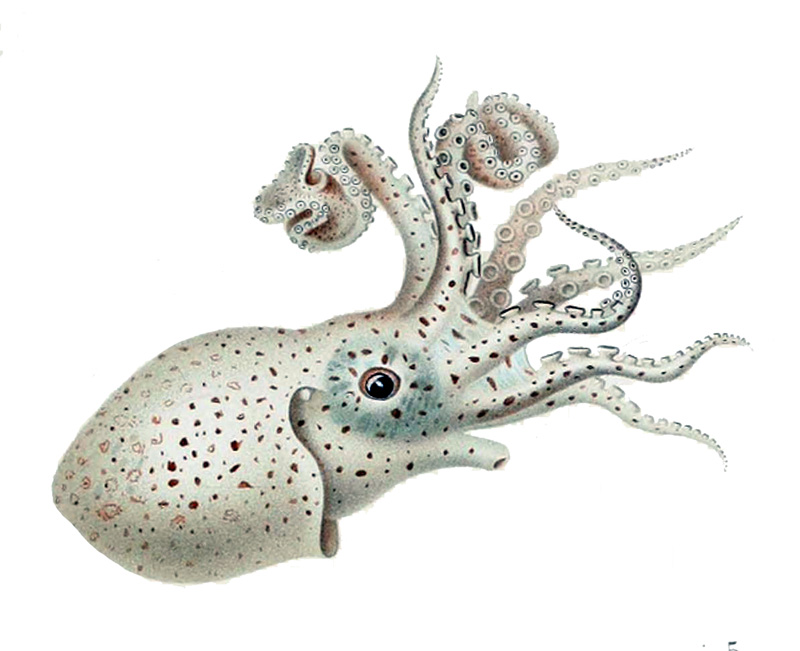
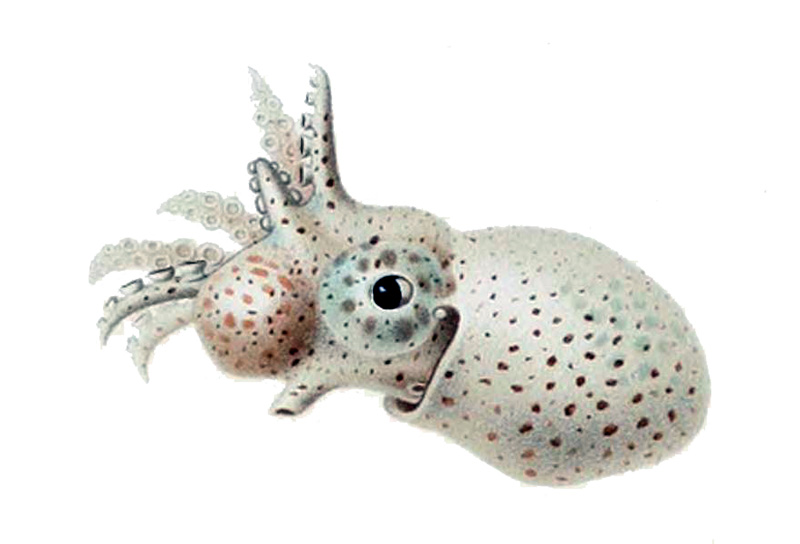
Argonauts have the general octopod body plan—a rounded mantle and eight arms—but show several distinctive features. Females are comparatively large and develop specialized dorsal arms that secrete and shape the eggcase; males are minute by comparison and do not build cases, an extreme form of sexual dimorphism. The genus is characterised by large eyes, relatively small distal webs between the arms, and a mantle–funnel locking apparatus formed by knob-like cartilages and corresponding depressions in the funnel. These anatomical markers help distinguish Argonauta from related pelagic octopods.
Eggcase formation and buoyancy
The female secretes a thin calcareous eggcase from specialized surfaces of her dorsal arms. The case protects eggs and brooding young and can be enlarged as the clutch develops. Although sometimes called a "shell," the structure lacks the internal, gas-filled chambers that provide buoyancy to chambered nautiluses. Observations suggest the eggcase may assist the female with floating—by holding a bubble of air or by modifying the volume and shape of water carried inside—but the extent and mechanisms of buoyancy control remain active subjects of study.
Reproduction and life cycle
Reproduction involves transfer of spermatophores by the male’s hectocotylus; in classic accounts the hectocotylus can detach and remain within the female’s mantle cavity. Females brood eggs inside the eggcase until the young are relatively well developed. Like many open-ocean cephalopods, argonaut life histories are not fully documented: longevity, age at maturity and population dynamics are incompletely known for most species.
Ecology and distribution
Argonauta species are epipelagic, living near the sea surface in warm waters; they are most abundant in tropical and subtropical oceans worldwide. Records come from sightings at the surface, strandings of empty eggcases on beaches, and bycatch in surface fisheries. Their diet likely includes small pelagic crustaceans, jellyfish and other available surface organisms, and they face predation from large fishes and other oceanic predators.
Taxonomy and related genera
The genus Argonauta is usually considered to contain about seven extant species, all placed in the family Argonautidae. It can be separated from related pelagic octopods such as Ocythoe and Tremoctopus by the absence of water pores and by differences in the mantle–funnel locking apparatus. For taxonomic treatments and species lists consult specialist references and databases.
Human interest and research
Delicate eggcases wash ashore and have long attracted the attention of naturalists and collectors; they also appear as isolated fossils that inform paleontologists about past distributions. Because many aspects of argonaut biology are difficult to study in the open ocean, field observations, museum specimens and occasional captures continue to be important sources of knowledge. Ongoing research addresses eggcase formation, buoyancy, reproductive biology and the evolutionary origins of this unusual adaptation.
Further reading and resources
- Family Argonautidae overview
- Comparative shell morphology and nautilus comparison
- Cephalopod shell evolution
- Morphology and anatomy of argonauts
- Evolutionary innovation in eggcase formation
- The genus Argonauta: species accounts
- Tropical and subtropical distribution records
- Surface-dwelling habits and pelagic ecology
- Pelagic octopod ecology
- Mantle–funnel locking apparatus and identification
Questions and answers
Q: What is Argonauta?
A: Argonauta is the only living genus in the Argonautidae family, a group of pelagic octopods.
Q: Why are they called paper nautiluses?
A: They are called paper nautiluses because of the paper-thin eggcase that females make, which is an evolutionary innovation unique to the genus Argonauta.
Q: Where are Argonauts found?
A: Argonauts are found in tropical and subtropical waters worldwide, living in the open ocean.
Q: What are some physical characteristics of Argonauts?
A: Argonauta species have a rounded body, eight arms, no fins, very large eyes, and small distal webs. They also have a mantle-funnel locking apparatus, which is a unique way to identify the genus.
Q: How do Argonauts differ from octopuses?
A: Unlike octopuses, which live on the seabed, argonauts live close to the sea surface.
Q: What do Argonauts lack that other related genera have?
A: Argonauta species lack water pores, unlike the closely related genera Ocythoe and Tremoctopus.
Q: What is unique about the eggcase that female Argonauts make?
A: The eggcase that female Argonauts make is a paper-thin structure without gas-filled chambers, and is not a true cephalopod shell. It is an evolutionary innovation unique to the genus Argonauta.
Related articles
Author
AlegsaOnline.com Argonauta (paper nautiluses): pelagic octopods and their eggcases Leandro Alegsa
URL: https://en.alegsaonline.com/art/5494