
Salmonidae — family of salmon, trout, chars, graylings and whitefishes
Salmonidae are cold-water, ray-finned fishes including salmon, trout, chars, graylings and whitefishes; noted for anadromy in many species, an adipose fin, ecological importance and conservation concerns.
Overview
The family Salmonidae is a group of primarily cold‑water, ray‑finned fishes that includes salmon, trout, chars, graylings and the freshwater whitefishes. It is the only extant family placed in the order Salmoniformes. Salmonids occur mainly across the temperate and subarctic regions of the Northern Hemisphere, with some species established in southern temperate areas. Members occupy rivers, lakes and coastal waters, and their life histories range from wholly freshwater residents to anadromous forms that migrate to sea and return to freshwater to spawn.
Image gallery
10 Images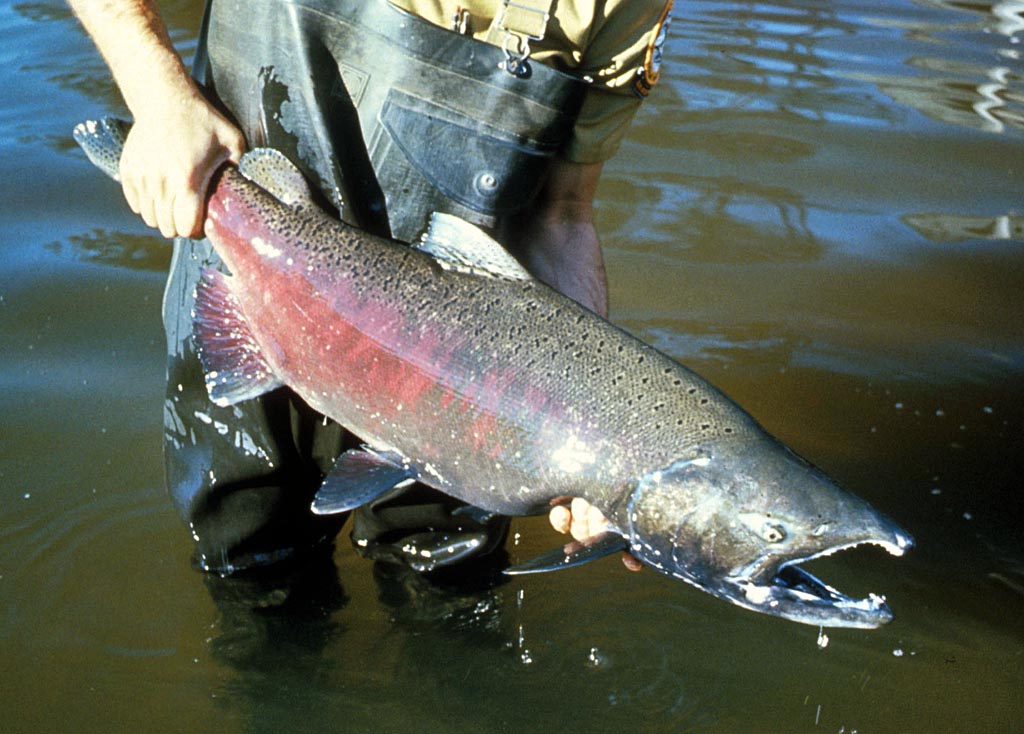



Morphology and distinguishing features
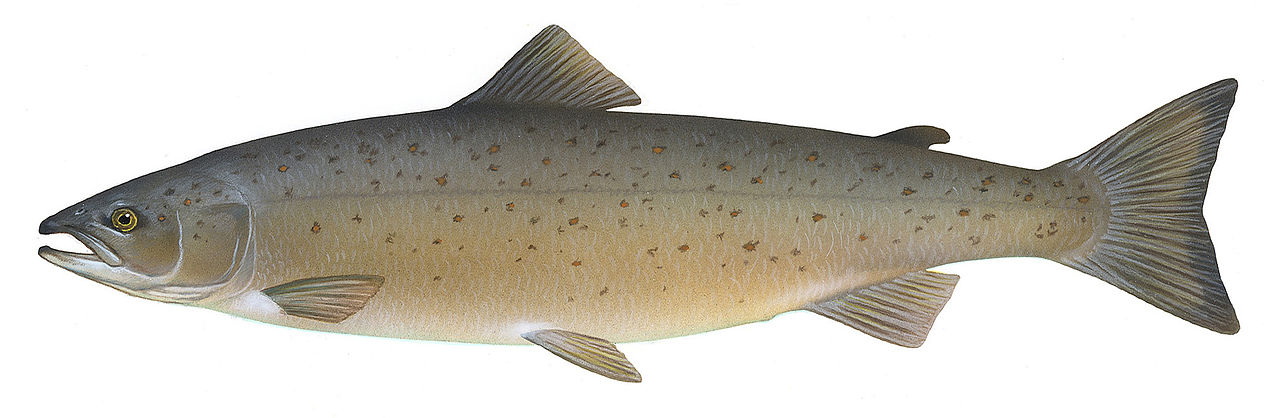
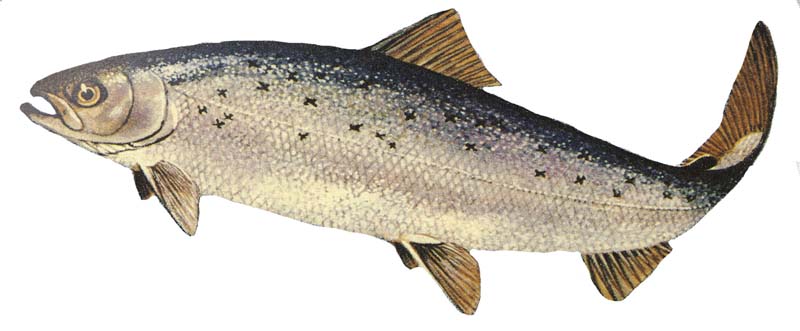
Salmonids show a characteristic combination of traits: a streamlined, often slender body; a small, fleshy adipose fin set toward the rear of the back; pelvic fins placed relatively far back on the belly; and a forked caudal (tail) fin. Scales are generally cycloid (rounded), and the oral dentition is typically a single row of small, sharp teeth. Body size varies widely within the family, from small whitefish species and chars under 20 cm to large migratory salmon that may reach a metre or more in length. Coloration and spotting patterns differ greatly by species, life stage and sex, often becoming more pronounced during spawning.
Life cycle, reproduction and behaviour
All salmonids spawn in fresh water. Many familiar species are anadromous: juveniles hatch and rear in streams or lakes, undergo physiological changes known as smoltification that prepare them for saltwater, grow at sea, and then return to natal or nearby freshwater sites to reproduce. Eggs are deposited in gravel nests called redds, and parental care beyond spawning is usually absent. Some species and populations are wholly freshwater and complete their life cycle without a marine phase. Salmonids are chiefly carnivorous and act as important aquatic predators, feeding on aquatic insects, crustaceans and smaller fishes; diet shifts with size and habitat.
Taxonomy and major groups
The family is commonly divided into three subfamilies that reflect ecological and morphological differences: Salmoninae (salmon, trout and chars), Coregoninae (whitefishes), and Thymallinae (graylings). Familiar genera include Salmo (which contains the Atlantic salmon and many trout), as well as other genera that contain Pacific salmon, chars and whitefishes. Scientific study integrates morphology, life history and molecular data to resolve relationships and to identify distinct conservation units.
Evolutionary background
Fossil and genetic evidence suggest that salmonids originated and diversified in temperate freshwater systems, with some lineages later adapting to marine environments. Compared with many more derived teleost groups, salmonids retain a set of anatomical features regarded as relatively primitive among modern teleost fishes, but they have also evolved complex life‑history strategies such as anadromy and natal homing.
Distribution and habitats
Salmonids are most diverse and abundant in cool, oxygen-rich waters. They occupy headwater streams, large rivers, oligotrophic lakes and nearshore marine zones. Habitat use varies seasonally: for example, adults may occupy coastal feeding areas while juveniles rear in rivers and lakes. Environmental factors such as water temperature, flow regimes, substrate composition and prey availability strongly influence distribution and recruitment.
Fisheries, aquaculture and human uses
Salmonids are central to commercial fisheries, recreational angling and aquaculture. Species such as Atlantic and Pacific salmon and many trout species are sought for food and sport. Aquaculture supplies a large portion of global salmonid production but raises management and ecological questions including disease transfer, genetic interactions between farmed and wild fish, and impacts on local ecosystems.
Conservation and management
Conservation concerns for salmonids include habitat degradation, barriers to migration such as dams, overfishing, changes in water temperature and flow due to climate change, invasive species, and genetic impacts from hatchery releases. Management approaches combine habitat restoration, barriers removal or modification, regulated harvest, hatchery supplementation where appropriate, and watershed‑scale conservation planning. Effective measures often require coordination among fisheries managers, conservation organizations and local communities.
Ecological and cultural significance
Beyond their ecological role as predators and prey, salmonids have substantial cultural importance for indigenous peoples and coastal communities, featuring in diets, ceremonies and economies. Their seasonal migrations connect marine and freshwater ecosystems, and declines in salmonid populations can indicate broader environmental changes in watershed and coastal habitats.
Further reading and resources
- General family treatments and taxonomic lists: see linked resources for family-level summaries (Salmonidae overview).
- Order and higher classification details are covered in specialist references (Salmoniformes).
- Information focused on salmon species can be found in guides and species accounts (salmon).
- Trout biology, identification and management are summarized in angling and fisheries literature (trout).
- For genus‑level information, including the Atlantic salmon and related trout, consult sources on Salmo.
- Comparative anatomy and teleost context: introductory texts on teleost fishes discuss how salmonids fit into broader fish diversity.
- Ecological roles and predator–prey interactions are discussed in ecosystem studies (predators).
These linked placeholders point to general resources and further reading. For region‑specific information, identification keys, and conservation status of particular populations, consult local fish and wildlife agencies and peer‑reviewed literature.
Questions and answers
Q: What is the Salmonidae?
A: The Salmonidae is a family of ray-finned fish.
Q: What is the order that the salmonidae belongs to?
A: The salmonidae is the only living family in the order Salmoniformes.
Q: What are some examples of fish that belong to the Salmonidae?
A: Some examples of fish in the Salmonidae include salmon, trout, chars, graylings, and the freshwater whitefish.
Q: What are the characteristics of the Salmonidae?
A: Salmonids have placed far back pelvic fins, adipose fins towards the rear, rounded scales, forked tails, and a single row of sharp teeth.
Q: Do all salmonids spawn in fresh water?
A: Yes, all salmonids spawn in fresh water.
Q: What is the migratory lifecycle of the salmonids?
A: The salmonids have a migratory lifecycle where they spend most of their lives at sea and only return to the rivers to reproduce.
Q: What do salmonids feed on?
A: Salmonids are predators that feed on small crustaceans, aquatic insects, and smaller fish.
Related articles
Author
AlegsaOnline.com Salmonidae — family of salmon, trout, chars, graylings and whitefishes Leandro Alegsa
URL: https://en.alegsaonline.com/art/86524