
Alps: Europe's major mountain range
Overview of the Alps: geography, geology, ecology, notable peaks and human uses across the transnational mountain system.
Overview
The Alps are the largest continuous mountain range in Europe, forming a highland spine that separates different climatic and cultural regions. The name appears in many languages, for example Italian Alpi, French Alpes, German Alpen, Romansh Alps, Slovene Alpe and Occitan Aups. The term has long associations with snow and ice; in some traditions the root is linked to the idea of whiteness.
Image gallery
10 Images


Geography and political extent
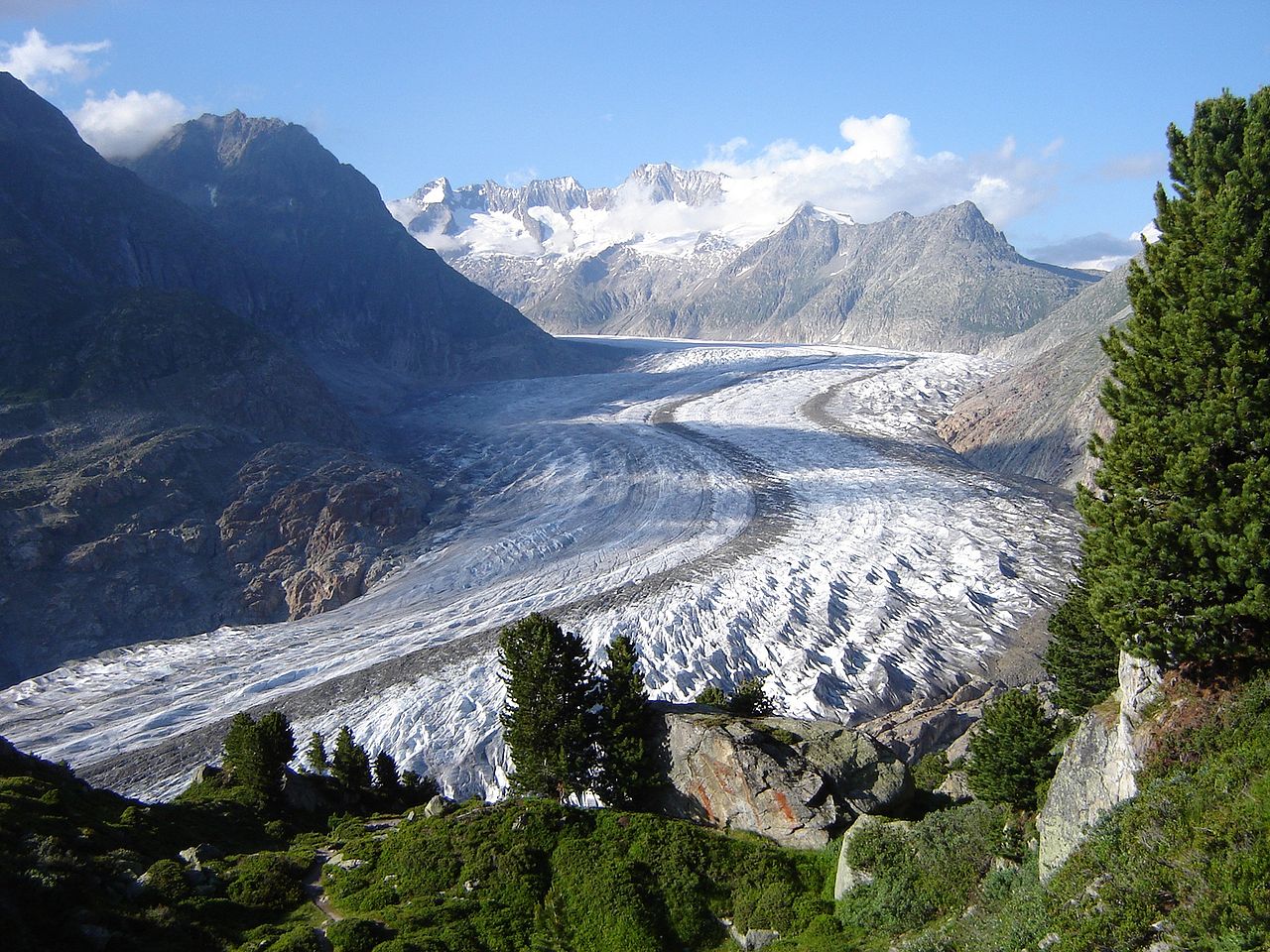
The chain stretches across central Europe from the eastern foothills to the western end of the range, touching several countries. Major states that contain alpine territory include Austria, Slovenia, Italy, Switzerland, Liechtenstein, Germany and France. The landscape includes high peaks, glaciated valleys, deep gorges and broad alpine meadows.
Notable summits and passes
The Alps contain many famous mountains and historic passes. The highest peak is Mont Blanc, which rises to about 4,808 metres on the French–Italian frontier. Other well-known summits include the Matterhorn and the Eiger, while passes such as the Brenner and Saint Gotthard have long served as transalpine routes for trade and travel.
Geology and natural zones
Geologically the Alps formed as the African and Eurasian tectonic plates collided, uplifting sedimentary and crystalline rocks in a series of folds and thrusts. The result is a complex structure with distinct belts and nappes. Climatically and ecologically the range is stratified by altitude: montane forests give way to subalpine shrub and meadows, then to alpine tundra and permanent ice at the highest elevations. Glaciers have sculpted the valleys and continue to influence river systems.
Human use, culture and economy
Human settlement in the Alps dates back millennia; communities adapted to steep terrain with pastoralism, seasonal grazing (transhumance), forestry and small-scale agriculture. From the 19th century onward mountaineering and alpine tourism grew rapidly, and today winter sports, summer hiking and scenic tourism are central to many local economies. The mountains also supply hydroelectric power and freshwater, and they host a range of protected areas and national parks that preserve biodiversity and cultural landscapes.
Distinctive features and significance
The Alps are notable for their combination of natural diversity, dramatic scenery and dense human presence. They have shaped regional climates, water resources and cultural identities across central Europe, and they remain a focus for scientific study, recreation and cross-border cooperation in conservation and transport planning.
- Languages and local names: see the multilingual forms listed above.
- Major contemporary issues: glacier retreat, sustainable tourism and habitat protection.
Questions and answers
Q: What is the Alps?
A: The Alps is the largest mountain range in Europe that stretches from Austria, Slovenia, Italy, Switzerland, Liechtenstein, and Germany to France.
Q: What is the meaning of the word "Alps"?
A: The original meaning of "Alps" was "white."
Q: What is the highest mountain in the Alps?
A: The highest mountain in the Alps is Mont Blanc, located on the Italian-French border, standing at 4,808 meters (15,774 feet).
Q: Which countries are located in the Alps?
A: The Alps stretches across Austria, Slovenia, Italy, Switzerland, Liechtenstein, Germany, and France.
Q: What are the different names of the Alps in various languages?
A: In Italian, the Alps are referred to as "Alpi", in French as "Alpes", in German as "Alpen", in Bavarian as "Oipm", in Romansh as "Alps", in Slovene as "Alpe", and in Occitan as "Aups".
Q: Is the Alps the greatest mountain range in Europe?
A: Yes, the Alps is the greatest mountain range in Europe.
Q: What is the height of Mont Blanc, the highest mountain in the Alps?
A: The height of Mont Blanc, the highest mountain in the Alps, is 4,808 meters (15,774 feet) on the Italian-French border.
Related articles
Author
AlegsaOnline.com Alps: Europe's major mountain range Leandro Alegsa
URL: https://en.alegsaonline.com/art/2994
Sources
- commons.wikimedia.org : Alps
- wikidata.org : wikidata.org/wiki/Q1286
- d-nb.info : 4001328-5
- hls-dhs-dss.ch : 008569
- id.loc.gov : sh85003839
- catalog.archives.gov : 10045350
- id.ndl.go.jp : 01078176
- aleph.nkp.cz : ge128379
- viaf.org : 315124935
- worldcat.org : 315124935