
Anne Frank: life, the diary, and historical legacy
Anne Frank (1929–1945) was a Jewish girl whose wartime diary — written while hiding from the Nazis in Amsterdam — became a seminal account of life under persecution and a major symbol of the Holocaust.
Anne Frank, born Annelies Marie Frank on 12 June 1929 in Frankfurt am Main, is remembered worldwide for the diary she kept while hiding from Nazi persecution and for the tragic fate she shared with millions of other European Jews during World War II. Her experience ended in the winter of 1945 at the Bergen-Belsen camp, where she died shortly before the war ended (Bergen-Belsen). The record she left behind has become one of the best known personal testimonies of the Holocaust (Holocaust) and has inspired stage adaptations (plays), films (movies), and countless educational programs.
Image gallery
10 Images
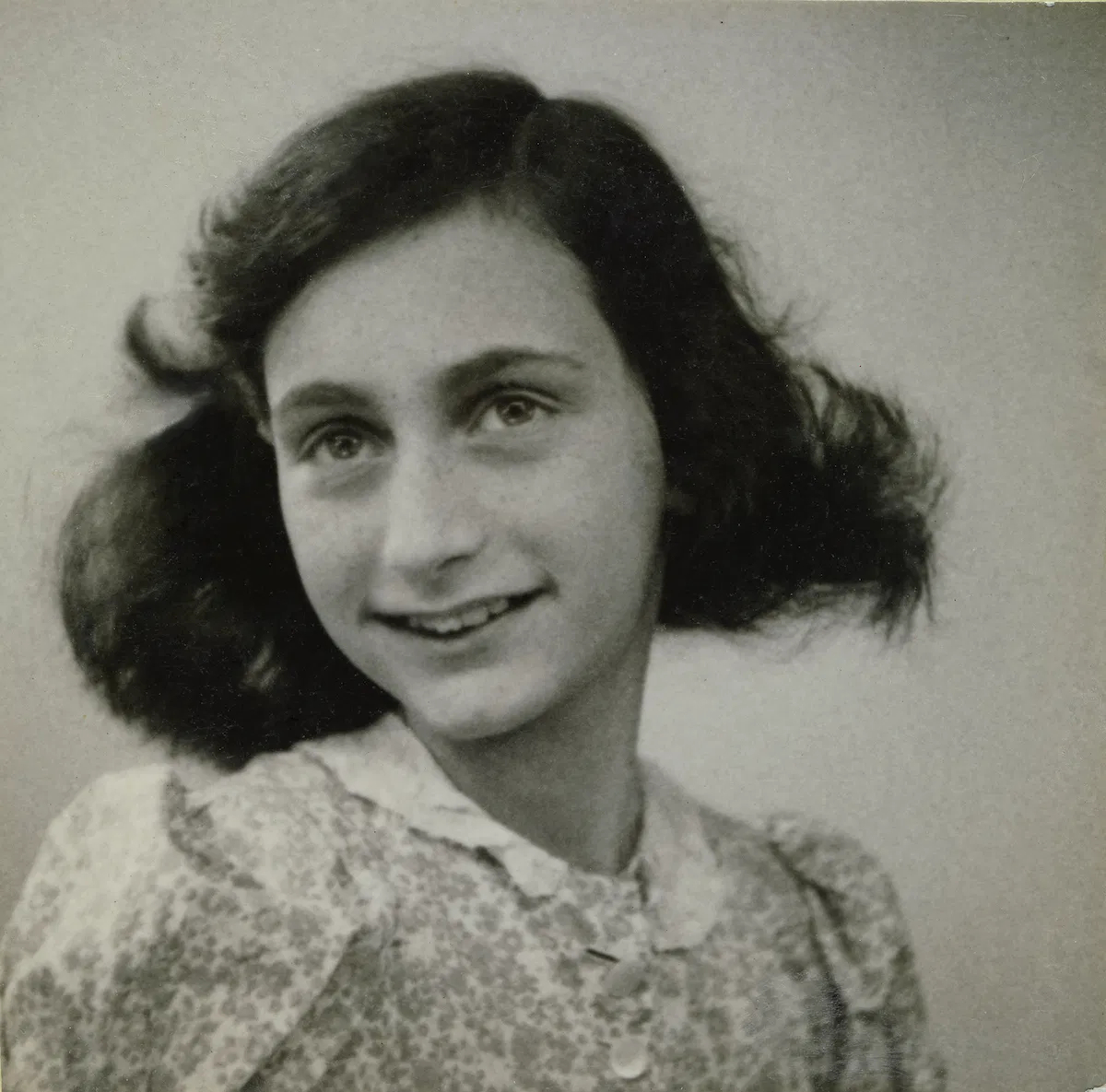


Life and family background
Anne grew up in a middle-class family in what was then Weimar Germany (Weimar Germany) and spent most of her later childhood in Amsterdam (Amsterdam), in the Netherlands (Netherlands). Officially German until 1935, Anne and her family lost German citizenship under the racial laws promulgated by the Nazi government (German nationality, Nazi Germany). She was the younger daughter of Otto Frank and Edith Frank-Holländer and sister to Margot Frank (Margot); the family identified as Jewish (Jews) but lived among neighbors and friends of several faiths, including Catholic (Catholic) and Protestant (Protestant) families. Anne’s mother was observant (Edith), while her father placed emphasis on education and books: Otto’s home library was an important influence on the children (library).
The Franks left Germany in 1933 after the Nazi Party rose to power (Nazi Party) and anti-Jewish measures and violence began to escalate (Antisemitism). Otto moved first to Amsterdam to establish a business, and his wife and daughters joined him soon after. He worked with companies such as Opekta (Opekta Works), a firm that sold pectin (pectin), and later a related firm, Pectacon, which marketed spices and other food products (herbs, salts, mixed spices) used by local trades including butchers (sausages). Among colleagues who later became part of the group in hiding was Hermann van Pels (Hermann van Pels), a Jewish associate who worked with Otto.
Hiding, the diary, and daily life in the Secret Annex
After the German invasion of the Netherlands in 1940 and the tightening of restrictions on Jews (Nazi occupation), the Frank family lived under increasing discrimination and danger. Persecution intensified in 1942 (persecution), and when Margot received a call-up notice for relocation to a labor camp, the family went into hiding in July 1942. They concealed themselves in a hidden set of rooms behind Otto Frank’s business premises, an area often called the Secret Annex (Otto Frank's office). Anne received a red-checked diary on her thirteenth birthday and began to write regularly, recording the small and large events of life in confinement as well as her reflections about identity, the future, and human nature (13th birthday, diary).
Anne’s writing covers the period from 12 June 1942 to 1 August 1944 and mixes vivid daily detail with the introspection of a teenager growing into an observer of history. She described roommates, their attempts to remain quiet and concealed, the sound of the city beyond their walls, and tensions within the hiding group. Her tone ranges from wry and humorous to sincere and anguished, and it reveals traits many who knew her later recalled: energy, curiosity, and courage (brave, energetic). The diary combines practical notes about life in hiding with literary ambitions: Anne considered becoming a writer and used her entries to experiment with style.
Arrest, deportation and death
After more than two years of concealment the occupants of the Annex were betrayed (betrayed) and arrested in August 1944. They were taken to transit and concentration camps (concentration camps) and separated from one another. Anne and Margot were deported to Auschwitz and later transferred to Bergen-Belsen, where disease and starvation were widespread. Both sisters died of typhus (typhus) in early 1945, in the months before Allied forces liberated the camps. Otto Frank was the only immediate family member to survive the Holocaust; he returned to Amsterdam after the war.
Publication, translations and cultural impact
After the war Otto Frank recovered Anne’s diaries and papers, which had been preserved by helpers and friends of the family. He prepared a version for publication; the book first appeared in Dutch and was later translated (translated) into many languages from the original Dutch (Dutch), reaching English readers in the early 1950s (English) as The Diary of a Young Girl. The diary’s frankness, literary quality, and human perspective turned it into a classic of wartime literature and an educational touchstone about the experience of Jews during the Holocaust. It has been adapted for stage and screen and remains widely read and studied around the world.
- Historical context: Hitler’s rise and related political changes in Germany made the Frank family’s emigration necessary (Adolf Hitler, the Nazis and their growing power in the 1930s), and earlier electoral shifts and social pressures contributed to exile (elections).
- Personal portrait: family friends and survivors emphasized differences between Anne and Margot—Anne was socially warm and expressive, Margot more reserved—and noted how the girls’ schooling changed under discriminatory rules that forced Jewish children into separate institutions (Aachen, business moves).
- Enduring questions: the diary raises issues about memory, testimony, and representation. While its authenticity and origins have been the subject of scholarly discussion, the broad outline—of hiding, arrest, and the later publication by Otto Frank—is well documented.
Anne Frank’s diary continues to be taught as a personal account that makes the scale of persecution comprehensible through an individual voice. Museums, educational programs, and memorials use her life and writing to teach about the dangers of hatred and the importance of human rights. For readers today, the diary is both a historical source and a powerful literary work: it records daily life under threat while also giving an intimate view of a young person testing ideas about the future, identity, and human decency (Bergen-Belsen, Holocaust, diary). Many original documents and secondary studies remain accessible for those who wish to learn more about Anne Frank and the world she lived in (films, theatre, translations).
Notable individuals and companies connected to Anne’s life—from neighbors and helpers to Otto Frank’s commercial partners—illustrate how ordinary networks of work and friendship intersected with larger historical forces. Names and details from the family’s story—such as businesses selling pectin (pectin) and spice mixes (spices)—appear in accounts of the period. The Frank family’s movement from Germany to the Netherlands and later events reflect a broader pattern faced by hundreds of thousands who fled or were displaced across Europe in the 1930s and 1940s (Nazi Party, Antisemitism).
For further reading, many publishers and institutions offer editions, translations, and scholarly commentary on Anne Frank’s diary and life. Those interested in primary documents and verified research should consult established archives and annotated editions rather than unverified internet summaries (Dutch sources, English editions, translations).
Questions and answers
Q: Who was Anne Frank?
A: Anne Frank was a Jewish girl who lived in Amsterdam during World War II. She is most famous for her diary which has been translated into many languages and is one of the most widely read books today.
Q: When and where was she born?
A: Anne Frank was born on 12 June 1929 in Frankfurt, Germany.
Q: How did the Nazi occupation affect the Franks' life?
A: The Nazi occupation of the Netherlands caused restrictions on Jewish people's freedom, including laws that only allowed Jewish children to attend Jewish schools. This led to the Franks having to move to a different school, as well as becoming poorer due to Otto Frank's companies not being able to give him enough money to support his family.
Q: What were Anne and Margot like?
A: Margot was polite, quiet, and thoughtful while Anne was brave, energetic, and friendly. Anne also enjoyed reading and writing from an early age but tried to hide what she wrote from others.
Q: What happened after two years of hiding?
A: After two years of hiding in secret rooms at Otto Frank's office building, they were betrayed and taken to concentration camps. Anne and her sister Margot were later taken to Bergen-Belsen concentration camp where they both died from typhus in February 1945.
Q: How did Otto Frank find out about his daughter's diary?
A: After surviving the war, Otto went back to Amsterdam where he found out that his daughter's diary had been saved by someone who had been helping them hide during their time there. He then helped print a version of it in 1947 which eventually became known around the world as The Diary of a Young Girl when it was printed in English in 1952.
Related articles
Author
AlegsaOnline.com Anne Frank: life, the diary, and historical legacy Leandro Alegsa
URL: https://en.alegsaonline.com/art/4412
Sources
- worldcat.org : 42369449