
Great Salt Lake: geography, ecology, history, and human uses
A concise overview of the Great Salt Lake in Utah: its physical features, hydrology, ecology, historical origin, uses such as mineral extraction and recreation, and modern environmental concerns.
Overview
The Great Salt Lake is a large saline lake in the United States, located within the state of Utah. It is a classic example of an endorheic basin: water that flows into it does not reach the ocean but is lost primarily through evaporation. Because of its size and salinity it is often compared to other inland saline bodies such as the Dead Sea, and is one of the largest endorheic lakes in the world.
Image gallery
10 Images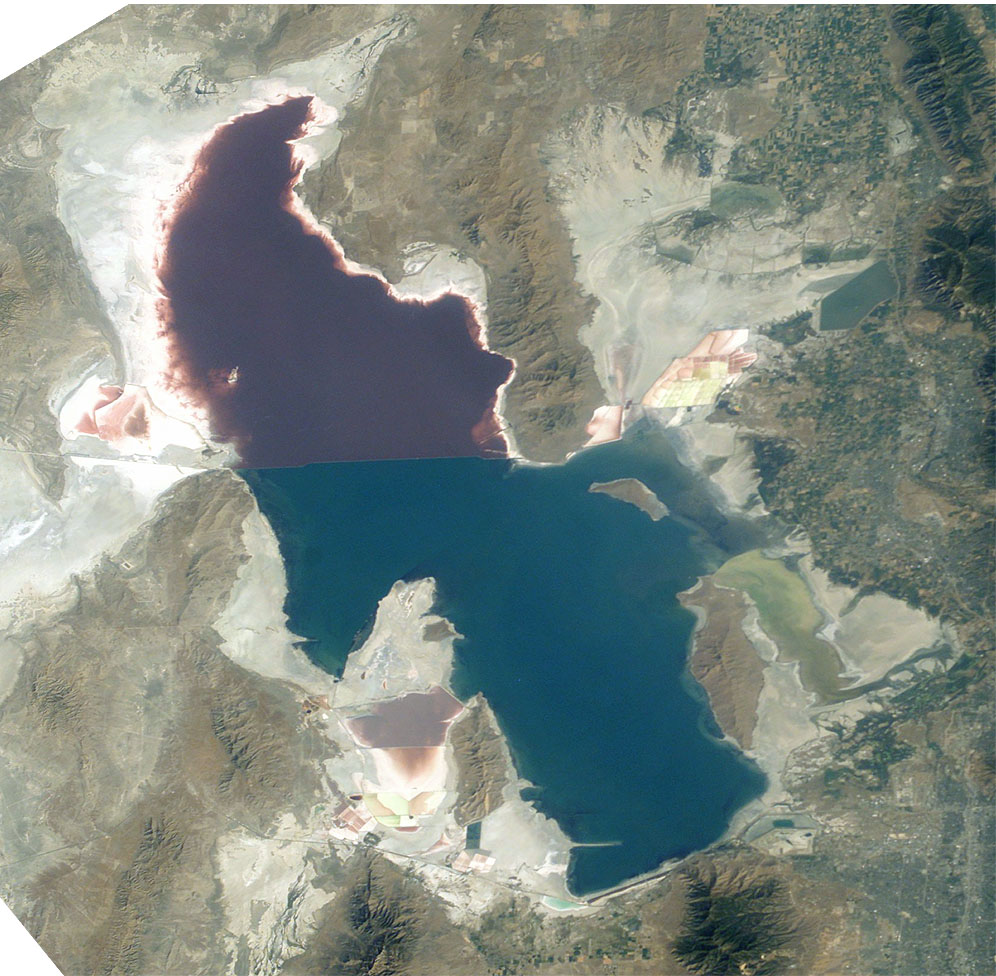




Physical characteristics and hydrology
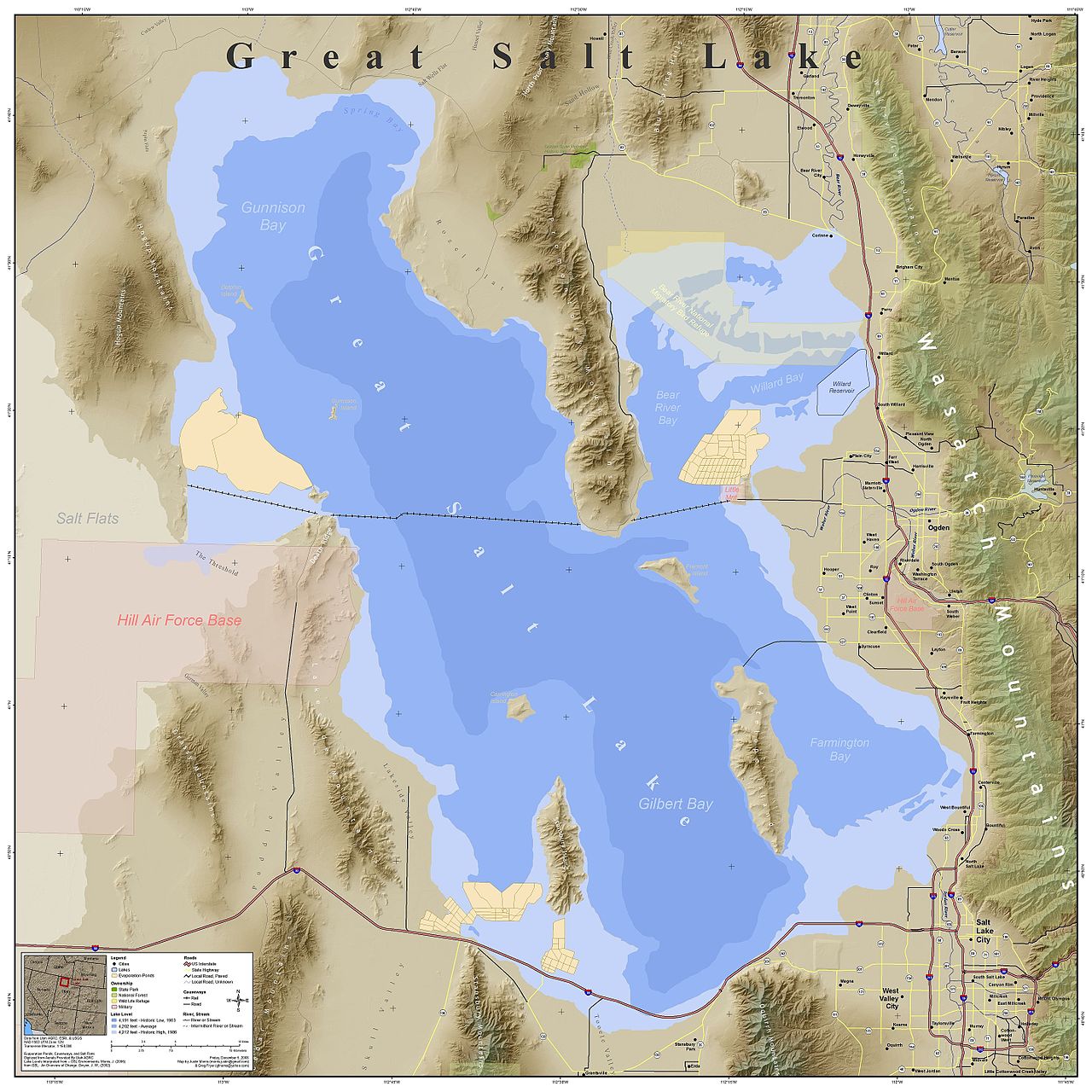
The lake lies in the northern part of the Great Basin, a broad area of interior drainage and arid landscape that extends into parts of Nevada, Idaho, California, and Arizona. Its length and width vary with seasonal and multi-year changes in inflow and evaporation; average surface area measurements fluctuate widely, reflecting the dry desert climate of the region. Major rivers feeding the lake include the Jordan, Weber and Bear rivers, and a railroad causeway divides the body of water into distinct north and south arms, contributing to differences in salinity and surface conditions.
Ecology and economic uses
Despite high salinity—many times that of typical seawater—the Great Salt Lake supports specialized life and is an important habitat for migrating and resident birds. Brine shrimp and other halophilic organisms flourish and form the base of a food web that supports vast flocks during migration seasons. Economically, the lake and its surrounding wetlands support mineral extraction (including salts and other evaporite minerals), a commercial brine shrimp industry, and recreational activities such as sailing and birdwatching.
History and origin
The modern Great Salt Lake is a remnant of much larger Pleistocene lakes that once covered the basin during cooler, wetter periods. Over thousands of years, climatic shifts shrank these ancient lakes, leaving behind the salty waters and shallow flats seen today. Human settlement and water use in the watershed began to reshape inflow patterns in the 19th and 20th centuries, with irrigation and urban development altering the lake's seasonal dynamics.
Environmental challenges and management
Variability in lake levels is a continuing concern. Periods of prolonged drought and diversions for agriculture and municipalities reduce inflow, exposing lakebed areas that can generate dust problems and harm wildlife habitat. Management efforts by state and local agencies aim to balance water use, mineral production, public recreation, and conservation. The causeway and other infrastructure have also changed circulation and salinity patterns in ways that receive regular study.
Notable facts and local context
- The lake is a saline or "saltwater" body rather than freshwater; it has served as a commercial source of salts and other minerals (saltwater lake).
- It provides critical stopover habitat for migratory birds and supports industries tied to brine organisms like shrimp.
- Shoreline and jurisdictional edges touch several Utah counties, including Davis, Tooele, Box Elder, Salt Lake and Weber counties.
The Great Salt Lake remains a distinctive landscape feature with ecological, economic and cultural importance for the Intermountain West. Ongoing monitoring and adaptive management seek to address the tradeoffs between human water needs and maintaining the lake's unique ecosystems.
Related articles
Author
AlegsaOnline.com Great Salt Lake: geography, ecology, history, and human uses Leandro Alegsa
URL: https://en.alegsaonline.com/art/40542
Sources
- geonames.usgs.gov : "USGS GNIS Detail:Great Salt Lake"
- geology.utah.gov : "The Great Salt Lake Information Sheet"
- deseretnews.com : "Great Salt Lake- a lively recreational jewel"