
Greater Antilles: Cuba, Hispaniola, Jamaica and Puerto Rico
The Greater Antilles are the largest Caribbean islands — Cuba, Hispaniola (Haiti and the Dominican Republic), Jamaica and Puerto Rico — formed from continental rock with distinct geology, ecology and history.
Overview
The Greater Antilles are the principal large islands of the Caribbean Sea and constitute the central arc of the Caribbean island region. They include the major landmasses of Cuba, Jamaica, Hispaniola and Puerto Rico and, in many treatments, nearby smaller islands such as the Cayman Islands. Located within the wider context of the Caribbean Sea, the Greater Antilles form the largest and most populated part of the West Indies.
Image gallery
10 Images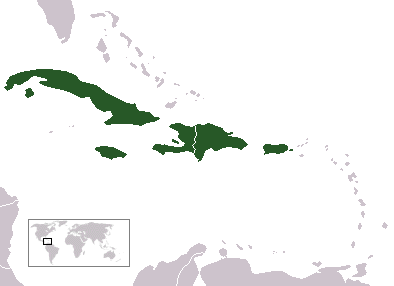


Principal islands and political divisions
Commonly counted members of the group are:
- Cuba — the largest island in the Caribbean and the core of the Republic of Cuba and its satellite islets.
- Jamaica — an independent island nation with a distinct cultural and historical identity.
- Hispaniola — an island shared by two sovereign entities: Haiti on the west and the Dominican Republic on the east.
- Puerto Rico — an archipelago with a main island that is an unincorporated territory of the United States.
Geology and physical characteristics
Unlike many smaller Caribbean islands, the Greater Antilles are largely composed of continental and older igneous rocks rather than solely recent volcanic or coral formations. This gives them higher relief, more extensive freshwater systems and more varied soils. By contrast, the Lesser Antilles are mostly made up of younger volcanic islands or islands formed of coral. The continental character of the Greater Antilles contributes to larger land area, more diverse terrain and broader habitat types.
Ecology and resources
The islands support a wide range of ecosystems from montane forests and river valleys to coastal mangroves and coral reefs. Their larger size and varied geology allow for high biodiversity and a number of endemic species of plants, birds and reptiles. Historically the islands’ soils and climates have supported agriculture, including export crops, while coastal and reef systems sustain fisheries and tourism economies.
Human history and cultural importance
Indigenous peoples inhabited these islands for millennia before European contact. From the late 15th century onward, colonization by European powers, the transatlantic slave trade and later migrations shaped the islands’ demographics, languages and cultures. Today the Greater Antilles are culturally influential across the Caribbean, with rich musical, literary and culinary traditions that reflect Indigenous, African, European and later global influences.
Distinguishing features and notable facts
Key distinctions that set the Greater Antilles apart include their larger land area and continental geology, which encourage more complex river systems and greater agricultural potential than many smaller Caribbean islands. The group contains some of the region’s most populous cities and plays a central role in regional politics, economy and transportation. The nearby Cayman Islands and other satellite isles are sometimes grouped with the Greater Antilles for convenience, while the Lesser Antilles form a separate volcanic and coral arc. For further geographic context see resources on the Caribbean Sea and comparative material on volcanic and coral island formation.
For concise country and island profiles, follow introductory references on Cuba, Jamaica, Hispaniola, Haiti, Dominican Republic and Puerto Rico, or consult regional summaries that include the Cayman Islands and neighboring archipelagos.
Related articles
Author
AlegsaOnline.com Greater Antilles: Cuba, Hispaniola, Jamaica and Puerto Rico Leandro Alegsa
URL: https://en.alegsaonline.com/art/40574