
Great Slave Lake: North America's deepest lake
Great Slave Lake is a vast glacial lake in Canada's Northwest Territories, notable for its depth, size, Indigenous connections, and role in regional ecology, transport and history.
Overview
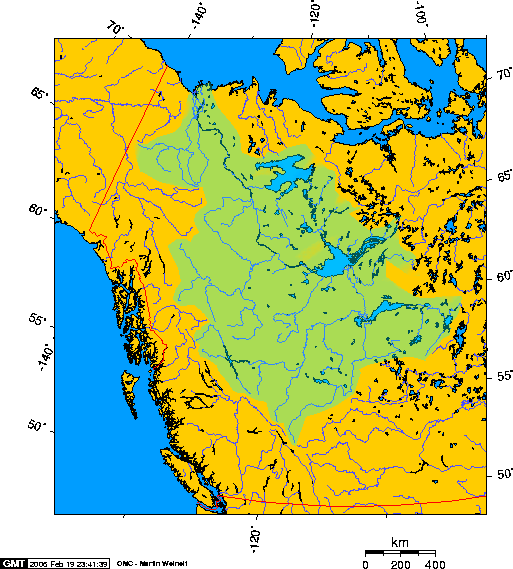
Great Slave Lake (French name: Grand lac des Esclaves) lies in the southern part of the Northwest Territories of Canada. It is one of the largest lakes on the continent, commonly cited as the second-largest in the territory and often ranked among the world’s largest by surface area. Its size and position make it a key geographic landmark in northern Canada.
Image gallery
10 Images






Physical characteristics
The lake stretches roughly 480 kilometres in length and varies between about 19 and 109 kilometres in width, covering approximately 27,200 square kilometres. Great Slave Lake reaches a maximum recorded depth of about 614 metres, making it the deepest lake in North America (citation in source material). The shoreline is irregular, with deep basins, long arms and numerous islands created by glacial scouring during the last ice age.
History and human presence
The lake and its shores have been home to Dene and other Indigenous peoples for millennia; the name “Slave” derives from the English translation of the name for the Slavey (Dene) people. European explorers, fur traders and later miners and settlers used the lake for travel and resupply. Towns and communities along its shores developed as fishing, trading and administrative centres.
Uses, communities and transport
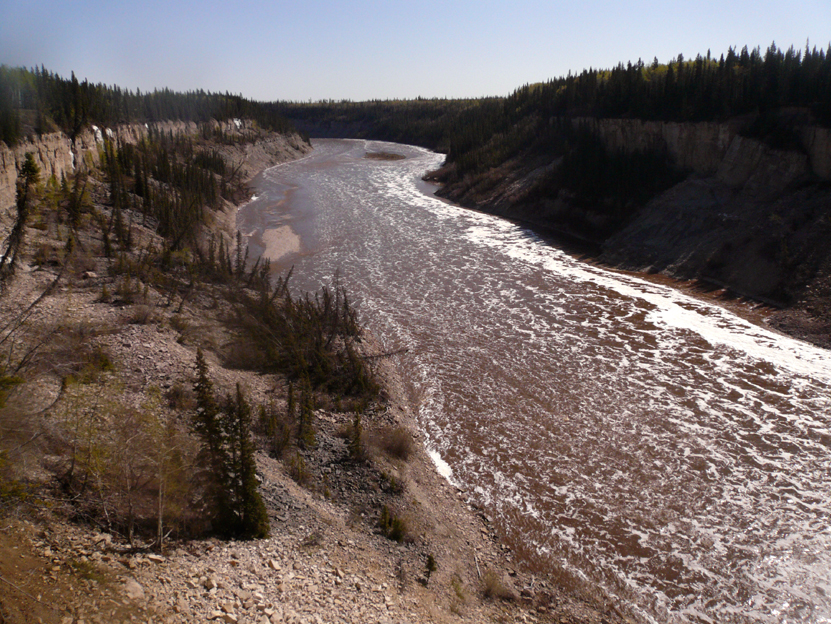
Great Slave Lake supports subsistence and commercial fisheries (notably lake trout and northern pike), seasonal navigation, and winter ice roads. The lake is also central to regional transport: the Mackenzie River flows out from the lake’s north and connects to the Arctic Ocean. Notable communities on or near the lake include:
- Hay River — an important southern port and service hub
- Yellowknife — the capital of the Northwest Territories, on the north shore
- Behchokǫ̀, Fort Resolution, Lutselk'e, Hay River Reserve, Dettah and N'Dilo
Ecology and conservation
The lake supports cold-water fish species and a range of wildlife along its shoreline and islands. Its waters and surrounding habitats are sensitive to changes from development, contamination and climate-related shifts in ice cover. Conservation efforts often balance Indigenous rights, commercial interests and ecological protection.
Notable facts
Beyond its depth and size, Great Slave Lake is important culturally and economically for the region. It freezes for much of the year, enabling winter travel but also limiting navigation seasonality. As a defining feature of the Canadian subarctic landscape, it remains a focus for scientific study, local livelihoods and Indigenous stewardship.
Questions and answers
Q: What is Great Slave Lake?
A: Great Slave Lake is the second-largest lake in the Northwest Territories of Canada.
Q: How deep is Great Slave Lake?
A: Great Slave Lake is the deepest lake in North America at 614m.
Q: What is the size of Great Slave Lake?
A: Great Slave Lake covers 27,200 square kilometres (10,502 sq mi) and is 480 kilometres (300 mi) long and 19 to 109 kilometres (12 to 68 mi) wide.
Q: Why is Great Slave Lake named as such?
A: Great Slave Lake is named after the Slavey First Nations people.
Q: What are some towns located on Great Slave Lake?
A: Some towns on the lake include Yellowknife, Hay River, Behchoko, Fort Resolution, Lutselk'e, Hay River Reserve, Dettah and N'Dilo.
Q: What is the ranking of Great Slave Lake regarding its size in the world?
A: Great Slave Lake is the ninth-largest lake in the world.
Q: In which language is Great Slave Lake also known as Grand lac des Esclaves?
A: Great Slave Lake is also known as Grand lac des Esclaves in French.
Related articles
Author
AlegsaOnline.com Great Slave Lake: North America's deepest lake Leandro Alegsa
URL: https://en.alegsaonline.com/art/40546