
Lake (inland standing body of water)
An inland body of standing water larger than a pond. Lakes can be natural or artificial, fresh or saline, and vary by origin, ecology, and human uses such as water supply, energy, and recreation.
Overview
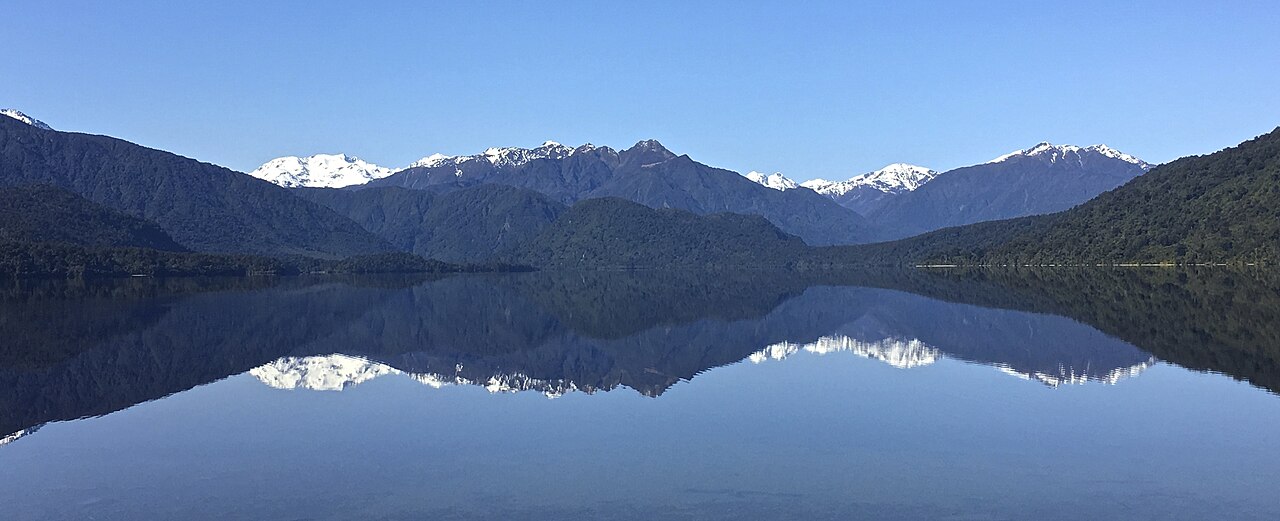
A lake is an inland body of still or slowly moving water, usually larger and deeper than a pond. Lakes are distinct from rivers, which flow, and from seas and oceans, which connect to the world’s saltwater basins. They occur on every continent except Antarctica’s permanently frozen interior, although many are found within polar and alpine regions. Most lakes contain fresh water, but some are saline or alkaline depending on their hydrology and local climate.
Image gallery
10 Images





Formation and types
Lakes form by a variety of geological and biological processes. Common origins include glacial excavation, where ice scours basins that later fill with water; tectonic activity, which creates depressions or damming; volcanic craters and calderas; fluvial processes that isolate oxbow lakes from rivers; and solution processes in karst landscapes. Humans also create artificial lakes or reservoirs by damming rivers for storage, power generation, or flood control. Lakes are often categorized by origin (glacial, tectonic, volcanic, artificial) and by their hydrological balance (open lakes with outflow versus endorheic or closed basins that lose water mainly by evaporation).
Physical and ecological characteristics
Physically, lakes vary in size, depth, and shape, which controls light penetration, temperature layering (stratification), and seasonal mixing. Many temperate lakes stratify in summer and overturn in spring and autumn, redistributing oxygen and nutrients. Ecologically, lakes support diverse communities of algae, plants, invertebrates, fish, and waterfowl; they are important nodes in freshwater biodiversity. Water chemistry—pH, dissolved oxygen, nutrient concentrations, and salinity—shapes the species composition. Some lakes are naturally salty or become saline in arid regions where evaporation concentrates dissolved salts.
Uses, management, and impacts
Lakes provide water for drinking, irrigation, industry, and recreation, and are widely used for fishing, boating, and tourism. Reservoirs supply hydroelectric power and regulated water flows. Human activity, however, can alter lake ecosystems: nutrient loading causes eutrophication and algal blooms; water extraction and diversion change levels; invasive species may disrupt native communities; and land-use change in watersheds influences sediment and pollutant inputs. Conservation and management efforts aim to balance human uses with ecological integrity through monitoring, protected areas, and restoration projects.
Notable examples and distinctions
Some lakes are exceptionally large or saline and are known by names that recall seas. The Caspian Sea is the planet’s largest enclosed inland water body by area; other well-known saline lakes include the Great Salt Lake and the Dead Sea. The Aral Sea has been widely cited as an example of dramatic shrinkage due to river diversion. Geographical patterns show many lakes concentrated in formerly glaciated regions and in northern latitudes; Canada and parts of northern Europe have especially high lake counts, and some countries are nicknamed for their abundance of lakes.
Further reading and references
- Pond — comparison and distinctions
- Ocean — differences from inland waters
- Sea — enclosed or marginal marine waters
- Flow — hydrology of standing water
- River — river-lake interactions
- Earth — global distribution of lakes
- Freshwater — lake water chemistry
- Northern Hemisphere — latitudinal patterns
- Canada — extensive lake systems
- Finland — many inland lakes
- Reservoir — artificial lakes and dams
- Electricity — hydroelectric use of lakes
- Recreation — lakes and leisure activities
- Irrigation — agricultural water use
- Industry — industrial water demands
- Domestic water use — lakes as supply sources
- Endorheic basin — closed hydrological systems
- Evaporation — role in water balance
- Groundwater flow — subsurface exchange
- Soil pores — seepage and filtration
- Salt — salinization processes
- Concentration — salinity and chemistry
- Great Salt Lake — example of saline lake
- Caspian Sea — largest enclosed inland water body
- Aral Sea — human impacts on lake systems
- Dead Sea — extreme salinity and ecology
Related articles
Author
AlegsaOnline.com Lake (inland standing body of water) Leandro Alegsa
URL: https://en.alegsaonline.com/art/55595
Sources
- commons.wikimedia.org : Lakes
- stat.fi : Statistics Finland
- andes.org.uk : Information about Ojos del Salado volcano