
French Revolutionary Wars (1792–1802)
A decade of European and global conflict triggered by the French Revolution, pitting Republican France against shifting coalitions of monarchies and reshaping politics, territory, and military practice across Europe.
The French Revolutionary Wars were a series of interconnected conflicts fought between 1792 and 1802 that grew out of the upheaval of the French Revolution. Republican France confronted a changing set of opponents — including Britain, Russia, the Habsburg monarchy and other continental states — many of which were traditional monarchies alarmed by the revolution's example. Historians generally divide the period into the War of the First Coalition (1792–1797) and the War of the Second Coalition (1798–1802). The conflict began on European soil but quickly acquired overseas dimensions, influencing events from the Mediterranean to the Atlantic and contributing to a lasting reordering of territorial control, law and political ideas.
Image gallery
10 Images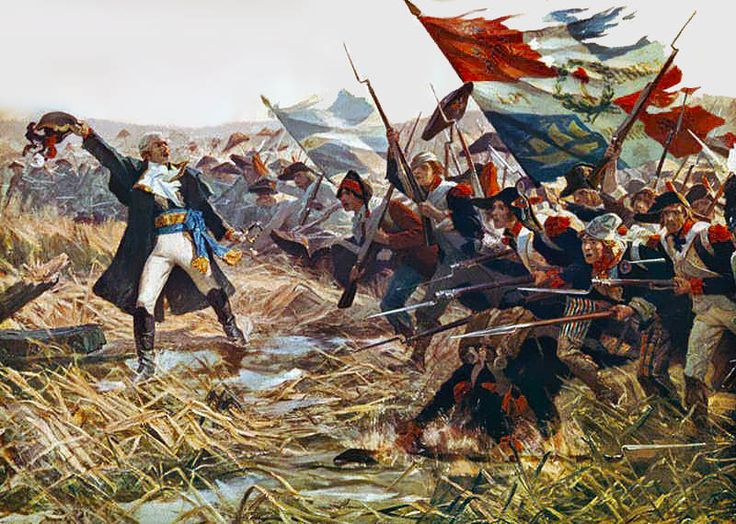





Origins and early course (1792–1793)
The wars were rooted in internal political change within France. Revolutionaries deposed and eventually tried King Louis XVI, and the new revolutionary government — the National Convention — sought both to defend the republic and to export revolutionary principles. European rulers reacted with suspicion and hostility: Austria and Prussia openly threatened intervention and issued the Declaration of Pillnitz, a diplomatic warning that helped provoke Paris into declaring war. By the summer of 1792 French armies faced invasion. A republican victory at the Battle of Valmy that September halted the immediate threat and encouraged the Convention to abolish the monarchy, but military fortunes soon ebbed and flowed. Defeats such as Neerwinden in 1793 and political crises at home fed a sharp internal struggle, during which the radical Jacobins gained influence and the government resorted to severe measures in the period known as the Reign of Terror.
Mobilization, reform and resurgence
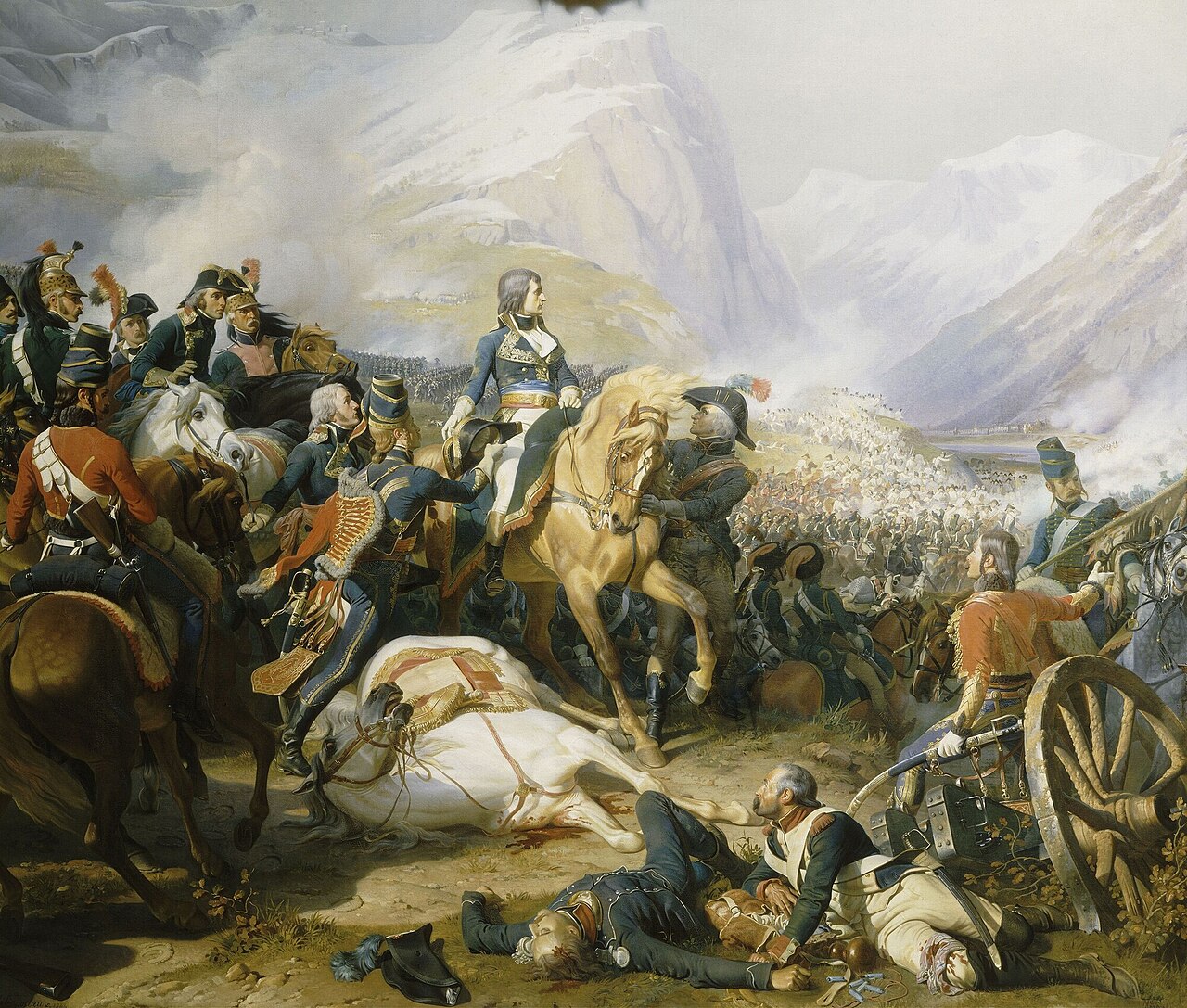
Despite internal turmoil, France reorganized its military and society to sustain a mass war effort. Measures like conscription and centralized administration allowed the republic to field large, motivated armies that combined citizen enthusiasm with increasing professional competence. By 1794 French forces enjoyed important victories against coalitions that included Spain and the Habsburgs; these successes led to the occupation of territories in the Low Countries and along the Rhine. Diplomatic settlements in the mid-1790s compelled the Dutch and others to conclude peace. A little-known artillery officer, Napoleon Bonaparte, rose to prominence in this atmosphere, beginning a highly successful Italian campaign in 1796 that undermined Habsburg control in northern Italy and forced the Austrians to make concessions as the First Coalition unraveled.
The Second Coalition and global operations (1798–1802)
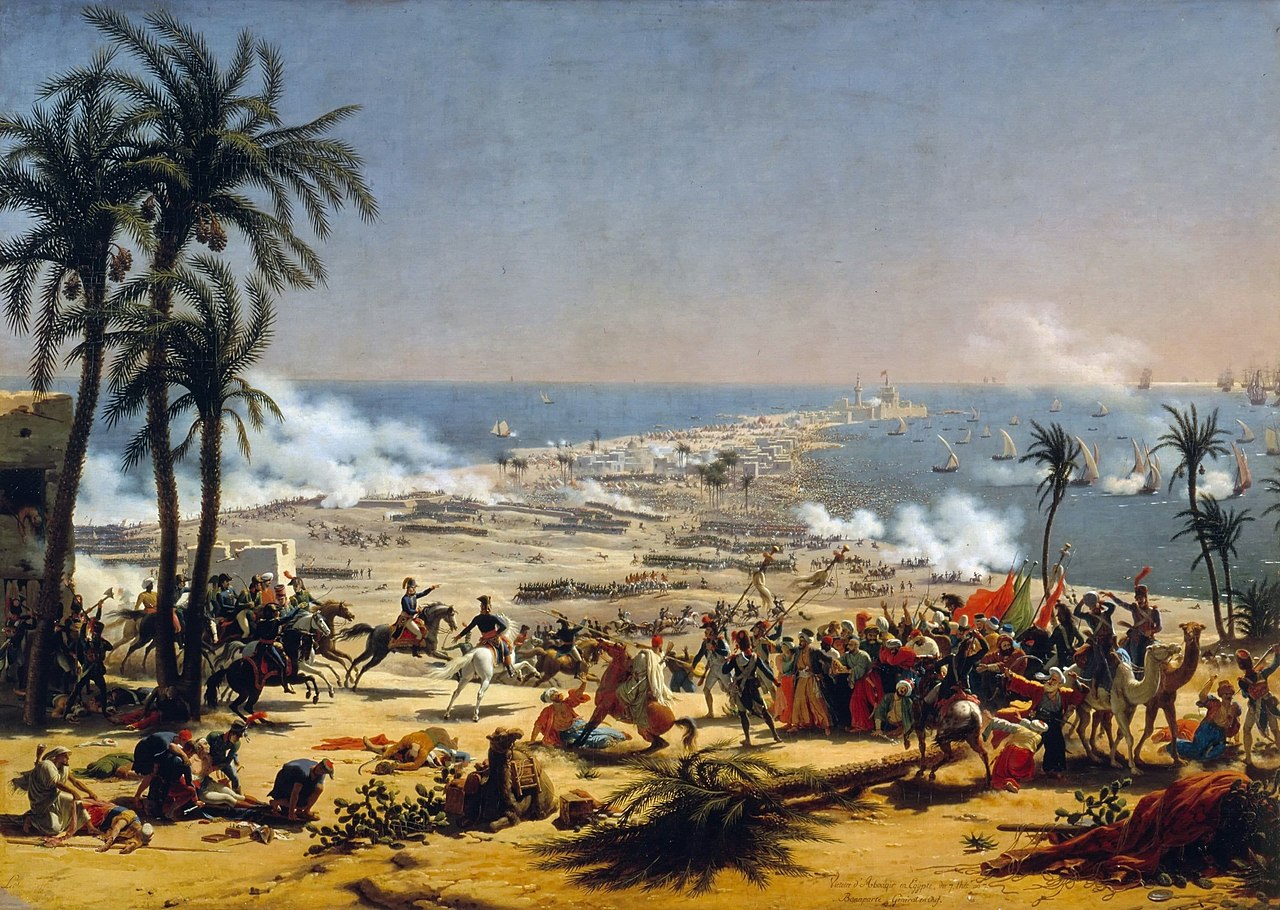
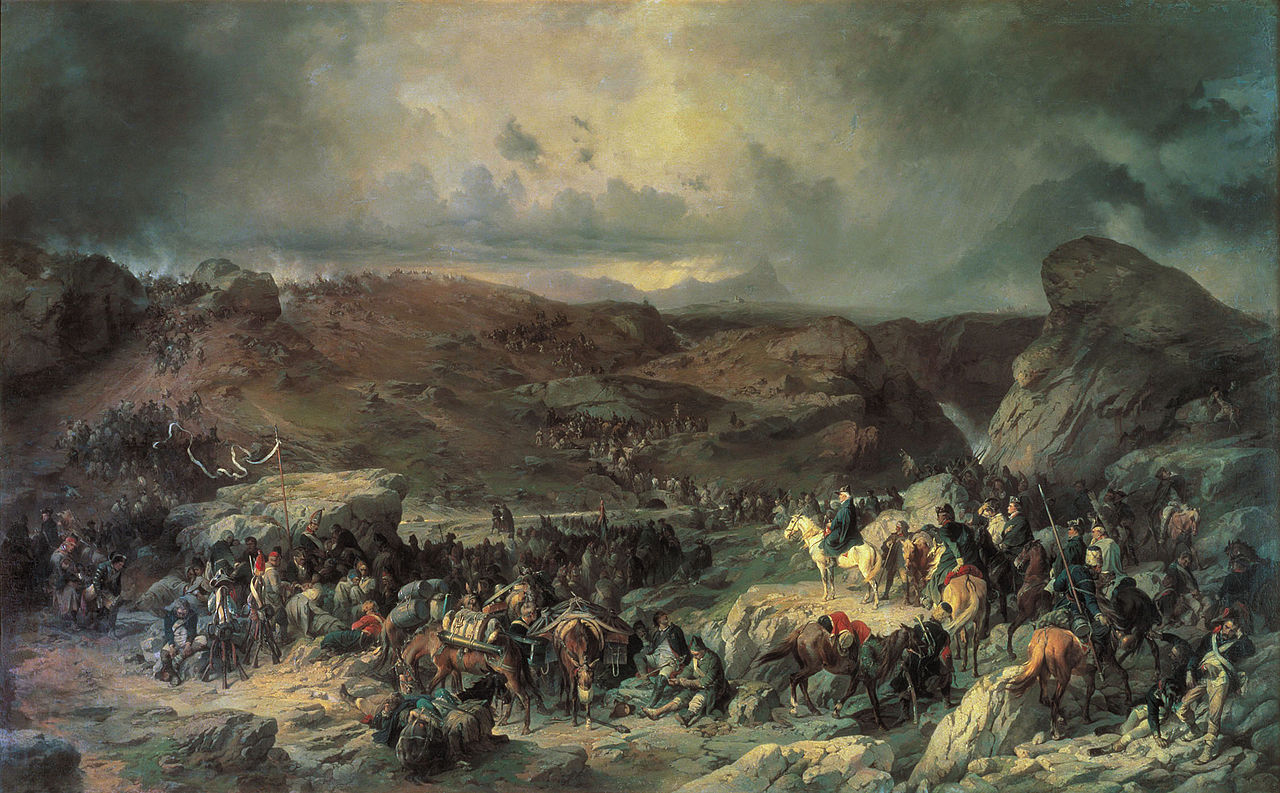
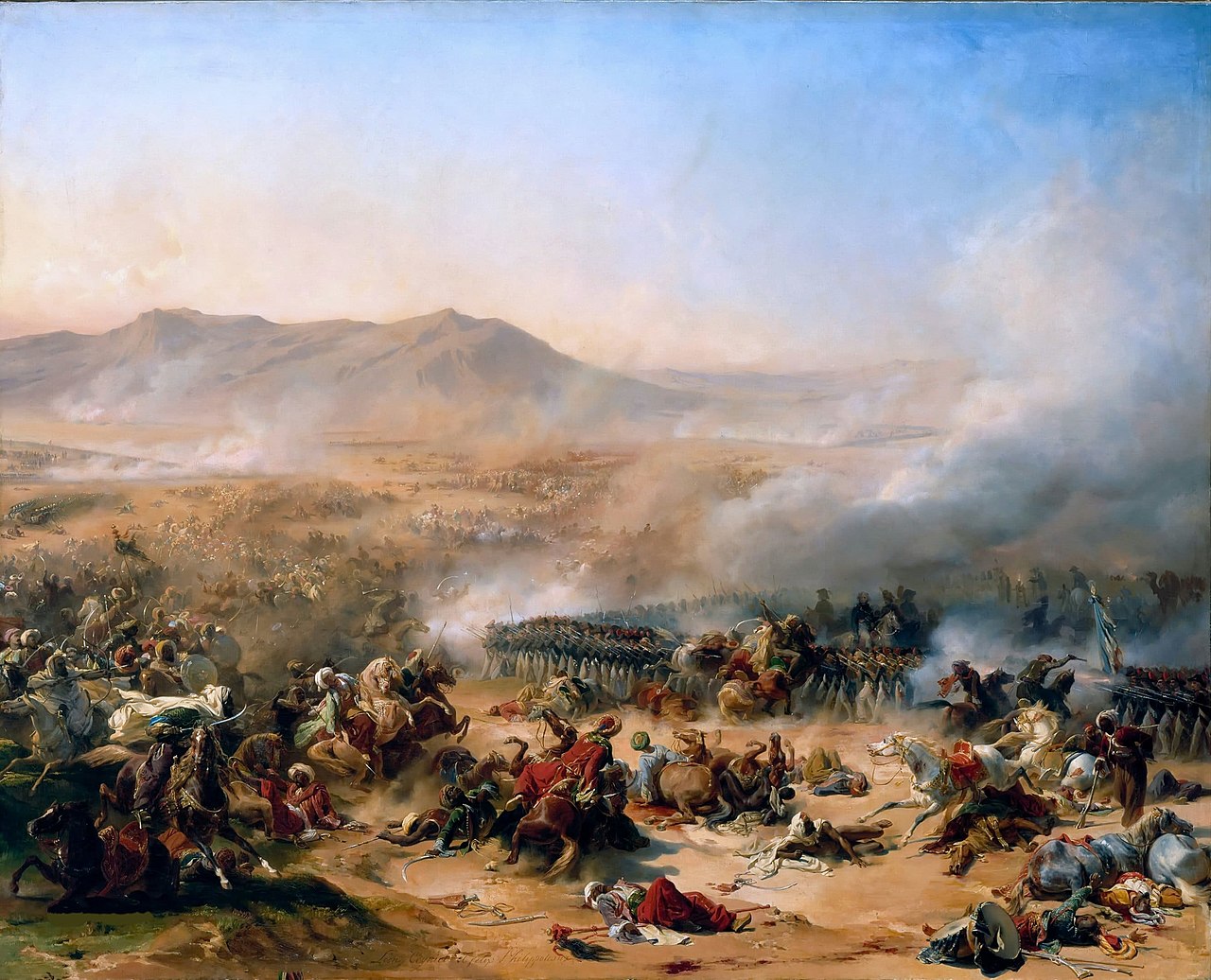
The Second Coalition took shape after the French expedition to Egypt in 1798. Napoleon's Egyptian campaign aimed to threaten British trade routes and spread French influence in the eastern Mediterranean, but it became a mixed venture: initial tactical gains in the region were overshadowed by a decisive naval defeat at the Battle of the Nile, which increased British naval dominance in the Mediterranean and isolated French forces. Meanwhile, continental opponents exploited France's distant commitments and launched campaigns that briefly rolled back French gains in Italy and Switzerland. A key reversal for the Coalition came after French victories at Zürich and elsewhere, which persuaded Russia to withdraw its main army. On the political front, Napoleon's return to France and his seizure of power in the coup of 1799 transformed the republic's leadership: as First Consul he reorganized military command and pursued peace with exhausted enemies, culminating in agreements such as the Treaty of Lunéville and, later, the Treaty of Amiens that temporarily ended hostilities in 1802.
Key participants, battles and settlements
- Principal combatants and powers: Britain, Russia, the Habsburg monarchy (Austria), German states, Spain, the Dutch Republic and various Italian states; on the French side, revolutionary governments and later the government led by Napoleon Bonaparte.
- Notable battles and campaigns: the early French defense at Valmy, the Italian campaigns that humbled the Habsburg armies and threatened Vienna, the Egyptian venture and the maritime clash at the Battle of the Nile, and continental engagements such as Marengo and Hohenlinden.
- Important treaties and outcomes: peace arrangements with Prussia and Spain in the mid-1790s, the Treaty of Lunéville with Austria, and the short-lived peace with Britain under the Treaty of Amiens in 1802.
Consequences and long-term significance
By the end of the Revolutionary Wars France had expanded its influence over wide regions of Europe, directly or through satellite republics, and had exported many administrative and legal reforms that challenged the old order. Revolutionary and Napoleonic rule reshaped territorial boundaries in places such as the Low Countries and parts of the Italian peninsula, and colonial rearrangements followed in other theaters — for example, France's sale of territory in North America (the Louisiana region) in the years that followed. The decade of warfare also accelerated changes in warfare itself: larger conscript armies, corps organization, and mobilization of national resources became central features of modern conflict. Although the 1802 peace temporarily halted the Coalition wars, the unresolved rivalry between Britain and France and the emergence of a powerful single leader in Napoleon paved the way for the later Napoleonic Wars and the formation of a Third Coalition against France.
Other aspects deserve emphasis. The wars affected politics at home as much as on the battlefield: radicalization and reaction alternated in France, with episodes such as the Reign of Terror reshaping public life. Relations with non-European powers — from the Ottoman Empire in the east to colonial actors elsewhere — were altered by the intrusion of revolutionary France into global diplomacy. Ultimately, the Revolutionary Wars transformed Europe not only by redrawing maps but by propagating ideas about citizenship, law and sovereignty that outlived the regimes that initially promoted them.
For readers seeking concise entry points: the French Revolutionary Wars bridge the internal upheaval of 1789 and the imperial ascendance of Napoleon. They are essential for understanding the transition from ancien régime diplomacy to the Napoleonic international order and remain a pivotal episode in the development of modern Europe. For further study consult contemporary campaign maps and primary documents such as declarations, treaties and the correspondence of key figures to follow how military events and political change fed each other during this turbulent decade.
French Revolution | Britain | Russia | Italy | Netherlands | Germany | Louisiana | Louis XVI | National Convention | Monarchy | Jacobins | Reign of Terror | Spain | Dutch | Napoleon Bonaparte | Habsburg | Vienna | Ottoman | British Navy | Battle of the Nile | Mediterranean | Coup | Dictator | Hohenlinden | Treaty of Amiens | Napoleonic Wars | Third Coalition
Related articles
Author
AlegsaOnline.com French Revolutionary Wars (1792–1802) Leandro Alegsa
URL: https://en.alegsaonline.com/art/36616