
War of the Third Coalition (1805): Overview and Outcomes
Overview of the War of the Third Coalition (1805): belligerents, main campaigns (Ulm, Trafalgar, Austerlitz), political consequences including the Treaty of Pressburg and reordering of German states.
Overview
The War of the Third Coalition was a major campaign of the Napoleonic Wars that culminated in 1805. It pitted Napoleonic France and its client states against an alliance led by Britain, the Habsburg monarchy of the Holy Roman Empire, and Imperial Russia. The conflict combined continental armies and British naval power and ended with decisive outcomes that reshaped Central Europe. France and a range of dependent or allied polities contributed forces and administration to Napoleon's efforts, while opponents sought to check French expansion and protect trade and territorial interests.
Image gallery
10 Images


Causes and composition
The immediate origins lay in the collapse of earlier settlements after the French Revolution and the rivalry for influence in Italy and Germany. Britain continued to oppose France at sea and to subsidize continental enemies. Austria and Russia mobilized to resist French control of German states and the Italian peninsula. Several smaller states were drawn into the struggle on both sides as allies, client regimes or occupied territories—often described as conquered and satellite states that provided recruits and resources for Napoleon's campaigns.
Major campaigns and battles
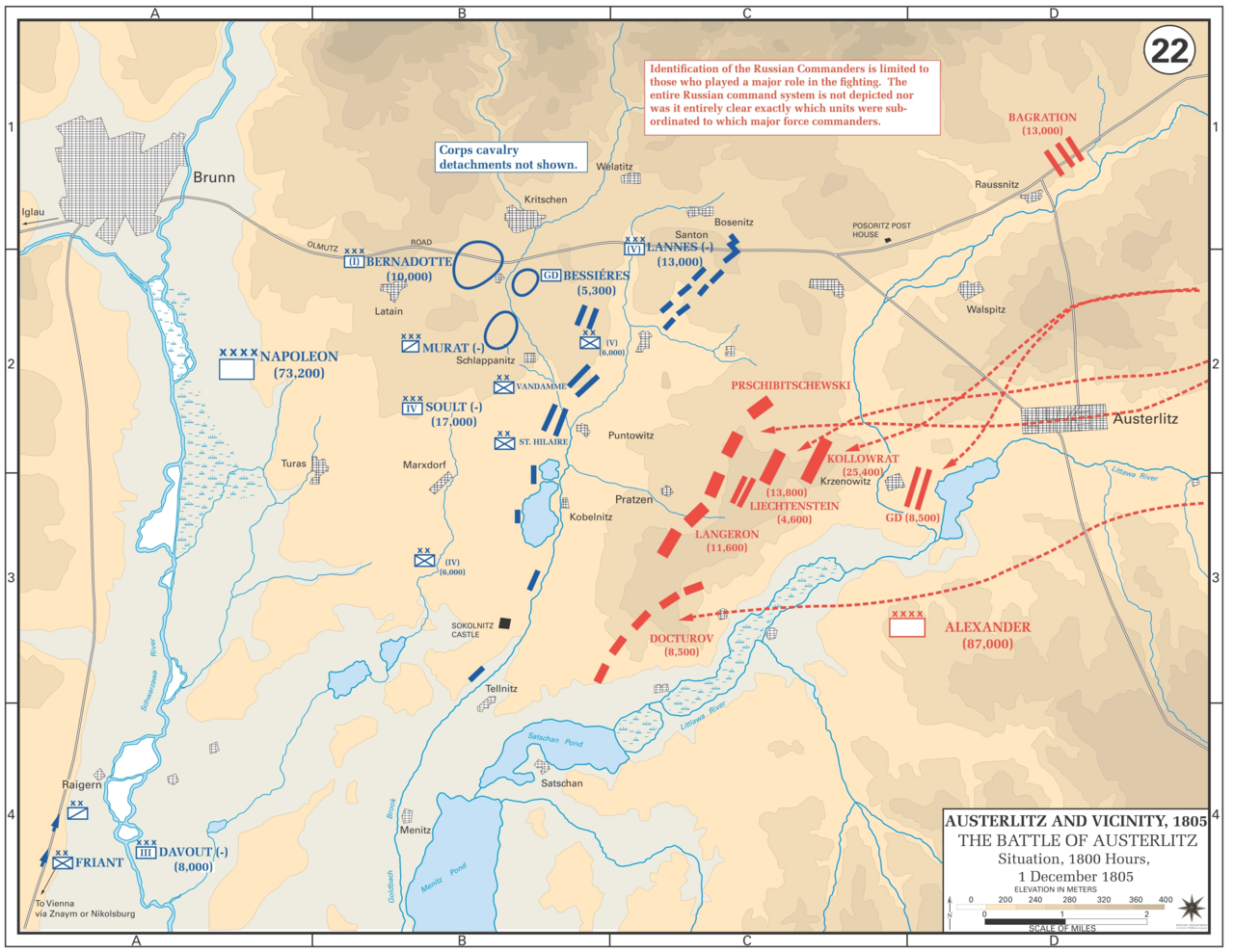
Napoleon demonstrated rapid operational movement in Central Europe. A notable early success was the surrender of an Austrian force at Ulm after skilful manoeuvre, followed by the decisive engagement at Austerlitz in December 1805, where the Franco-Italian army defeated the combined Austro-Russian field armies. The battle of Austerlitz is widely regarded as the campaign's culminating victory for Napoleon. Russian forces under their imperial command participated prominently in the continental fighting and later negotiations. Russia remained a major power concerned with the balance on the continent.
Naval actions and British role
At sea the Royal Navy achieved a decisive victory that secured maritime supremacy. The action off the Spanish coast at Trafalgar prevented any realistic invasion threat to Britain and affirmed British command of the seas for the remainder of the Napoleonic conflicts. Britain used its fleet and financial resources to shape coalition strategy and sustain partners on the continent.
Consequences and political outcomes
The military results produced important diplomatic changes. The Treaty of Pressburg and related settlements imposed territorial losses on Austria and accelerated the dissolution of long-standing imperial arrangements in Germany. Within months the old structure of the Holy Roman Empire was effectively dismantled and the Confederation of the Rhine emerged under French influence. These rearrangements consolidated French dominance in parts of Europe, even as British naval power constrained Napoleon's global options.
Significance and legacy
The war demonstrated Napoleon's operational skill and the effectiveness of corps-based manoeuvre, and it underlined the centrality of sea control in early 19th-century strategy. The campaign reshaped political boundaries, accelerated legal and administrative reforms in many German and Italian states, and set patterns of alliance that influenced subsequent coalitions. Military and diplomatic historians study the 1805 campaign for its lessons in operational art and coalition politics.
Notable engagements and further reading
- Ulm (October 1805): strategic encirclement and capitulation of Austrian forces.
- Trafalgar (21 October 1805): decisive British naval victory securing sea control.
- Austerlitz (2 December 1805): major decisive victory for Napoleon; see contemporary and modern accounts at Austerlitz studies.
- Italian campaigns: operations that consolidated French gains in northern Italy.
For balanced perspectives consult general histories and archival collections in Britain, France, Austria and Russia, as well as specialist studies of coalition diplomacy and military operations. National archives and edited documentary series provide primary material while treatments in multiple languages illuminate different viewpoints. Additional online and print resources are catalogued at several repositories and research guides (see links for national overviews and primary-source collections at France, satellite state records, Holy Roman context, and British naval archives here).
Related articles
Author
AlegsaOnline.com War of the Third Coalition (1805): Overview and Outcomes Leandro Alegsa
URL: https://en.alegsaonline.com/art/106503