
Low Countries
Region of northwestern Europe around the Rhine–Scheldt–Meuse deltas, historically and culturally linked; today covering the Netherlands, Belgium, Luxembourg and nearby border areas.
Overview
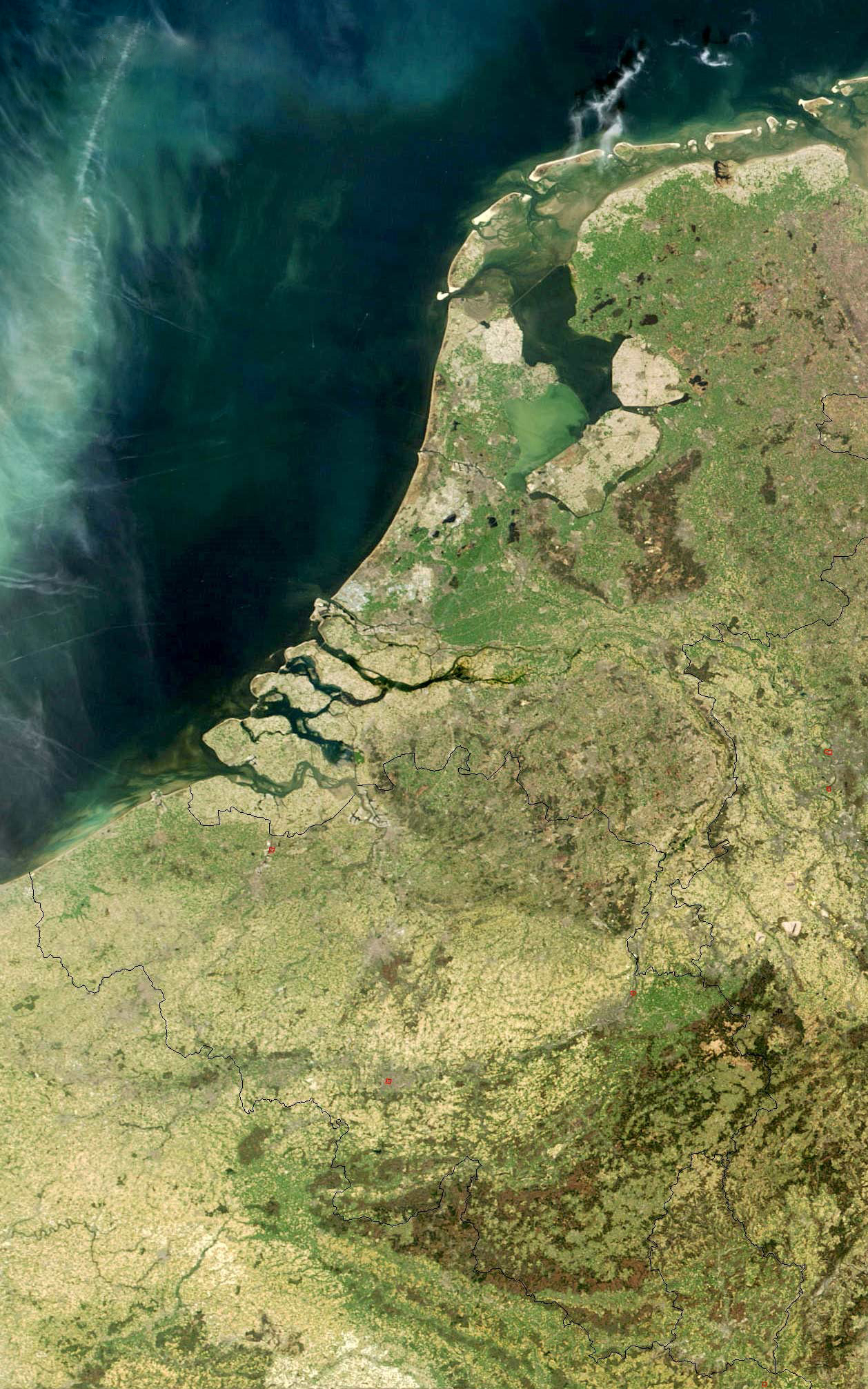
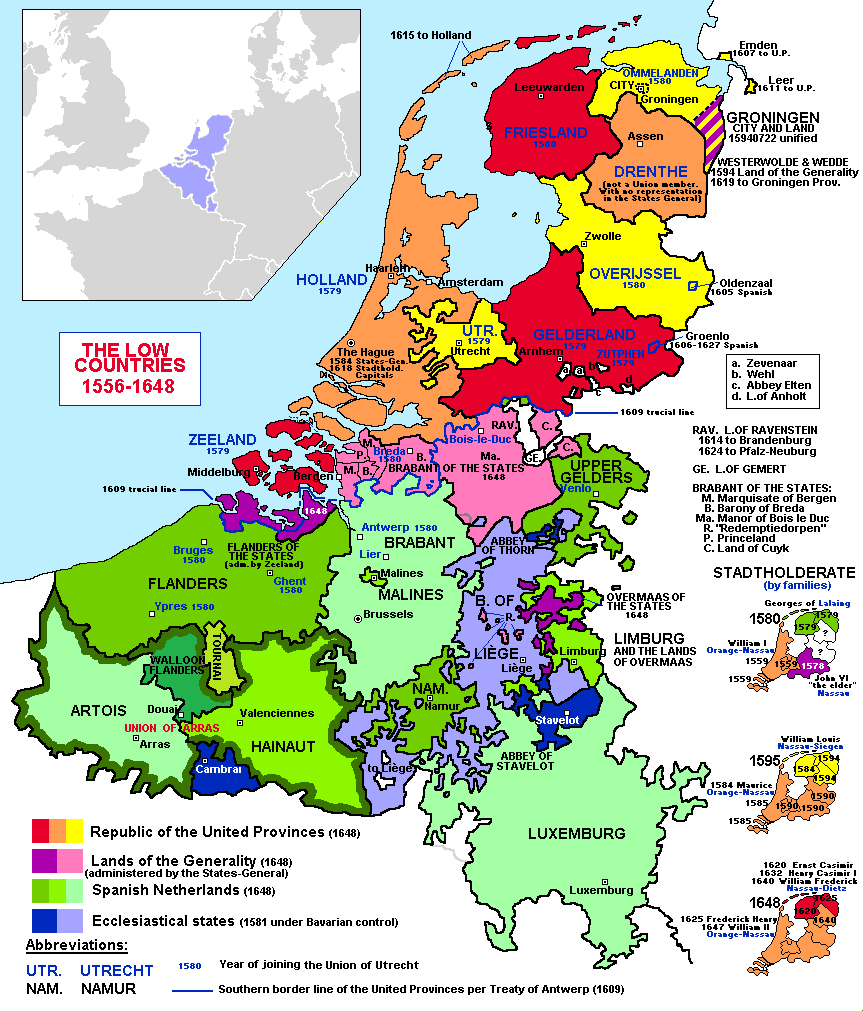
The term "Low Countries" refers to a coastal and river-delta region of northwestern Europe characterized by low-lying land and a long history of human efforts to manage water. In medieval and early modern sources the phrase denoted overlapping political units and provinces; for background see medieval usage. The modern area most commonly includes the Netherlands, Belgium and Luxembourg and related border regions.
Image gallery
10 Images






Geography and landscape
The landscape centers on the deltas of three major rivers: the Rhine, the Scheldt and the Meuse (Maas). These waterways created fertile floodplains, estuaries and marshes that were gradually converted into arable land by dikes, drainage and reclamation techniques such as polders. Coastal flood control and river management are central themes; for delta maps and hydrology consult delta systems. Parts of adjacent German provinces and northern French territories are sometimes included in broader definitions (Lower Saxony, Nord‑Pas‑de‑Calais).
Historical development
Politically the region has changed shape many times. In the late Middle Ages it comprised a patchwork of duchies, counties and bishoprics that were often grouped as the Burgundian and later Habsburg Netherlands. The sixteenth and seventeenth centuries saw the split between the northern provinces (which evolved into the Dutch Republic) and the southern provinces (variously ruled as the Spanish and Austrian Netherlands). For summaries of those eras see riverine provinces and accounts of the Dutch and Belgian developments.
Culture, language and identity
The Low Countries are multilingual and culturally diverse. Dutch (including Flemish varieties) and French are major languages, with German and Luxembourgish also present in border areas. Regional identities — for example Flemish and Walloon in Belgium — reflect different linguistic and historical experiences. Contemporary national entities include the Kingdom of the Netherlands and the Kingdom of Belgium, while Luxembourg is a separate Grand Duchy; introductions: Luxembourg, Nederland.
Economic importance and legacy
From medieval trade towns to early modern maritime power, the Low Countries have been influential in commerce, shipping and finance. Cities such as Amsterdam and Antwerp became hubs for Atlantic and European trade, craft industries and cultural exchange. The region's engineering of waterways and polder landscapes remains a model for flood management; see engineering histories at regional studies.
Distinctions and modern use
Today the phrase is used in historical, cultural and occasionally political contexts rather than as a precise administrative label. Broader or narrower definitions may include parts of northern France and Germany; comparative overviews and modern borders are treated in sources on European regions and on the Benelux cooperation (historic) and contemporary cross-border arrangements (infrastructure). For more general reading see regional maps, Dutch history, Belgian history, and linguistic surveys at Luxembourg language, German borderlands, and northern France.
The name itself reflects the geography: the Dutch word Nederland literally means "low country," and collective forms such as de Nederlanden were used historically to describe the territories in flux across centuries. Further reading and maps are available via general introductions and specialized studies (hydrology, historical borders).
Related articles
Author
AlegsaOnline.com Low Countries Leandro Alegsa
URL: https://en.alegsaonline.com/art/59575