
Dutch Republic (Republic of the Seven United Netherlands)
The Dutch Republic (1581–1795) was a confederation of seven provinces that became a major commercial, naval and cultural power in the 17th century and later evolved into the modern Netherlands.
Overview
The Dutch Republic, formally the Republic of the Seven United Netherlands, was a confederation of provinces in northwestern Europe that existed from the late 16th century until the end of the 18th century. Born from revolt against Habsburg rule, it became one of the era's leading maritime and commercial powers, known for religious and intellectual toleration, financial innovation and a flourishing arts scene.
Image gallery
10 Images




Political structure and institutions
Rather than a centralized monarchy, the Republic was a loose federation in which provincial assemblies retained significant authority and sent delegates to the States General, the federal assembly. Executive and military leadership varied: provinces sometimes appointed a stadtholder to coordinate defence and foreign policy. Over time the position became dominated by the House of Orange, creating what many historians describe as a hybrid of republican and quasi-dynastic rule.
Origins and development
The Republic emerged during the revolt against Spanish Habsburg rule. Provincial leaders declared independence from the crown and organized a confederation. Recognition of independence took decades of diplomacy and war, and the polity evolved through periods of merchant-led republican government and stadtholder-led regimes. In the late 18th century internal divisions and external pressures led to its replacement by the Batavian Republic and later political reorganizations.
Economy, trade and culture
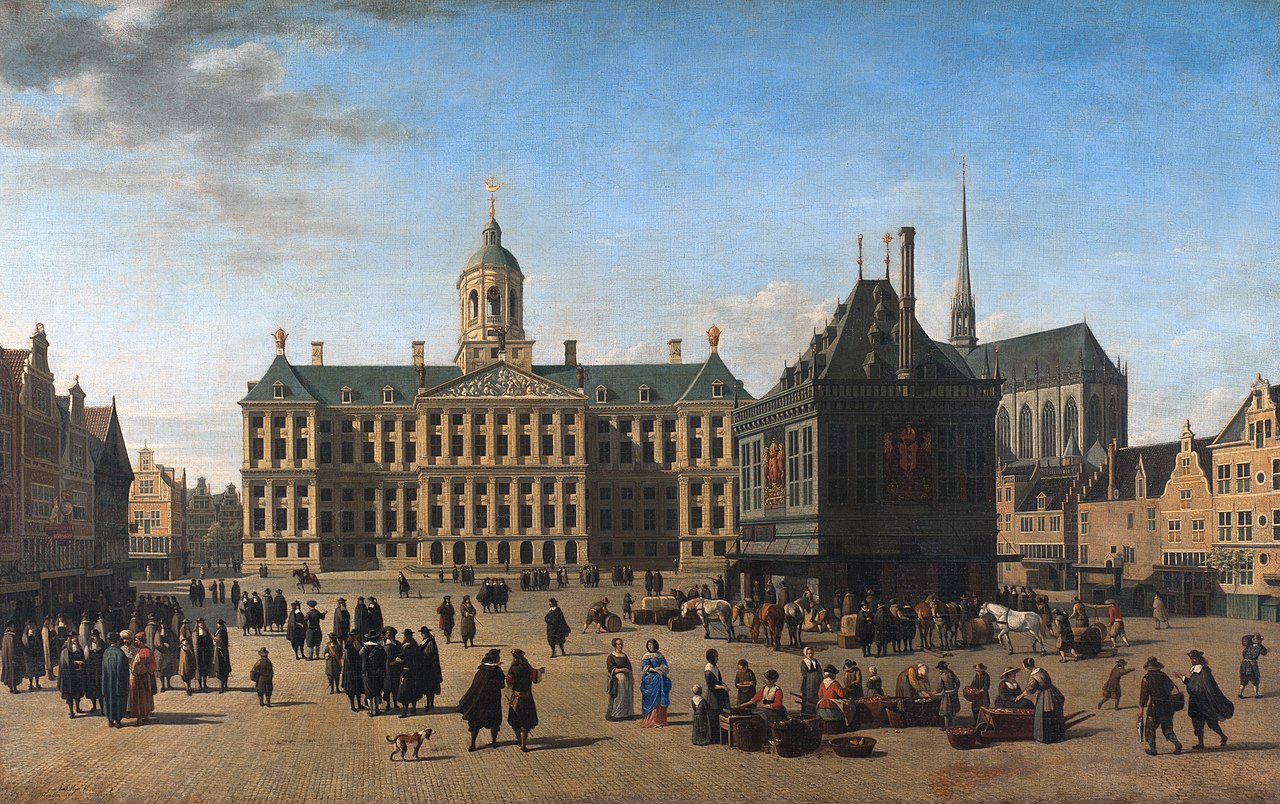
Its economy rested on maritime trade, shipbuilding, colonial enterprise and financial markets. Dutch merchants and chartered companies established trade networks across Asia, Africa and the Americas. The Republic's cities, especially Amsterdam, became important banking and insurance centers. Cultural life was notable for painters, philosophers and scientists who contributed to what is commonly called the Dutch Golden Age.
Legacy and succession
The political and commercial achievements of the Republic influenced state-building, international law and capitalism. After its dissolution it was succeeded by the Batavian Republic and later by the United Kingdom of the Netherlands, the modern Netherlands and finally the constitutional Kingdom of the Netherlands. Its mix of provincial autonomy, republican institutions and influential merchant elites remains a subject of study for political and economic historians.
- Key features: confederation of seven provinces, States General, powerful merchant class.
- Distinctive elements: maritime dominance, tolerant cities, and the tension between republicanism and stadtholder leadership.
Questions and answers
Q: What was the Dutch Republic?
A: The Dutch Republic was a confederacy of provinces in Europe from 1581 to 1795.
Q: What were some of the alternative names for the Dutch Republic?
A: The Dutch Republic was also known as the Republic of the Seven United Netherlands, the Republic of the United Netherlands, the United Provinces, Federated Belgic Provinces, and Belgic Federation.
Q: When did the Dutch Republic exist?
A: The Dutch Republic existed from 1581 to 1795.
Q: What came after the Dutch Republic?
A: The Batavian Republic, the United Kingdom of the Netherlands, and the modern Netherlands (now a part of the Kingdom of the Netherlands) came after the Dutch Republic.
Q: What form of government did the Dutch Republic have?
A: The Dutch Republic was called a republic, but the Stadtholders became a hereditary dynasty.
Q: How was the Dutch Republic organized?
A: The Dutch Republic was organized as a confederacy of provinces.
Q: Where was the Dutch Republic located?
A: The Dutch Republic was located in Europe.
Related articles
Author
AlegsaOnline.com Dutch Republic (Republic of the Seven United Netherlands) Leandro Alegsa
URL: https://en.alegsaonline.com/art/29357
Sources
- npofocus.nl : "Waarom vormen de Noordelijke Nederlanden een republiek?"
- populstat.info : Demographics of the Netherlands
- tools.wmflabs.org : 52°04′48″N 4°18′00″E / 52.08000°N 4.30000°E / 52.08000; 4.30000