
Gaelic Ireland: society, law and culture through the medieval period
Gaelic Ireland was the indigenous Gaelic social, legal and cultural order across Ireland from prehistory to the early 17th century, notable for clan organization, Brehon law, bardic learning and distinctive arts.
Overview
Gaelic Ireland denotes the indigenous Gaelic-speaking social and political order that developed on the island from prehistory and persisted, in various forms, until the early 17th century. Before the arrival of Anglo-Norman forces in 1169, commonly called the Norman invasion, Gaelic institutions and customs formed the dominant framework of settlement, governance and culture across most of Ireland.
Image gallery
10 Images




Society and political structure
Social life was organised around kin-groups, often called tuatha or clans, each ruled by a chief or king. These polities varied greatly in size and influence and formed shifting networks of alliance and rivalry. Leadership and succession were determined by customary practice such as tanistry, in which a successor was agreed from among eligible males of the ruling kin rather than by strict primogeniture. Fosterage, hospitality and clientage were important social bonds linking families and magnates.
Law and learned professions
The native legal tradition, commonly called Brehon law, addressed property, contracts, marriage, injury and dispute resolution through a system of customary judgments rather than state courts. Professional jurists and learned families preserved and transmitted legal texts and precedent. Alongside jurists, bardic poets, historians and physicians formed hereditary learned classes who served patrons and kept genealogies and cultural memory alive.
Culture, art and settlement
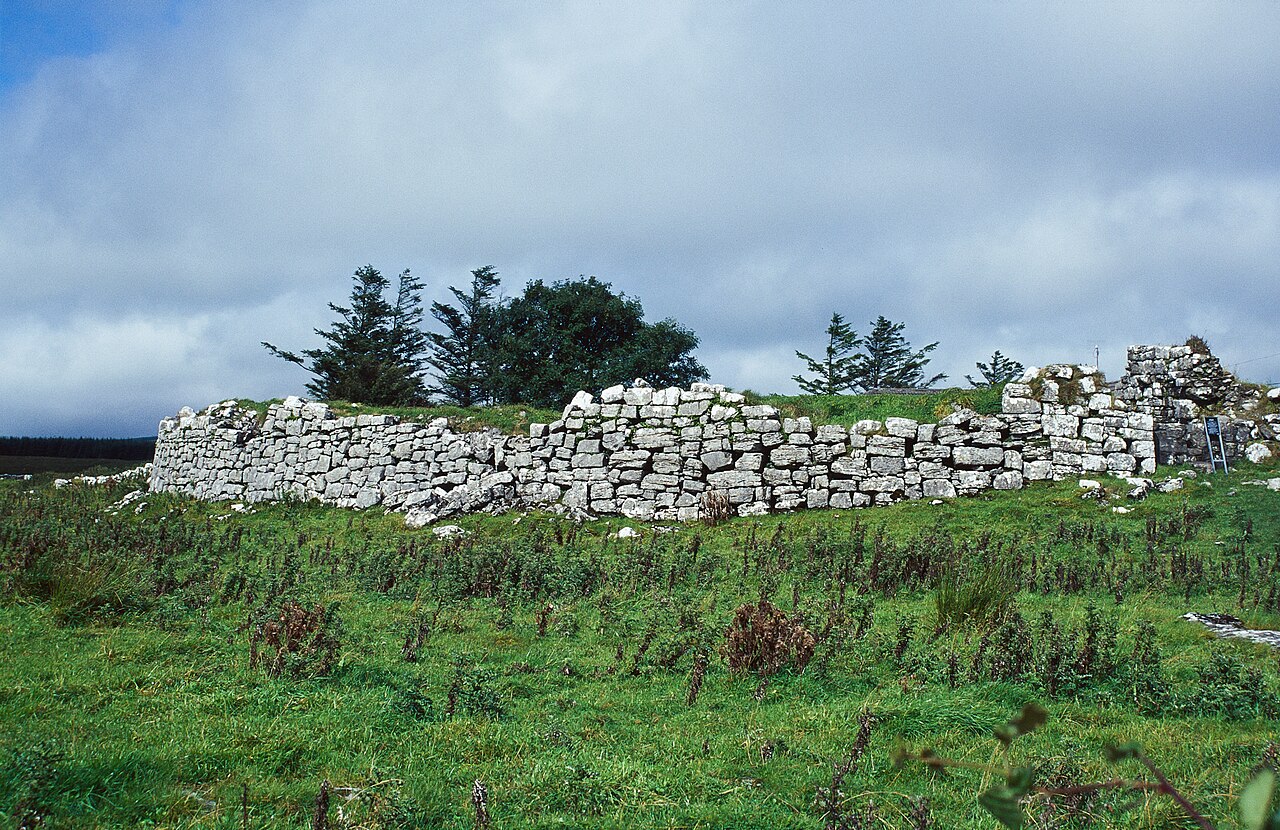
Gaelic culture produced rich literary and artistic expression: bardic poetry, genealogical tracts, harp music, illuminated manuscripts and ornate metalwork. Monasteries and ecclesiastical schools were centres of learning in the early medieval period, while later secular bardic schools trained poets in strict metres. Everyday settlement left physical traces in ringforts, crannogs and field systems; monumental sculpture like high crosses and stone ogham inscriptions record language and belief.
Economy and external contacts
Economy combined pastoral farming, seasonal transhumance and maritime trade. Irish polities engaged in trade, raiding and diplomacy with Britain, continental Europe and Norse settlers, which affected material culture and political alignments without wholly replacing Gaelic patterns.
Decline, adaptation and legacy
From the late 12th century the arrival of Norman forces introduced new lordships and legal systems; over subsequent centuries Gaelic institutions adapted, blended with, or resisted those changes. The 16th and early 17th centuries brought intensified centralising policies and military campaigns that ended many independent Gaelic lordships. Nevertheless, the Gaelic language, legal concepts, bardic and artistic traditions strongly influenced later Irish identity and remain subjects of study and revival.
Related articles
Author
AlegsaOnline.com Gaelic Ireland: society, law and culture through the medieval period Leandro Alegsa
URL: https://en.alegsaonline.com/art/37191