
Louis XVI: Reign, Reform Attempts, Revolution and Execution
Louis XVI (1754–1793), Bourbon king of France whose attempted reforms, fiscal crisis and the events of 1789–1793 ended in his trial and execution during the French Revolution.
Louis XVI (born 23 August 1754; died 21 January 1793) was King of France from 1774 until the suspension and later abolition of the monarchy in 1792 amid the upheavals of the French Revolution. A member of the House of Bourbon, he succeeded his grandfather Louis XV at the age of twenty. His reign combined early attempts at measured reform with an inability to resolve deep fiscal and political crises. The sequence of events that followed—fiscal collapse, popular unrest, institutional confrontation and foreign threats—ultimately produced the end of his rule and his execution.
Image gallery
10 Images



Early life and court
Raised in the royal household and educated for kingship, Louis was seen by contemporaries as conscientious, devout and lacking the forceful temperament associated with some earlier sovereigns. His marriage to Archduchess Maria Antonia of Austria, known after her marriage as Marie Antoinette, followed dynastic custom and was intended to cement ties with the Habsburg monarchy. The couple’s private life and the court at Versailles became the focus of intense public scrutiny and, later, political attack.
Ministers and early reform efforts
In the 1770s and 1780s Louis appointed ministers who tried to modernize royal administration and public finance. Economically liberal advisers such as Turgot proposed reductions in internal controls and merit‑based reforms; Jacques Necker sought to bring greater transparency to finance and public confidence. Some measures reduced the use of judicial torture and increased toleration for non‑Catholics, reflecting changing ideas about law and rights (judicial restraint). These policies met entrenched opposition from privileged groups and conservative magistrates, limiting their impact.
Fiscal strains and foreign policy
The French state entered Louis’s reign with heavy debts and recurrent deficits. Military engagement abroad, most notably the decision to support the American colonies in their struggle with Britain, raised France’s international standing but added to governmental borrowing and fiscal strain (American alliance). At the same time an inequitable tax structure and local fiscal privileges meant that proposed reforms often ran into political and social resistance. Intellectual currents of the Enlightenment encouraged public debate about privilege, representation and the limits of absolute rule, increasing popular expectations for political change.
Events of 1789 and the collapse of royal authority
Confronted by an acute financial crisis, Louis summoned the Estates‑General in 1789, an assembly of clergy, nobility and commoners that had not met for many decades. The representatives of the Third Estate claimed a new legitimacy and, together with liberal nobles and clergy, formed the National Assembly to draft reforms and a constitution. Rapidly escalating protests and rural disturbances, together with dramatic episodes such as the Storming of the Bastille and the October march on Versailles, signalled a transfer of authority in parts of the country. The king’s vacillation between concessions and reliance on traditional support eroded his credibility among reformers and the urban public.
- Key moments during the crisis:
- Calling of the Estates‑General (1789) and emergence of the National Assembly
- Popular uprisings, the Bastille and the October march on Versailles
- Flight to Varennes (June 1791), which undermined royal trust
- Insurrection, arrest and the suspension of the monarchy (1792)
Flight to Varennes and the loss of trust
In June 1791 Louis and his family attempted to leave Paris for a royalist stronghold, intending to rally support and negotiate with foreign courts. The flight to Varennes failed when the royal party was recognized and detained; their return to Paris convinced many citizens that the monarch might collude with external powers to overturn the course of the revolution. The episode hardened political divisions and contributed directly to the decline of any viable constitutional monarchy under Louis.
Abolition of monarchy, trial and execution
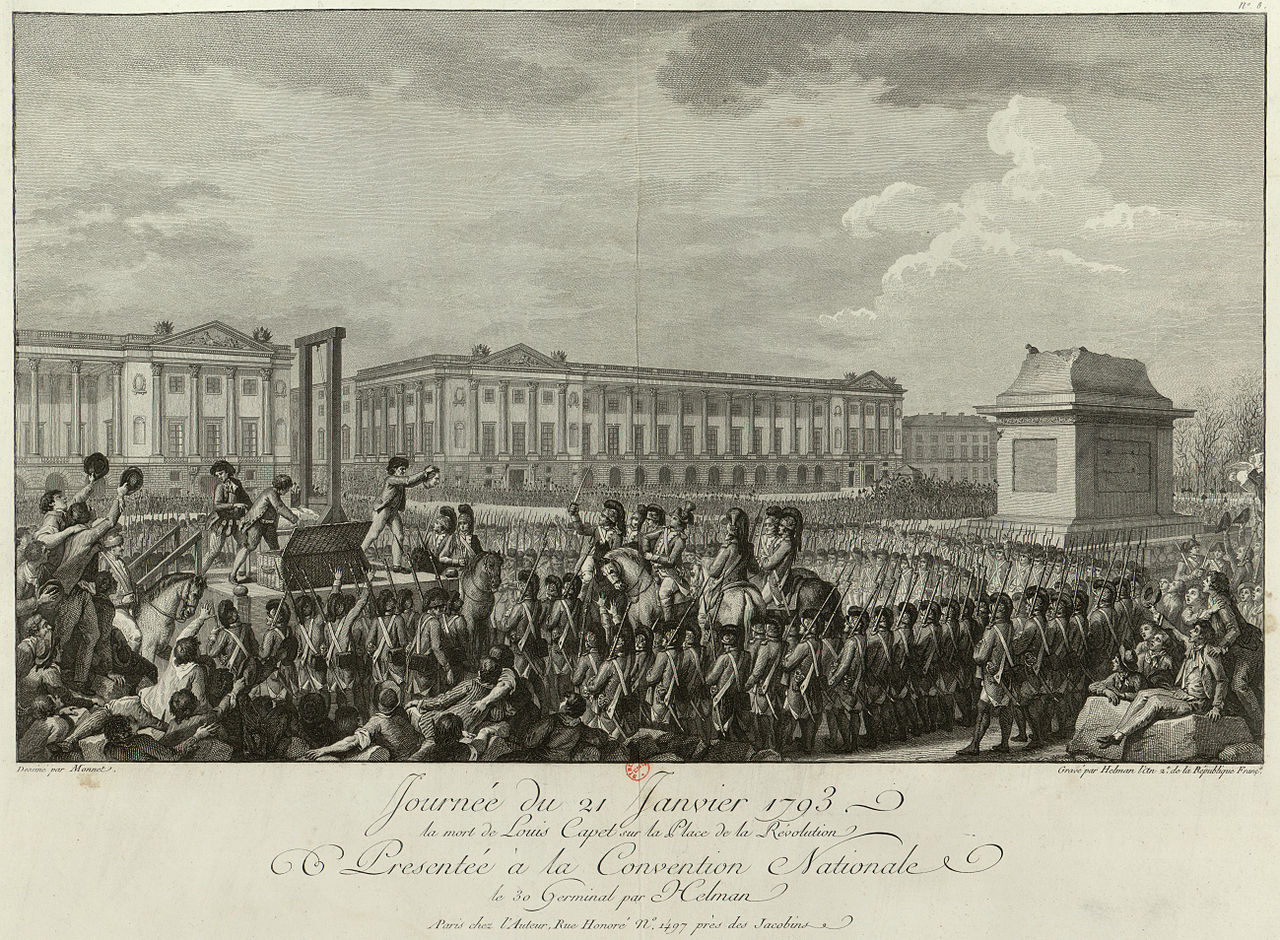
After the monarchy was suspended and the republic proclaimed, the revolutionary legislature placed Louis on public trial. He was charged with acts judged incompatible with the nation’s sovereignty and accused of corresponding with foreign governments. The National Convention judged the case and found him guilty of treason, a verdict that led to his being sentenced to death. Louis was executed by guillotine on 21 January 1793. His execution was unprecedented in modern French history and symbolized the radical break with the ancien régime.
Aftermath and historical assessment
The revolutionary years that followed saw continued war, political radicalization and periods of intense social upheaval. Historians debate how far Louis’s personal characteristics, his ministers’ policies, structural fiscal problems and broader social forces were responsible for the collapse of royal authority. Some portray him as a well‑meaning but indecisive ruler who failed to manage competing powers; others emphasize deeper institutional and economic stresses that limited any sovereign’s capacity to enact peaceful reform.
Although monarchies were later restored in various forms in France during the 19th century, Louis XVI’s fall remains central to understanding the transition from absolutist rule to modern political regimes. His reign is studied in fields ranging from constitutional and legal history to cultural history of the court and to diplomatic histories of late‑18th‑century Europe.
For concise overviews and primary documents consult general surveys of the French Revolution, studies of the Bourbon dynasty and the reign of Louis XV, accounts of legal reform concerning judicial practice, diplomatic treatments of the American alliance, intellectual histories of the Enlightenment, biographies of Marie Antoinette, the records of the National Convention, documentation of the charges of treason and contemporary explanations of the use of the guillotine.
Questions and answers
Q: Who was Louis XVI?
A: Louis XVI was the King of France from 1774 until 1792, when the monarchy was abolished during the French Revolution. He came from the House of Bourbon and became king at the age of 20 after his grandfather's death.
Q: What reforms did he make in France?
A: Early in his reign, Louis XVI tried to make France more modern by stopping government use of torture and allowing people to be Protestant again. He also took away some laws on selling grain which led to high grain prices in years with bad harvests.
Q: What caused major money problems for France?
A: Debts from wars, other war debts, and an outdated tax system caused major money problems for France during Louis' reign.
Q: What happened when Louis called an Estates-General meeting?
A: When Louis called an Estates-General (a parliament) meeting to try to solve these money problems, he soon disappointed elected politicians who wanted to reduce his powers. This led to protests against the monarchy becoming more common across France.
Q: How did people become increasingly opposed to him?
A: As new ideas spread through the Age of Enlightenment, more people stopped supporting the existing monarchy (the Ancien Régime) and demanded change. His failed escape from Paris in June 1791 convinced many people that he was plotting with foreign governments against them, making him even less popular as a symbol of the Ancien Régime that people wanted to leave behind.
Q: Was Louis executed?
A: Yes, he was arrested during a riot in August 1792 and then executed by guillotine on 21 January 1793 - making him the only king of France ever executed.
Related articles
Author
AlegsaOnline.com Louis XVI: Reign, Reform Attempts, Revolution and Execution Leandro Alegsa
URL: https://en.alegsaonline.com/art/125414