
Battle of the Nile (1798)
A decisive British naval victory in August 1798 that destroyed the French fleet at Aboukir Bay, isolated Napoleon's army in Egypt, and shifted control of the eastern Mediterranean to Britain.
Overview
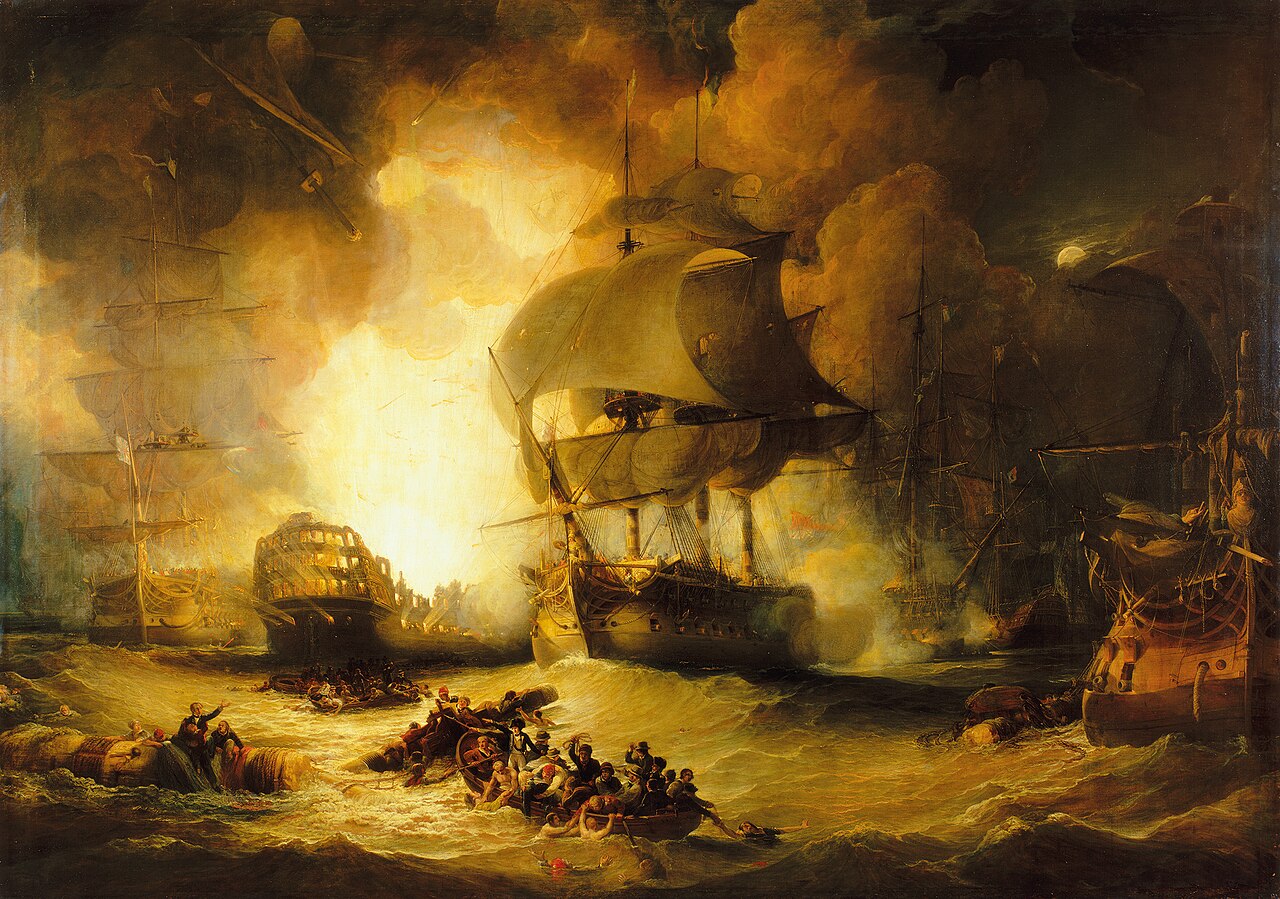
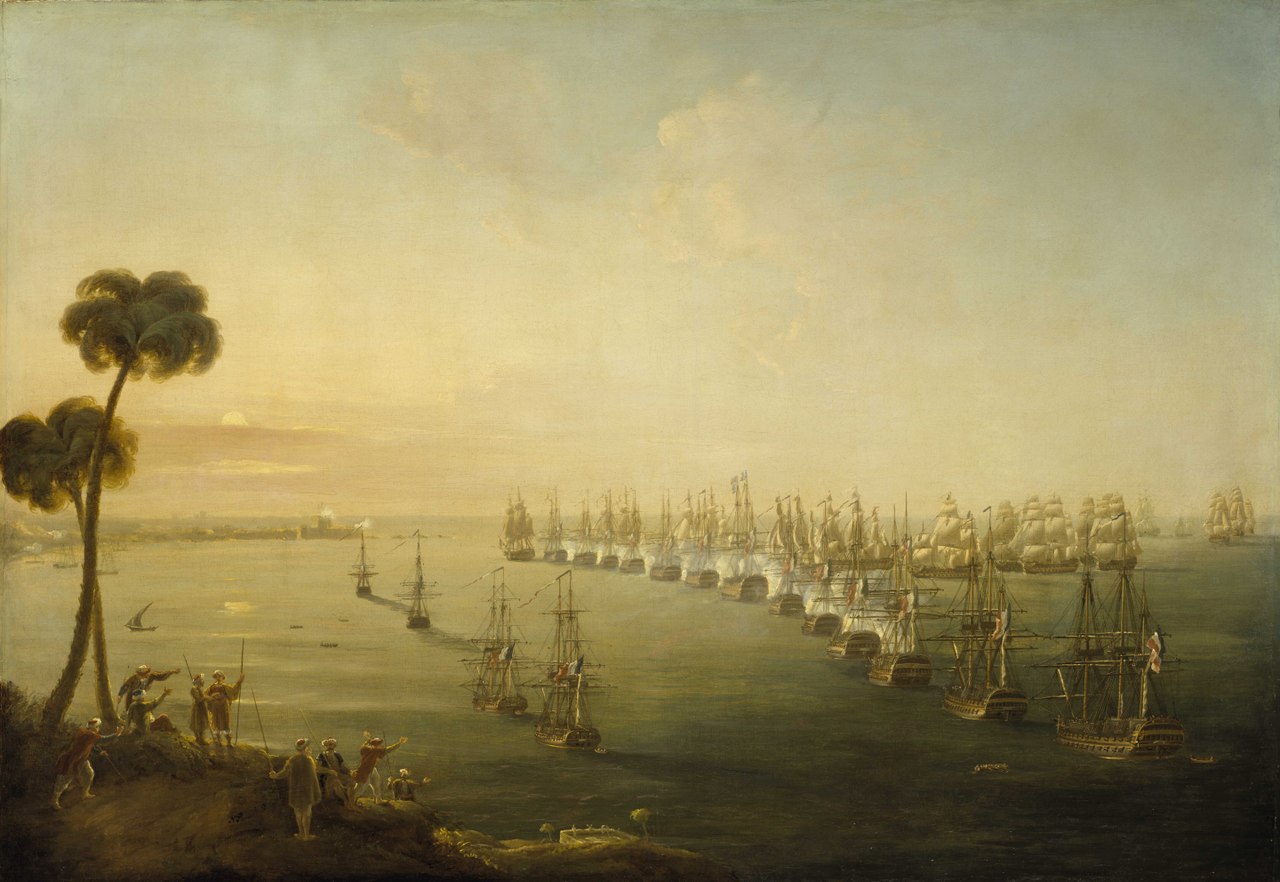
The Battle of the Nile was a decisive naval engagement fought 1–3 August 1798 during the Napoleonic Wars. A British fleet under Horatio Nelson attacked and defeated a French fleet, leaving Napoleon's expeditionary force stranded on the coast of Egypt. The clash took place where the Nile meets the sea, in an estuary near Aboukir, and is often called the Battle of Aboukir Bay in contemporary accounts.
Image gallery
10 Images




Background
In 1798 France launched an ambitious Mediterranean campaign aimed at undermining British trade routes and extending French influence. Napoleon landed an army in Egypt and won a land action at the Battle of the Pyramids, but his fleet anchored offshore made the expedition vulnerable. The confrontation at sea was between the British Royal Navy and the French fleet; it involved large sailing ships of the line and support vessels on both sides.
Forces and tactics
The British force, operating from ships of the Royal Navy, approached the anchored French line and exploited its position close to shore. Nelson's commanders took advantage of the French deployment by engaging along both sides of the enemy line, a bold maneuver that disrupted French cohesion. Night action, close-range broadsides, and careful seamanship played major roles in determining the battle's course.
Outcome and consequences
The British victory shattered the French Mediterranean fleet and left Napoleon's army cut off from supplies and reinforcements. The result accelerated French isolation in Egypt and contributed to the eventual surrender of French forces in the region, culminating in the Capitulation of Alexandria. Strategically, the battle secured British sea control of the eastern Mediterranean and bolstered Nelson's reputation.
- Destroyed or captured many French ships and reduced French naval power in the region (battle significance).
- Stranded an expeditionary army far from home and complicated French political aims.
- Enhanced British influence over Mediterranean trade routes and regional diplomacy.
Notable facts
Although centered on fleet actions, the engagement had wide effects ashore: the loss of naval support forced French troops to rely on local resources and limited reinforcements. The Battle of the Nile remains a classic example of decisive naval action altering the course of a wider campaign, and it is routinely studied for its tactical innovations and the importance of controlling sea lines of communication.
For further reading on the ships and units involved, contemporary accounts, and the campaign's larger diplomatic fallout, see specialized works and archives linked in research guides (French sources, British archives, and modern studies at naval history portals).
See also references to the earlier land engagement at the Battle of the Pyramids and later surrender events tied to the campaign (geographic context, regional studies).
Contemporary documents and annotated analyses are available in many collections and digital libraries; consult curated bibliographies for primary sources and specialist commentary (Napoleonic Wars overviews, battle studies).
Related articles
Author
AlegsaOnline.com Battle of the Nile (1798) Leandro Alegsa
URL: https://en.alegsaonline.com/art/9569