
Jacobins — political club of the French Revolution
The Jacobins were a radical political club during the French Revolution that promoted republicanism, social equality and centralized revolutionary government; associated with Robespierre and the 1793–1794 Reign of Terror.
The Jacobins were a political club and network that became one of the most influential forces during the French Revolution. Originating in 1789 as a gathering of anti‑royalist deputies and citizens who called themselves the Society of the Friends of the Constitution, the group took its popular name from the Dominican convent (Jacobin in French) where its Parisian meetings were held. Over a few years the club grew beyond a single location into a nationwide movement that shaped policy and public life in revolutionary France.
Image gallery
4 Images
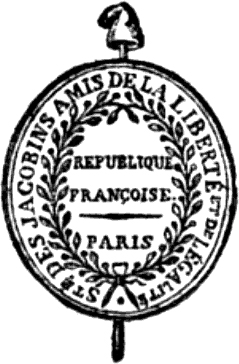


Organization and membership
At its core the Jacobin movement combined a formal club in Paris with affiliated societies in towns and neighborhoods across France. Membership ranged widely in social background: many members were bourgeois lawyers, journalists and provincial notables, while the broader social base included working people and urban poor. Contemporary estimates and later historians have suggested the national network may have numbered in the hundreds of thousands at its height, though the composition and influence varied from place to place.
Political positions and actions
Jacobins advocated a republican form of government, greater political equality, and strong measures to defend the Revolution against internal and external enemies. They supported price controls, wartime mobilization, limits on counter‑revolutionary activity, and policies intended to secure bread and basic goods for the urban population. The movement aligned closely with the radical urban militants known as the sans‑culottes, who rejected aristocratic dress in favor of long trousers and demanded direct action on economic and social grievances.
Leadership and the Reign of Terror
The most visible leader associated with the Jacobins was Maximilien de Robespierre, a lawyer and deputy whose prominence grew as the Revolution entered crisis. Jacobin influence peaked in 1793–1794 when the Convention and the Committee of Public Safety, institutions dominated by Jacobin deputies and allies, imposed severe measures against perceived enemies. That period, often called the Reign of Terror, combined revolutionary justice with centralized emergency government; its excesses provoked resistance and eventual backlash.
Decline and legacy
After a political counter‑movement culminated in the Thermidorian reaction of July 1794, leading Jacobin leaders were arrested and executed and the club’s power was curtailed. The Paris club itself was closed, and many of the Jacobins’ policies were rolled back. Nonetheless, the Jacobin legacy persisted: their defense of popular sovereignty, secular republicanism and state intervention in emergencies influenced later 19th‑century republicans, social reformers and debates about citizenship and rights.
Notable facts
- The Paris Jacobin club began among deputies from Brittany and others opposed to royal authority.
- The group included a mixture of social groups such as artisans, shopkeepers, cooks (cooks), and shoemakers (shoemakers), alongside professional men.
- Maximilien de Robespierre is frequently identified with Jacobin leadership and policy direction (Robespierre).
Related articles
Author
AlegsaOnline.com Jacobins — political club of the French Revolution Leandro Alegsa
URL: https://en.alegsaonline.com/art/49020