
Chaparral: Mediterranean shrubland of California and similar regions
Chaparral is a drought‑adapted shrubland shaped by a Mediterranean climate and periodic fire, predominant in California and found in four other global regions with similar climates.
Overview
Chaparral is a plant community dominated by dense, woody shrubs adapted to dry summers and cooler, wetter winters. It is a form of shrubland or heathland most famously present in the U.S. state of California, and extending into northern Baja California. The vegetation and ecosystem processes of chaparral develop under a Mediterranean climate and a long relationship with wildfire.
Image gallery
9 Images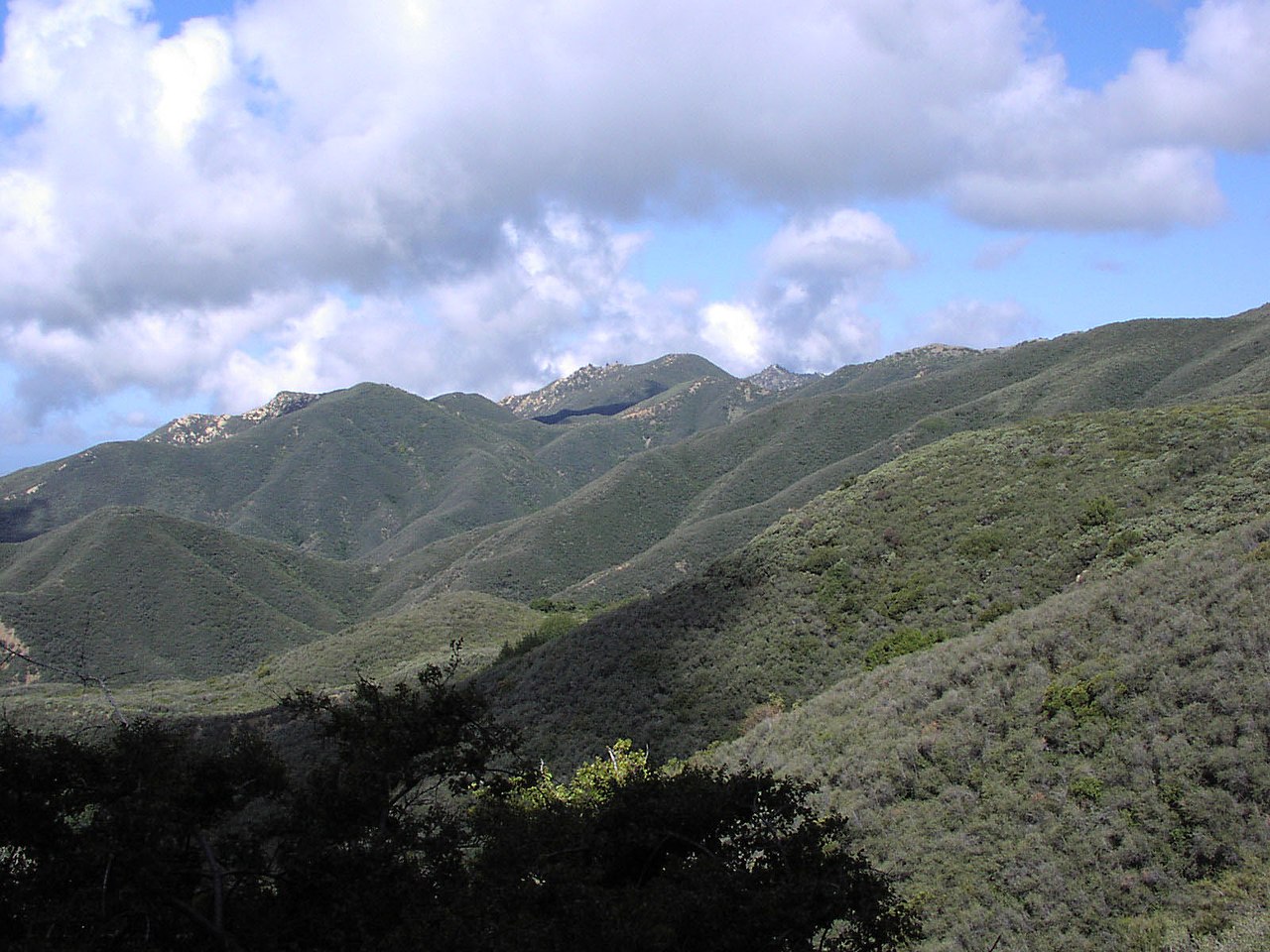


Characteristics
Plants in chaparral are adapted to seasonal drought: they commonly have hard, leathery (sclerophyllous) leaves and retain foliage year‑round as evergreens. Typical species include various scrub oaks, manzanitas, chamise and ceanothus, which form dense stands and low forests. These species concentrate growth in stems and leaves that resist desiccation during summer drought, and many reproduce or resprout after burning.
Geographic distribution and global analogues
While California contains some of the most extensive chaparral, similar Mediterranean‑type shrublands occur on four other continents: the coastal Mediterranean Basin (maquis), central Chile (matorral), the Cape region of South Africa (fynbos), and parts of southwestern Australia (kwongan). These regions share seasonal rainfall patterns and many functional plant adaptations despite different species.
Fire ecology and lifecycle
Fire is a natural and influential process in chaparral ecology. The frequency of fires can vary widely—from roughly a decade in some disturbed areas to several decades or over a century in mature stands—and is influenced by climate, fuels and human activity. Periodic burning shapes species composition and structure: some plants are killed by fire and regenerate from seed, while others resprout from roots or burls. Although chaparral communities can form dense, continuous thickets, they are often highly flammable under hot, dry conditions and wind.
Human interaction, conservation and uses
Chaparral landscapes provide habitat for wildlife, reduce erosion on slopes, and host diverse native plants valued for erosion control and habitat restoration. They are also vulnerable to conversion for development, fragmentation, invasive species and altered fire regimes. Management aims to balance natural fire cycles with protection of life and property, recognizing that suppression, frequent human‑caused ignitions, or long fire‑free intervals can all alter ecological balance (fire interval concerns).
Notable facts and distinctions
- The word chaparral derives from Spanish (chaparro), originally referring to scrub oak and low, brushy growth.
- Chaparral differs from grassland and woodland by dominance of hard‑leaved shrubs and by its response to seasonal drought and fire.
- As a Mediterranean‑type vegetation it is most similar functionally to maquis, matorral, fynbos and kwongan.
For more on plant lists, regional maps and management practices see regional resources and guides (California, Baja California, or global Mediterranean‑climate summaries at climate and biome references). Additional reading and practical guidance are available through conservation organizations and land‑management agencies (fire ecology, seasonal drought, drought resilience, and species‑level information at botanical and habitat sites).
Questions and answers
Q: What is chaparral?
A: Chaparral is a shrubland or heathland plant community mainly found in California and other parts of Mexico.
Q: What kind of climate is needed for chaparral to develop?
A: Chaparral is caused by a Mediterranean climate with mild, wet winters and hot dry summers.
Q: What type of plants can be found in chaparral?
A: Chaparral has summer drought-tolerant plants with hard sclerophyllous evergreen leaves.
Q: How much of California is covered by chaparral?
A: Chaparral covers 5% of the state of California, and an additional 3.5% of associated Mediterranean shrubland.
Q: What is the origin of the name "chaparral"?
A: The name "chaparral" comes from the Spanish word "chaparro," referring to scrub oaks.
Q: Where else in the world can chaparral be found?
A: Chaparral can be found in four other regions in the world: parts of the Mediterranean coast, Central Chile (matorral), South African Cape (fynbos), and South Australia (kwongan).
Q: How frequently do fires occur in chaparral?
A: Fires in chaparral are not frequent and usually occur at intervals from 10–15 years to over a hundred years. However, mature chaparral often has dense and highly flammable thickets.
Related articles
Author
AlegsaOnline.com Chaparral: Mediterranean shrubland of California and similar regions Leandro Alegsa
URL: https://en.alegsaonline.com/art/18595
Sources
- calacademy.org : "Hotspot; California on the Edge"