
Cherry blossom (Sakura): biology, varieties, cultural significance
Cherry blossom, or sakura, refers to ornamental Prunus species famed for brief, showy spring flowers. This article covers biology, varieties, cultural history, hanami customs, cultivation and notable facts.
Cherry blossom, commonly called sakura in Japanese, designates the flowering ornamental cherries of the genus Prunus rather than the edible fruit trees. In written Japanese the name appears in kanji and is often rendered in katakana. Botanically, several species and many cultivated clones are grouped under the informal term; the widely planted ornamental is frequently identified with Prunus serrulata, while other cherries produce the small fruits associated with the genus (cherry). The delicate floral display itself is commonly described as the blossoms that signal the arrival of spring.
Image gallery
10 Images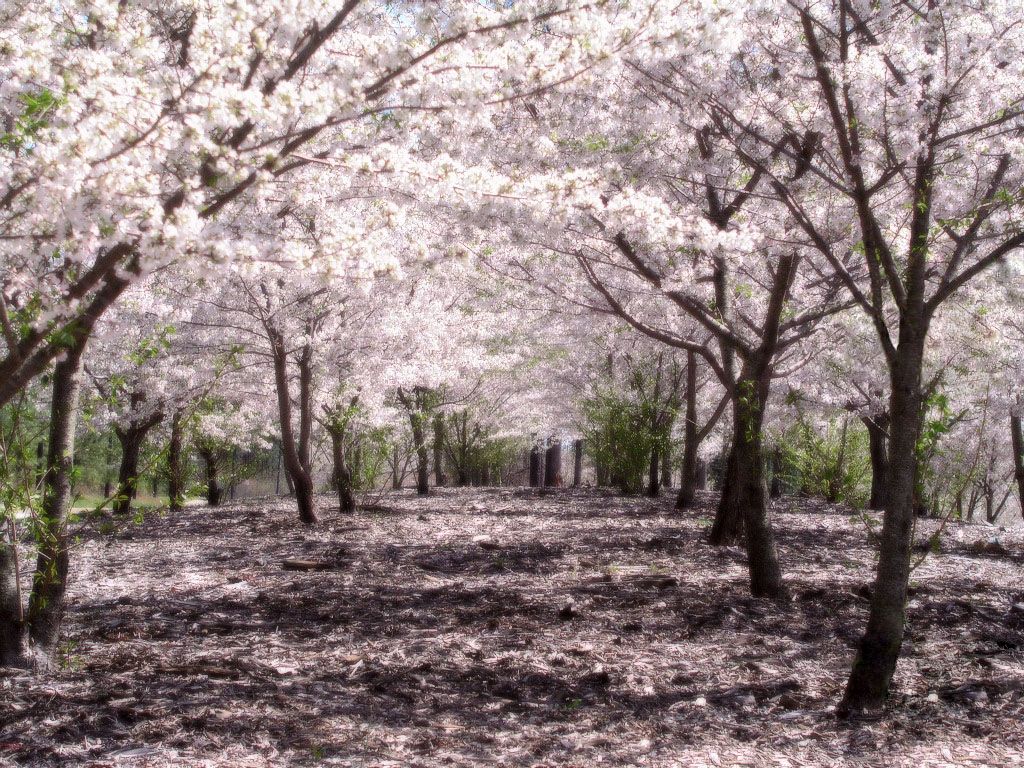


Description and characteristics
Cherry blossom trees are valued for their prolific, short-lived flowers and for a variety of forms and colors. Typical blossoms are pale pink to white and most wild types have simple flowers with about five petals, but many cultivated varieties are double-flowered and can bear dozens of petals per bloom. Trees range from compact garden specimens to larger street and park plantings. The flowering period is brief—often only a week or two for a tree at peak bloom—making the spectacle transient and highly prized.
Varieties and horticulture
There are hundreds of named cultivars and local types across East Asia and beyond. Somei-yoshino (a cloned cultivar) became especially widespread in Japan during the 19th and 20th centuries because of its abundant, uniform flowering and ease of propagation. Other forms emphasize color, petal number, bloom time or tree habit. Because many ornamentals are grafted or propagated by cuttings, the same cultivar can be found over wide areas, while spontaneous local variants continue to arise.
History and cultural significance
In Japan sakura have deep cultural resonance: they are associated with spring renewal, beauty and the transience of life. This association is often expressed through the aesthetic concept of mono no aware, an awareness of impermanence. Cherry blossoms have been depicted in poetry, visual arts and seasonal calendars for centuries. The public custom of hanami (literally "flower viewing") involves gathering beneath blossoming trees for picnics and socializing; this practice has both aristocratic and popular roots and remains a major seasonal event. Internationally, cherry trees have also served as diplomatic gifts and as focal points for festivals outside Japan.
Customs, festivals and modern observance
During bloom, forecasts of the so-called cherry-front track the advance of flowering across regions, helping people plan visits to famous viewing sites. Municipalities, parks and temples commonly host night illumination of trees and organized festivals. The practice of celebrating blossoms blends leisure, tourism and local identity; in cities and countryside alike, cherry blossom season brings increased foot traffic and cultural programming. The term flower viewing is used in many languages to describe these events.
Uses, ecology and notable facts
- Ornamental use: Trees are planted for streetscapes, parks and gardens and pruned for form and flowering display.
- Ecology: Blooms provide early-season nectar and pollen for pollinators, but many ornamental cultivars produce little or no edible fruit.
- Symbolism: Beyond spring and beauty, sakura are used in names, logos and ceremonies, and they appear in popular culture as motifs of renewal and ephemerality (symbol of spring season).
- Practical notes: Cultivation favors sites with well-drained soil and adequate chill hours; pests and diseases of Prunus can affect both leaves and flowers.
Although strongly linked with Japan, the appreciation of cherry blossoms extends across East Asia and into Western countries where climate and horticulture permit. Study of their varieties, historical planting patterns and cultural meanings continues to attract botanists, historians and the general public. For further reading on terminology, writing forms and traditional practices see resources on the Japanese name and writing (kanji, katakana), linguistic usage (sakura), generic descriptions of cherries (cherry), blossom morphology (blossoms), customary observance (hanami, flower viewing) and petal structure (petal counts).
Questions and answers
Q: What are Japanese Cherry blossoms?
A: Japanese Cherry blossoms are cherry trees, Prunus serrulata, and their blossoms.
Q: What does Sakura mean?
A: Sakura means cherry blossom in Japanese.
Q: Are cherry trees a symbol of spring for Japanese people?
A: Yes, cherry trees are a symbol of spring for Japanese people.
Q: What is the traditional custom of Hanami?
A: The traditional custom of Hanami involves visiting places where sakura are blooming.
Q: Are cherry blossoms the national flower of Japan?
A: No, cherry blossoms are not the national flower of Japan.
Q: Which is the most famous type of sakura?
A: Someiyoshino is the most famous type of sakura.
Q: How many different types of cherry trees are there?
A: There are approximately 400 different types of cherry trees.
Related articles
Author
AlegsaOnline.com Cherry blossom (Sakura): biology, varieties, cultural significance Leandro Alegsa
URL: https://en.alegsaonline.com/art/19297