
Chervil (Anthriscus cerefolium): a delicate garden herb
Chervil is a delicate annual herb (Anthriscus cerefolium) in the carrot family, valued for its mild anise-like flavor in French cooking and used fresh in salads, sauces, and fines herbes.
Overview
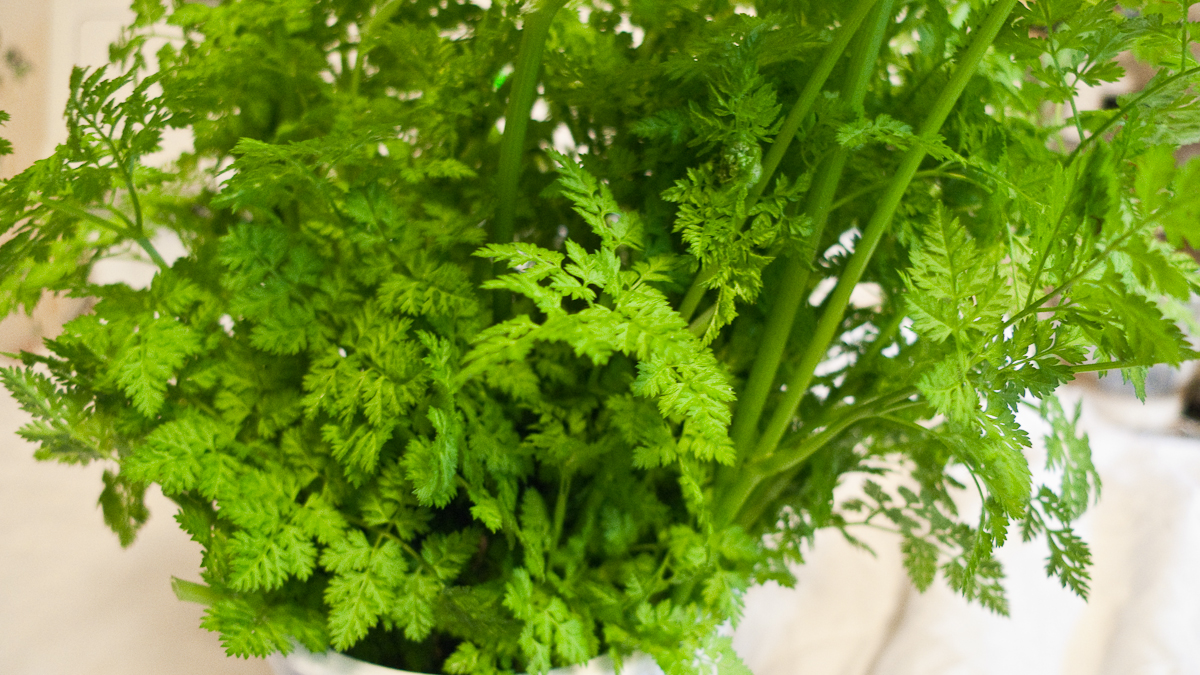
Chervil (Anthriscus cerefolium) is a tender leafy herb in the Apiaceae (carrot) family. Often called garden chervil or French parsley, it is related to parsley and prized for an unobtrusive, slightly sweet flavor with a faint anise or licorice note. Chervil is most commonly grown as an annual for its delicate pinnate leaves and small white flower umbels.
Image gallery
4 Images


Description and cultivation
Chervil forms fine, feathery foliage on slender stems. Leaves are soft and delicate and bruise easily, so they are usually handled gently and added near the end of cooking. The plant prefers cool, shady to partially shaded sites with moist, well-drained soil. It germinates readily from seed and is often sown directly in the garden in early spring or autumn where climate allows. Because it dislikes heat, it bolts quickly in warm weather.
Culinary uses and examples
Used fresh rather than dried, chervil is a staple in classic French cooking and is one of the components of the traditional fines herbes blend. It complements eggs, seafood, light sauces, salads, and vegetable dishes. Chefs typically add it at the end of preparation to preserve its delicate aroma. It can also be blended into herb butters, dressings, and soups for a subtle lift.
History and cultural notes
Chervil has been cultivated in Europe for centuries and became especially associated with French cuisine. Though it does not have the strong, long-lasting presence of more pungent herbs, its nuanced flavor earned it a regular place in fine cooking and in simple domestic recipes. Gardeners have traditionally valued it for its early spring growth and quick return from seed.
Distinguishing features and safety
Because many members of the carrot family share similar umbels, care should be taken when foraging or identifying wild plants. Chervil's delicate leaves and mild scent help distinguish it from more bitter or poisonous look-alikes. For general information on herbs, see this herb resource. When in doubt, use cultivated plants purchased from trusted suppliers or grown in a garden rather than plants of uncertain identity.
- Typical uses: salads, sauces, fines herbes, egg dishes
- Growing tip: sow in cool weather and protect from heat to avoid bolting
- Flavor profile: mild, sweet, lightly anise-like; best used fresh
Related articles
Author
AlegsaOnline.com Chervil (Anthriscus cerefolium): a delicate garden herb Leandro Alegsa
URL: https://en.alegsaonline.com/art/19308