
Sclerophyll — hard‑leaved vegetation adapted to dry, nutrient‑poor climates
Sclerophyll denotes plants with hard, leathery leaves and short internodes, adapted to Mediterranean-type climates with dry summers, low-nutrient soils and frequent fire. Found worldwide.
Overview
Sclerophyll refers to a group of plants characterized by hard, stiff leaves and relatively short internodes. The term derives from Greek roots meaning "hard leaf." These structural traits are adaptations to seasonal drought, intense sunlight and soils low in nutrients, and they are common where summers are long and dry and winters are mild and wetter.
Image gallery
10 Images




Key characteristics
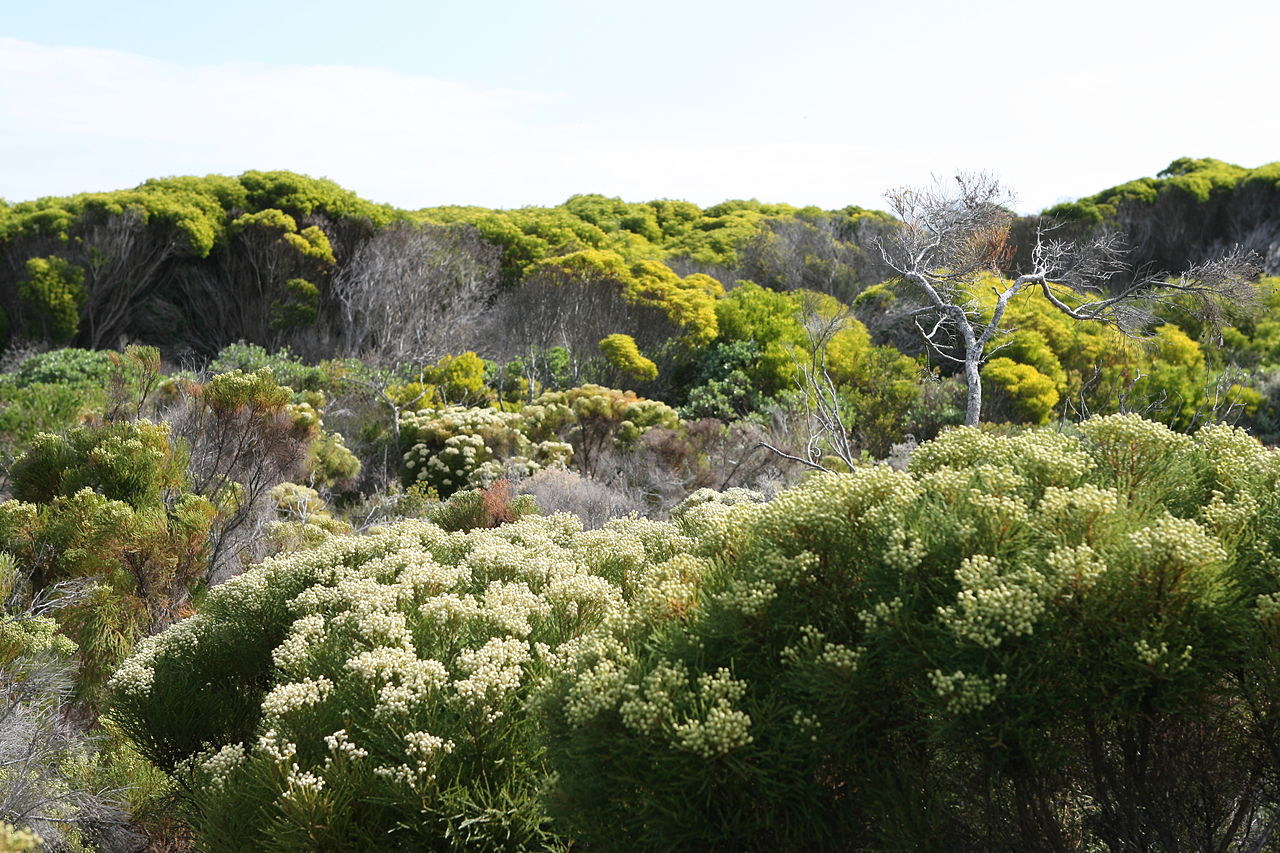
Typical sclerophyll features include small to medium leaves with a thick cuticle, tough or leathery texture, sunken stomata and dense tissue that reduces water loss. Branching patterns tend to produce short distances between leaves (short internodes), conserving resources. Many sclerophyllous species are evergreen, retaining foliage year‑round to maximize the limited opportunity for photosynthesis.
Where sclerophyll vegetation occurs
- Mediterranean Basin (maquis and garrigue)
- California (chaparral)
- Southwestern Australia (kwongan)
- South Africa (fynbos)
- Central Chile and parts of western South America (matorral)
Origins and ecological development
Sclerophylly has evolved repeatedly in unrelated plant families as a response to similar environmental pressures: seasonal drought, nutrient‑poor substrates (for example ancient sands and lateritic soils) and frequent surface fires. Fire plays a formative role in many sclerophyll communities; some species survive by resprouting from underground structures or by releasing seeds after burning. Where wildfires are frequent, species composition and regeneration strategies reflect that regime (wildfire dynamics).
Roles, uses and conservation
Sclerophyll ecosystems support high biodiversity in regions such as fynbos and kwongan, provide habitat and pollinator resources, and supply timber, resins and essential oils from genera like Eucalyptus and Protea. They are also vulnerable: altered fire regimes, invasive plants and land use change threaten native assemblies. Conservation and restoration efforts aim to maintain natural fire cycles and protect endemic species.
For more on leaf anatomy and related terms see hard leaf adaptations.
Related articles
Author
AlegsaOnline.com Sclerophyll — hard‑leaved vegetation adapted to dry, nutrient‑poor climates Leandro Alegsa
URL: https://en.alegsaonline.com/art/88059
Sources
- eoearth.org : Leather Oak, Quercus durata. Encyclopedia of Earth. National Council for Science and Environment
- environment.nsw.gov.au : "Sydney Coastal Dry Sclerophyll Forests"