
Chard: an overview of Swiss chard, silverbeet, and garden varieties
Chard (Beta vulgaris subsp. cicla) is a leafy green related to beets, valued for its nutrient-rich leaves and colorful stalks. This article covers appearance, history, uses, cultivation and distinctions.
Chard is a leafy vegetable commonly called Swiss chard, silverbeet, perpetual spinach or mangold. The cultivated plant belongs to the beet group Beta vulgaris subsp. cicla and is grown for its large, tender leaves and fleshy leafstalks. Chard is appreciated in kitchens and gardens for its versatility, mild earthy flavor and wide range of stem colors.
Image gallery
3 Images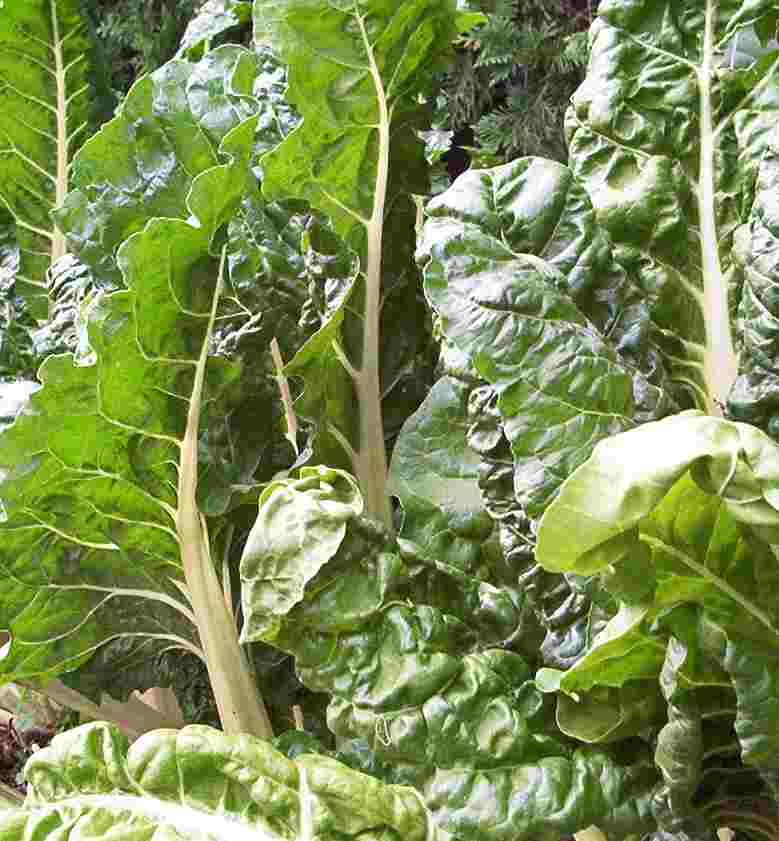


Characteristics
- Plant form: a rosette of broad, crinkled or flat leaves arising from a short stem.
- Edible parts: green leaf blades and the thicker petioles (stalks), both cooked or used raw.
- Varieties: stems range from white to yellow, pink and deep red—"rainbow chard" groups several colorful types.
- Taxonomy: chard is in the family Amaranthaceae and is closely related to beets; it is distinct from true spinach (spinach) despite similar uses.
Historically, chard has long been cultivated across the Mediterranean and Eurasia. It developed as a leafy form of the beet and was selected for tender leaves rather than an enlarged root. The common English name "Swiss chard" is widely used internationally, while other regional names reflect local culinary traditions.
Culinary uses are broad: leaves can be sautéed, braised, stirred into soups, folded into pies or eaten raw in salads when young. Stems require slightly longer cooking and are often chopped and treated like celery or asparagus. Chard is a nutrient-dense vegetable, contributing vitamins and minerals to the diet and performing well in seasonal rotations.
Gardeners value chard for its ease of culture and extended harvest window. It performs best in cool to temperate climates, tolerates light frost, and in mild regions can behave as a short-lived perennial. Seeds are sown in beds or containers, and plants benefit from regular moisture and modest feeding. Common pests include leaf miners and aphids; good sanitation and crop rotation reduce problems.
Notable distinctions: chard differs from beetroot in being grown for foliage rather than roots, and from true spinach in leaf texture and heat tolerance. Its colorful petioles make it attractive in market displays, and its reliable production through cooler months keeps it popular with both home growers and chefs.
Related articles
Author
AlegsaOnline.com Chard: an overview of Swiss chard, silverbeet, and garden varieties Leandro Alegsa
URL: https://en.alegsaonline.com/art/18638
Sources
- tropicos.org : "Name - Beta vulgaris subsp. cicla (L.) W.D.J.Koch"
- tropicos.org : "Name - Beta vulgaris var. cicla L."