
Battle of Plassey (1757)
A pivotal 1757 engagement in Bengal in which the British East India Company defeated the Nawab of Bengal, beginning Company political control in eastern India and accelerating European competition for the subcontinent.
The Battle of Plassey, fought on 23 June 1757 near the village of Palashi (anglicized as Plassey) on the Bhagirathi–Hooghly river in Bengal, marked a turning point in the history of the Indian subcontinent. The contest pitted forces of the British East India Company, led by Colonel Robert Clive, against the army of Siraj-ud-Daulah, the Nawab of Bengal. Although the engagement itself lasted only a few hours, its outcome had long-term political and economic consequences: it enabled the Company to establish a dominant position in Bengal and laid the foundations for British territorial expansion in India.
Image gallery
10 Images

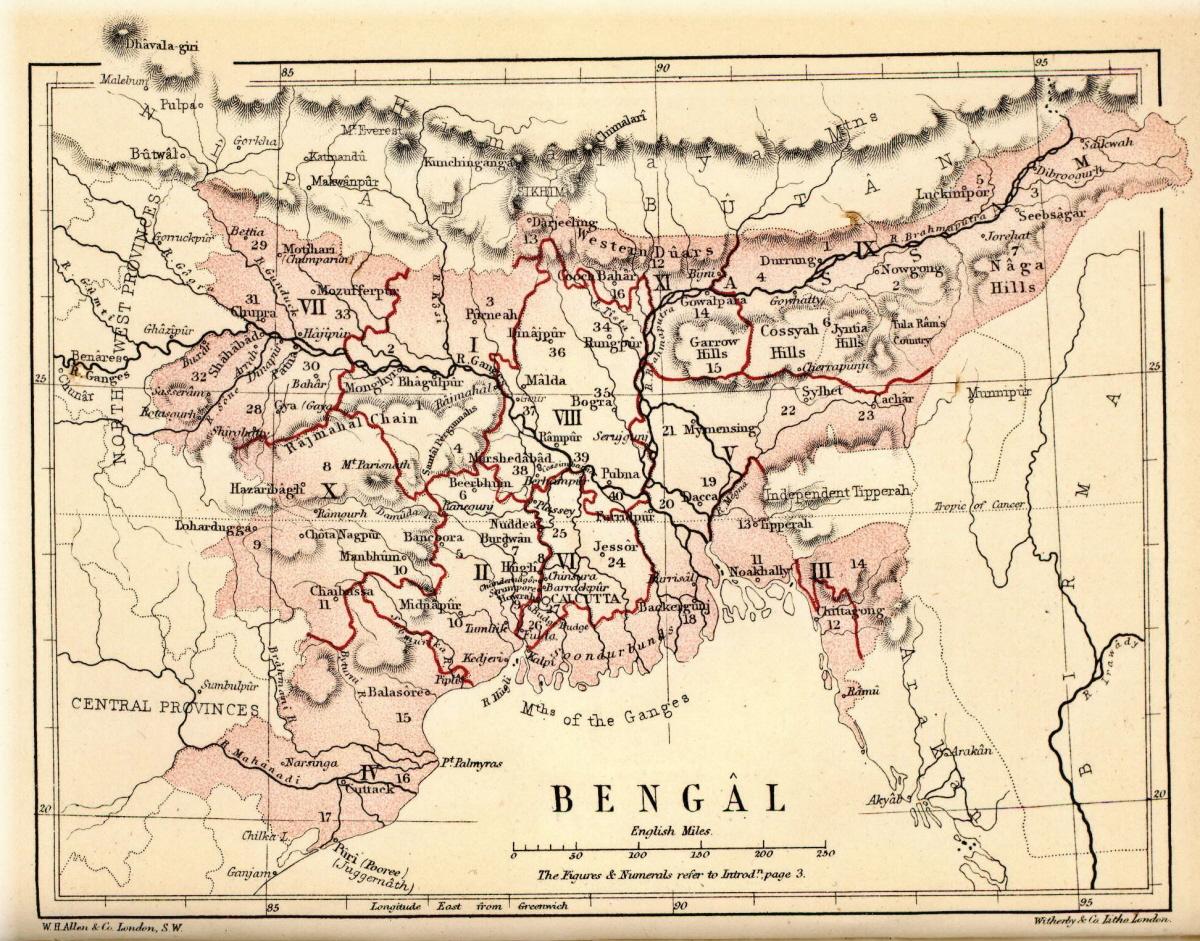


Background and causes
The confrontation was the culmination of escalating tensions between the Nawab and Company officials in Bengal. Frictions included the Company’s fortification of Fort William in Calcutta without clear authorization, disputes over trade privileges and customs revenue, and the sheltering of fugitives who had offended the Nawab’s administration. In June 1756 Siraj-ud-Daulah captured Calcutta; the subsequent incarceration episode known as the "Black Hole of Calcutta" became a rallying grievance for the British, though contemporary accounts and later interpretations vary about its scale. In reaction, the Company mounted a military response from Madras and elsewhere to recover lost ground.
Forces, allies and internal divisions
The broader diplomatic context included the global rivalry of the Seven Years’ War: Britain and France were engaged in conflict worldwide, and their East India Companies competed for influence in India. A small French detachment and advisors were attached to the Nawab’s side, but French support at Plassey was limited. Siraj-ud-Daulah’s command also suffered from internal fractures. Key members of his military and political elite—most notably Mir Jafar—were disaffected and entered into clandestine arrangements with Clive and other Company representatives. These secret agreements promised rewards and high office in exchange for withholding effective support during the battle, a factor that would decide the engagement.
The battle and immediate outcome
Clive advanced with a relatively small, disciplined force. Facing a numerically superior Nawab’s army, the Company contingent benefited from superior artillery organization, concentrated musketry and, crucially, the failure of allied Nawabi commanders to engage decisively. When the contest unfolded near the river banks at Plassey, the planned non-participation of pro-Nawab commanders deprived Siraj-ud-Daulah of a cohesive field response. After several hours of fighting the Nawab’s forces collapsed and he fled the scene. The Company’s victory was as much the result of political maneuver and betrayal as of battlefield tactics.
Consequences and significance
In the immediate aftermath Mir Jafar was installed as a pliant Nawab in return for his cooperation, while real power increasingly resided with the East India Company. Control of Bengal’s revenues gave the Company the financial resources to maintain and expand its own private armies and administrative reach. Over subsequent decades those resources powered an enlargement of Company control beyond Bengal to much of the subcontinent, and they facilitated the retreat or reduction of other European powers’ influence in India. The battle is therefore widely seen as the moment when a commercial enterprise transformed into a major political and military power in South Asia.
Legacy and interpretation
Historians have debated the meaning and morality of Plassey. Some emphasize its role as the origin point of British imperial rule in India and its economic consequences for Bengal and the wider region. Others highlight the agency of Indian actors, the dynamics of local politics, and the way commercial interests, diplomacy and bribery shaped outcomes. Plassey also entered popular memory and nationalist narratives as a symbol of betrayal and the beginning of foreign domination. Its study remains central to discussions about colonialism, corporate power, and the transformation of the early modern world.
Further reading and resources
- General overview of the Battle of Plassey
- Palashi / Plassey: site and geography
- History of Bengal in the mid‑18th century
- The Nawab of Bengal: Siraj‑ud‑Daulah
- French involvement in India during the Seven Years’ War
- The Seven Years’ War: global context
- East India Company expansion in the Indian subcontinent
- Bhagirathi–Hooghly river and strategic waterways
- The Ganges river system and Bengal’s delta
- Place‑name anglicization: Palashi to Plassey
- Biographical note: Siraj‑ud‑Daulah
- The nawabs and the late Mughal polity
- The Black Hole of Calcutta: incident and debates
- Dhaka and regional administration under the Nawabs
- Calcutta (Kolkata) in the 18th century
- Robert Clive: career and controversies
- Conspiracies and diplomacy before Plassey
- Composition of the Nawab’s army and command
- Mir Jafar: collaborator and successor
- Colonial competition in South Asia
- Company influence and political control mechanisms
- Revenue extraction and economic impact on Bengal
- Military finance and the growth of Company armies
- European rivals: Dutch and other traders in Asia
- French decline and the shift in imperial balance
- The British Empire in Asia: long‑term consequences
Questions and answers
Q: What was the Battle of Plassey?
A: The Battle of Plassey was a major battle that took place on 23 June 1757 at Palashi, Bengal. It was an important British East India Company victory over the Nawab of Bengal and his French allies. It was part of the Third Carnatic War, and of the worldwide Seven Years' War in which France and its allies fought Britain and its allies.
Q: Where did the battle take place?
A: The battle took place at Plassey, Bengal on the river banks of the Bhagirathi-Hooghly River, a distributary of the Ganges. This was near Murshidabad which was the capital of Bengal at the time.
Q: Who were involved in this battle?
A: The battle was between Siraj ud-Daulah, the last independent Nawab of Bengal, and the British East India Company. Additionally, there were French forces sent by their East India Company to fight against Britain's forces.
Q: What led to this battle?
A: The troubles between Siraj-ud-daulah and the British led to this conflict. First, they strengthened fortification around Fort William without informing him; secondly they abused trade privileges granted to them by Mughal rulers; thirdly they gave shelter to some officers who had misappropriated government funds from Dhaka city; finally when East India Company started further enhancement military preparedness at Fort William in Calcutta without informing him he retaliated by capturing Kolkata (renamed Alinagar).
Q: How did it end?
A: The British army under Colonel Robert Clive defeated Siraj-ud Daulah's forces with about 3,000 soldiers present at Plassey battlefield causing him to flee from there. As a reward for his treachery Mir Jafar was made Nawab of Bengal while former Nawab Mutsheed Kiki Khan directed all landowners not to sell any plot lands to British East India Company as result thereof .
Q: What effect did it have on colonial powers?
A: This is thought to be one of most important battles for control Indian subcontinent by colonial powers as result thereof British now had influence over Nawab and got lot revenue from trade which used increase their military power pushing other European colonial powers such Dutch & French out South Asia sign expansion British Empire in Asia .
Related articles
Author
AlegsaOnline.com Battle of Plassey (1757) Leandro Alegsa
URL: https://en.alegsaonline.com/art/9534