
Ganges (Ganga): geography, history, cultural importance and environmental issues
The Ganges (Ganga) is a major South Asian river rising in the Himalaya and flowing across northern India into Bangladesh; it is central to regional culture, economy, ecology and face pressing pollution challenges.
The Ganges, known in South Asian languages as the Ganga, is a principal river of northern India and Bangladesh. Sacred in Hindu tradition, it has shaped settlement, agriculture and belief for millennia. The name of the river is derived from the goddess Ganga in Hindu mythology, who is said to have descended from the heavens to purify the earth; this spiritual role influences many rites and pilgrimages along its banks. Geographers also recognise the river as one of the major drainage systems of the region and, by discharge, a leading river on the Indian subcontinent.
Image gallery
10 Images


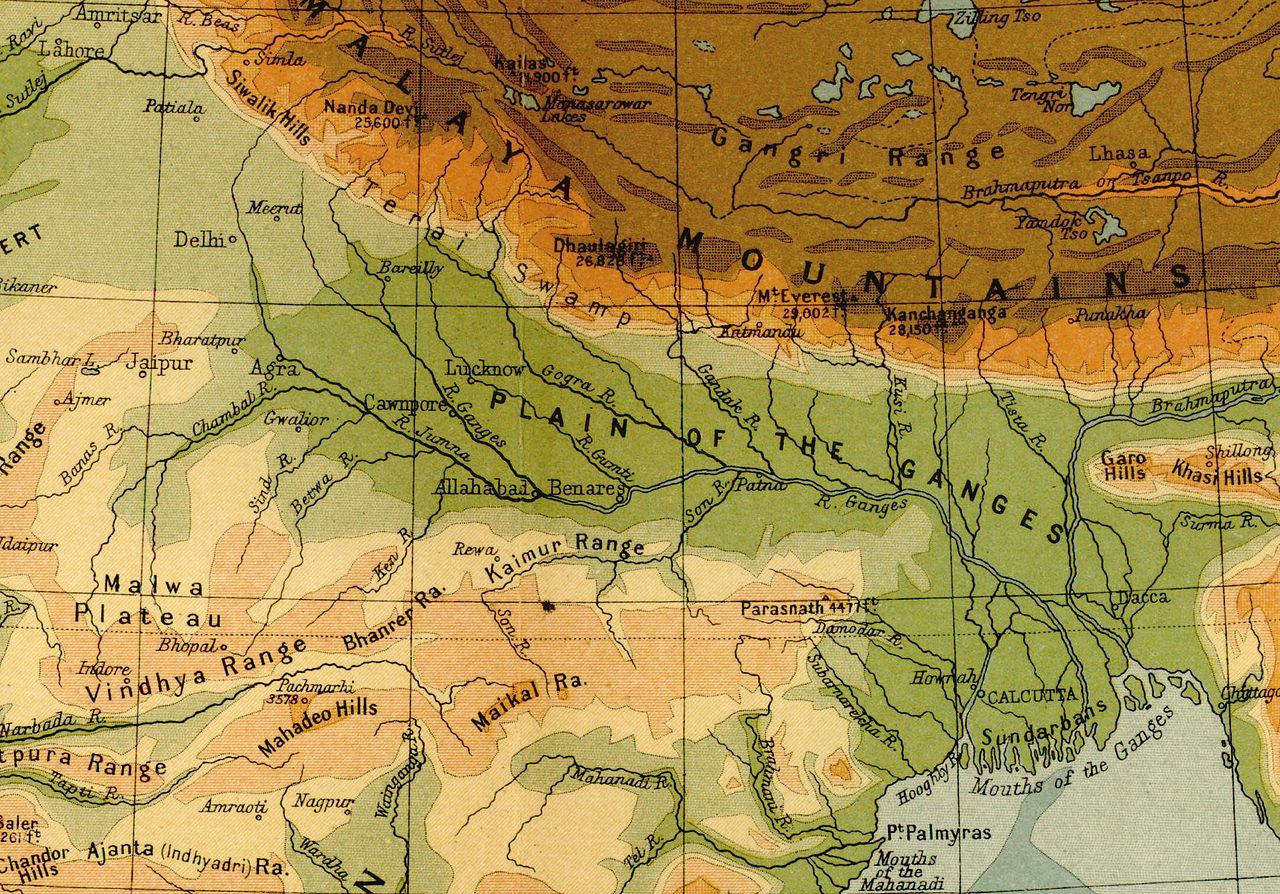


Geography and hydrology
The Ganges rises in the high Himalaya and gathers flow from several mountain streams before entering the broad Gangetic Plain. Its main headstreams include mountain rivers that join at Himalayan confluences; downstream, the river is joined by large tributaries such as the Yamuna and others that drain the north Indian plains. The river flows southeast across fertile alluvial plains and forms an extensive delta where it empties into the Bay of Bengal. The basin supports intensive agriculture and dense population across a wide climatic gradient from alpine to tropical.
Features and uses
- Agriculture: The floodplain yields fertile soil for rice, wheat, sugarcane and other staples, irrigated from the river and its canals.
- Transport and industry: Historically a transport corridor and today a source of water for cities, industry and hydropower projects in its upper reaches.
- Cultural uses: Ritual bathing, cremation, and religious festivals—most notably large congregations such as the Kumbh Mela—take place on its ghats and banks.
History, culture and mythology
The Ganges basin has been a cradle for many Indian states and empires; fertile soils and river routes encouraged early settlement, urban growth and political centres in the plains. In Hindu tradition the river is personified as the goddess Ganga and figures in stories of descent from the heavens, purification, and salvation. Cities such as Varanasi, Haridwar and Kolkata owe much of their spiritual and historical identity to their riverside locations.
Ecology and conservation challenges
The Ganges supports diverse freshwater life including fish, reptiles and the endangered Ganges river dolphin. Wetlands and the delta support unique mangrove forests and rich biodiversity. Rapid population growth, urban wastewater, agricultural runoff and industrial discharges have caused widespread pollution and habitat loss. Governments, local groups and international organisations have launched programmes and projects to reduce pollution, restore habitats and improve water quality, but significant ecological and public-health challenges remain.
Notable facts: the river system is central to the identity and economy of the region, sustains hundreds of millions of people, and combines deep cultural importance with pressing environmental concerns. The river is often referred to by its traditional name, the Ganga, which reflects both its natural presence and its place in South Asian civilization.
Questions and answers
Q: What is the Ganges river?
A: The Ganges river is the third largest river on the Indian subcontinent by discharge.
Q: Why is the Ganges river named after a Hindu goddess?
A: The Ganges river is named after a Hindu goddess called Ganga.
Q: What do geographers, historians, and mythologists think of the Ganges river?
A: Geographers, historians, and mythologists regard the Ganges river as the heart of Indian culture, tradition, and living.
Q: What is the Sanskrit name for the Ganges river?
A: The Sanskrit name for the Ganges river is Ganga.
Q: What is the Hindi name for the Ganges river?
A: The Hindi name for the Ganges river is Ganga.
Q: What is the Urdu name for the Ganges river?
A: The Urdu name for the Ganges river is Ganga.
Q: What is the Bengali name for the Ganges river?
A: The Bengali name for the Ganges river is Gonga.
Related articles
Author
AlegsaOnline.com Ganges (Ganga): geography, history, cultural importance and environmental issues Leandro Alegsa
URL: https://en.alegsaonline.com/art/37462
Sources
- commons.wikimedia.org : Ganges River