
Black Hole of Calcutta
The Black Hole of Calcutta refers to a contested 1756 episode in which British prisoners were confined in a small Fort William dungeon; accounts, casualty figures and its political legacy are subject to historical debate.
Overview
The term "Black Hole of Calcutta" refers to an incident during the capture of Fort William in June 1756, when a number of British and Anglo-Indian prisoners were confined in a small dungeon in the fort. The event took place in Calcutta (now Kolkata), in the Bengal region of what is today India. The episode became a focal point of British narrative about the dangers facing their traders and settlers in Bengal and was later used to justify military and political responses.
Image gallery
10 Images






Physical setting and contemporary description
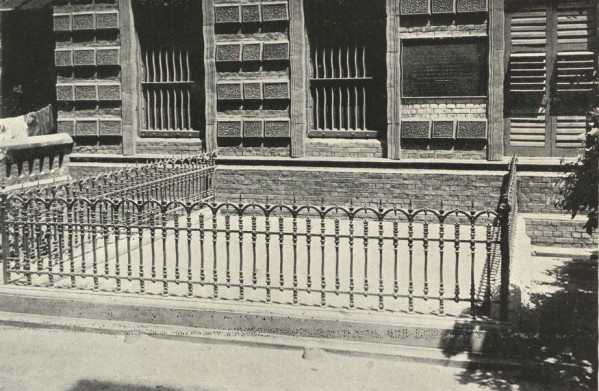
The space commonly identified as the "Black Hole" was a small jail room within old Fort William. Contemporary accounts described it as a cramped chamber with a couple of small barred windows. One long-standing description gives approximate internal dimensions of roughly 18 by 14 feet and notes that ventilation was poor. Early reports emphasized the confined nature of the space and the intense heat and overcrowding suffered by those inside; the room has often been referred to simply as the dungeon of the fort.
The 1756 incident
In June 1756 forces of the Nawab of Bengal seized Calcutta during a period of rising tensions between the East India Company and local authorities. John Zephaniah Holwell, an East India Company surgeon and one of the survivors, published an account stating that 146 people had been imprisoned in the cell overnight and that only 23 survived. Holwell's narrative was widely circulated in Britain and shaped public understanding of the event for many years, including the portrayal of the episode as an atrocity committed by the Nawab's forces.
Aftermath, memorials and political impact
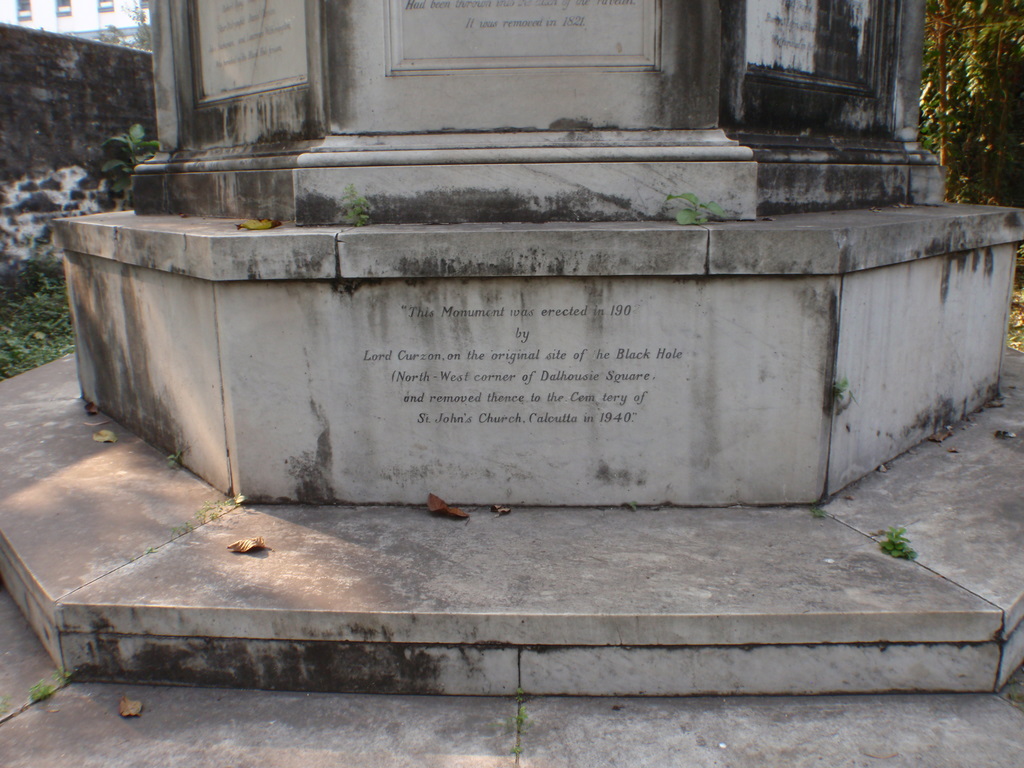
The story of the Black Hole was invoked in the British response to the capture of Calcutta and during subsequent military actions that culminated in the restoration of Company control over the city. An obelisk was later erected in memory of those who died; this monument became part of the local commemorative landscape and reflected the importance attached to the incident in British public memory. The memorial is often mentioned in accounts of colonial Calcutta and as a symbol of the event's continuing legacy in historical memory — see the later monument described at the memorial site.
Historiography and controversy
From the 19th century onwards, historians and scholars have reassessed Holwell's account. Many modern researchers accept that deaths did occur as a result of confinement, heat and overcrowding, but they question the specific figures Holwell provided and argue that the number of prisoners was likely smaller than he claimed. Skeptical studies examine logistical issues (whether the stated number could fit in the described space), potential exaggeration for propaganda, and the broader political motives that shaped contemporary reports. For further discussion on scholarly debate, see commentary by later analysts and historians at specialist sources.
Significance and notable points
- The Black Hole episode illustrates how a single dramatic account can influence public opinion and policy in a colonial context.
- It highlights tensions between the East India Company and regional powers such as the Nawab of Bengal, contributing to the chain of events that led to expanded Company control in India.
- Scholarly reassessment shows the importance of critical analysis of primary accounts and the role of memory and memorials in shaping historical narratives.
While the basic event — confinement and attendant fatalities — is generally acknowledged, precise details and casualty numbers remain disputed. The Black Hole of Calcutta therefore continues to be discussed both as a historical incident and as a case study in the formation of imperial memory and justification.
For a concise contemporary account, an early eyewitness narrative is available in Holwell's writings; for modern critical perspectives consult recent histories and archival studies that reevaluate primary testimony and context.
Dungeon accounts, Fort William records, and regional histories of India provide primary context; the later monument or obelisk is referenced at the memorial; and modern historiographical discussion can be found via resources linked at scholarship portals.
Related articles
Author
AlegsaOnline.com Black Hole of Calcutta Leandro Alegsa
URL: https://en.alegsaonline.com/art/11926