
Battle of Reading (871)
A battle in 871 during the Viking invasions of England in which a Viking force entrenched at Reading defeated the main West Saxon army; recorded in the Anglo‑Saxon Chronicle and part of the 871 campaign.
Overview
The Battle of Reading was fought in 871 near the settlement of Reading. It formed one episode in a year of intensive fighting between invading Vikings (often described in sources as Danes) and the native Anglo‑Saxons of Wessex. Contemporary annals name leading Viking commanders such as Bagsecg and Halfdan and record that the West Saxon field army was commanded by King Æthelred with his brother Alfred acting in a senior role. The clash is one of several connected encounters during the same campaign described in the Anglo‑Saxon Chronicle.
Image gallery
1 Image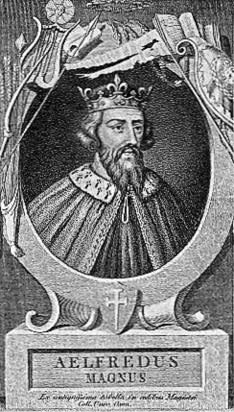
Context and strategic background
In the late 9th century a large Viking force operating in England sought to secure territory and winter quarters. The campaign that included Reading fits into this wider movement of armies which relied on mobility, seasonal campaigning and the occupation of defended camps. For Wessex, the arrival of this force presented an existential challenge: royal authority had to be reinforced by rapid mustering of local levies and the coordination of the king's household troops with regional leaders such as the ealdorman Æthelwulf.
Viking camp and tactical setting
The Vikings established a camp at Reading that exploited local geography. Contemporary notices emphasise that the site was defended by the rivers—the larger Thames and the Kennet—on two sides with a constructed rampart to the west. Such a position gave the garrison strong defensive advantages: approaches could be controlled, and an attacking force risked being channelled into disadvantageous ground. Three days after the Danes arrived, a mounted force rode out and met a Saxon detachment at Englefield; there the local West Saxons under Æthelwulf won a tactical victory and temporarily drove the raiders back into their camp.
The engagement and outcome
Within days the main West Saxon army, led by Æthelred and Alfred, advanced on the Viking position. The subsequent battle—referred to in sources as the Battle of Reading—ended with the Viking defenders repelling the assault. West Saxon forces were driven back and Æthelwulf, the ealdorman who had led the earlier success at Englefield, was killed in the fighting. The encounter is recorded as a Danish tactical victory that secured their camp for the immediate future.
Aftermath, further fighting and significance
The clash at Reading was followed by further actions in the same year, including battles at places later named in the Chronicle such as Ashdown, Basing and Meretun; control of the theatre shifted several times. The campaigns of 871 tested West Saxon resilience and were formative for figures such as Alfred, who gained experience that later shaped his kingship. The chronicle notice that records the fighting also contains the earliest surviving written mention of Reading, giving the episode local historical importance.
Sources and interpretation
Our chief narrative source is the Anglo‑Saxon Chronicle, a near‑contemporary annalistic record that remains indispensable but economical in detail. Later medieval historians and modern scholars have debated aspects such as exact dispositions, numbers and the sequence of movements. Archaeology around Reading and its river crossings has informed discussion but has not produced a definitive plan of the Viking camp; as a result many tactical details are inferred cautiously from topography and the written record.
- Recorded in the Anglo‑Saxon Chronicle among the entries for 871.
- Part of a broader campaign in which the Vikings sought winter quarters and territorial control.
- Site chosen for natural defences by the Viking force—rivers such as the Thames and an earthen rampart played key roles.
- Highlighted figures include King Æthelred, his brother Alfred, and the ealdorman Æthelwulf.
Questions and answers
Q: When was the Battle of Reading fought?
A: The Battle of Reading was fought in 871.
Q: Who were the two armies involved in the Battle of Reading?
A: The two armies involved in the Battle of Reading were the invading Viking army and the Anglo-Saxons of Wessex.
Q: Who led the Viking army in the Battle of Reading?
A: The Viking army was led by Bagsecg and Halfdan Ragnarsson.
Q: Who led the Wessex army in the Battle of Reading?
A: The Wessex army was led by King Athelred of Wessex and his brother Alfred.
Q: What is the Anglo-Saxon Chronicle?
A: The Anglo-Saxon Chronicle is an account that provides the earliest known written record of the existence of the town of Reading and describes the Battle of Reading.
Q: How did the Viking camp at Reading have natural defenses?
A: The Viking camp at Reading was protected on two sides by the Thames and Kennet rivers and on the western side by a rampart.
Q: Did the Vikings win or lose the Battle of Reading?
A: The Vikings won the Battle of Reading and drove the Wessex army back, with Ealdorman Athelwulf being killed in the fighting.
Related articles
Author
AlegsaOnline.com Battle of Reading (871) Leandro Alegsa
URL: https://en.alegsaonline.com/art/9541